Open-Source Powerhouse: How OpenAI GPT-OSS-120B is Democratizing Agentic Reasoning
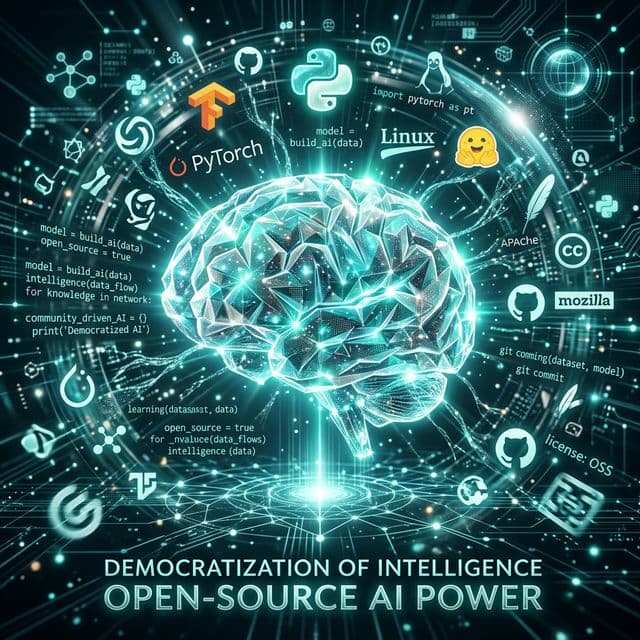
OpenAI releases GPT-OSS-120B, a 117-billion parameter mixture-of-experts model under Apache 2.0, bringing frontier-level reasoning to every developer's local machine.

OpenAI releases GPT-OSS-120B, a 117-billion parameter mixture-of-experts model under Apache 2.0, bringing frontier-level reasoning to every developer's local machine.

In a landmark move, the UK government has officially ruled out 'opt-out' copyright laws for AI model training, prioritizing creator consent and mandatory licensing mechanisms.

Solve the 'Summarize 1 Million Sentences' problem. Learn how to group your Knowledge Graph into communities and generate high-level summaries that answer top-down executive questions.

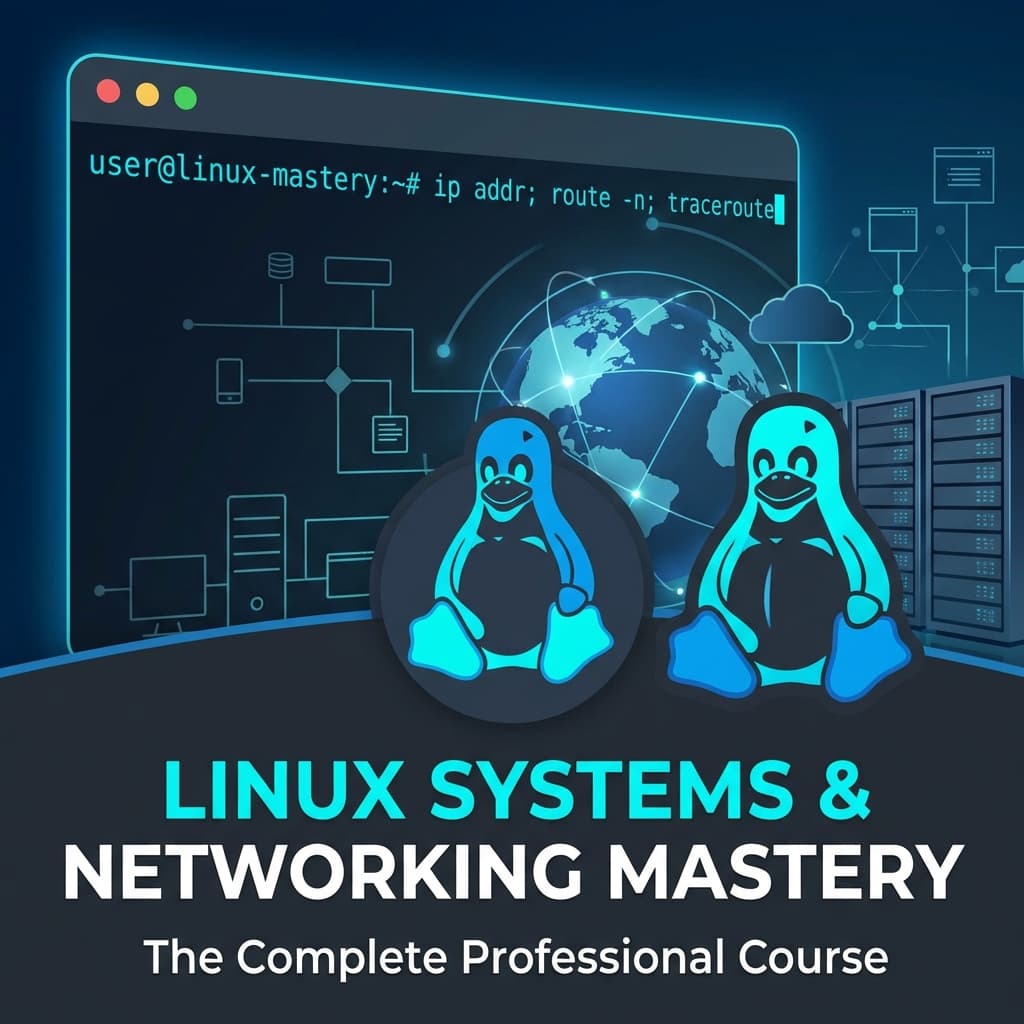
Ditch the rigid partitions of the past. Master 'Logical Volume Management' (LVM). Learn to pool your disks together, resize volumes while the system is running, and take instant backups using snapshots. Understand the PV -> VG -> LV hierarchy.

Accenture and Microsoft launch a massive partnership to deploy 'virtual team members' using GPT-5.4-powered Agentic systems for Global 2000 companies.

European Parliament committees adopt the 'Omnibus' simplification proposal, introducing critical bans on AI 'nudifiers' and extending high-risk system timelines to 2028.

In a shocking move, OpenAI releases GPT-OSS-120B, its first major open-weight LLM, signaling a new competitive strategy against Meta and Alibaba.

Rakuten releases its most powerful AI model to date, boasting 700B parameters and state-of-the-art Japanese language capabilities under an open-source license.

Smarsh launches AI-native agents designed to revolutionize corporate legal discovery and compliance, promising a massive reduction in operational costs.

Give your AI a sense of time. Learn how to retrieve event sequences and temporal paths to answer complex questions about history, progress, and the evolution of knowledge.

Ensure your disks wake up with you. Learn to manage the system's mount table. Master the syntax of the '/etc/fstab' file, understand mount options like 'noatime' and 'nofail', and learn to troubleshoot a system that won't boot due to a missing disk.

The shift from monolithic LLMs to parallelized multi-agent systems reaches a climax with the release of Grok 4.20 and Qwen 3.5, promising 10x gains in operational efficiency.

The European Parliament moves to include autonomous agents in its landmark AI Omnibus legislation, setting global standards for agentic sovereignty and accountability.

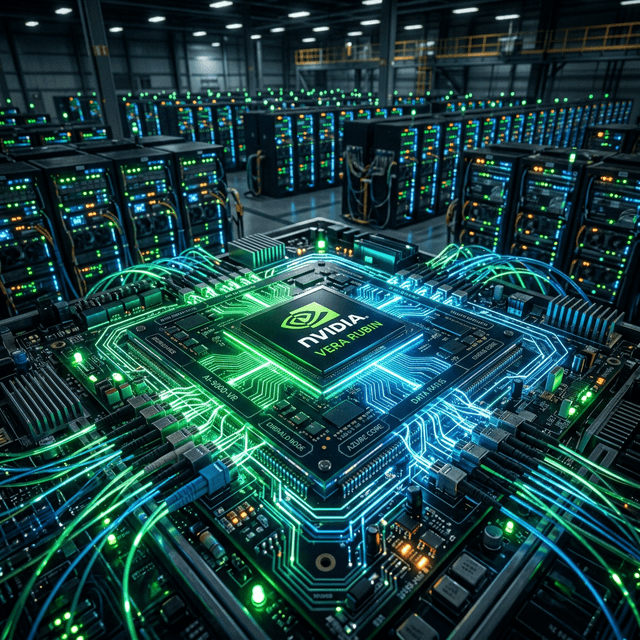
NVIDIA unveils its most powerful architecture yet, Vera Rubin, designed to facilitate the next generation of agentic AI and power global-scale AI factories.

By the end of 2026, 40% of enterprise applications will feature task-specific AI agents, marking the transition from generative assistance to autonomous digital colleagues.

OpenAI's latest frontier model, GPT-5.4, has achieved a historic milestone by outperforming human experts on the OSWorld benchmark for autonomous software interaction.

Solve the 'Bridge' problem in RAG. Learn how to use path-based retrieval to identify relationships between disparate entities and provide the AI with a chain of evidence.

Choosing the right floor for your data. Master the formatting of Linux partitions. Learn the differences between the reliable ext4, the high-performance XFS, and the next-gen Btrfs. Understand the 'Label' and 'UUID' identity system.

See the big picture. Learn the end-to-end lifecycle of a Graph RAG request—from the moment a user asks a question to the final synthesis of the graph-augmented answer.

Master the most common Graph RAG retrieval pattern. Learn how to pull a concentrated 'cloud' of facts around a central entity to provide a 360-degree view of any topic.

Before you can store data, you must build the foundation. Master the architecture of Linux partitions. Understand the differences between the classic MBR and the modern GPT formats. Learn to use 'fdisk', 'gdisk', and 'parted' to prepare your disks.

Discover how Agentic AI and the recent release of GPT-5.4 are transforming enterprises in 2026. Explore autonomous systems, ROI, implementation strategies, and the shift from chatbots to native computer use.

As autonomous AI agents dominate enterprise operations in March 2026, we examine the shifting workforce dynamics, the rising wage premium for AI skills, and the critical ethical governance systems needed.

Explore the March 2026 release of DeepSeek V4. Learn how this open-weight AI model's 1-million-plus token context and groundbreaking architecture are resetting enterprise AI pricing and infrastructure.

In March 2026, AI is no longer just text. Discover how native multimodal integration—bridging text, video, audio, and visual data seamlessly—is changing the way ecosystems like Google Workspace, Apple iOS, and OpenAI operate.

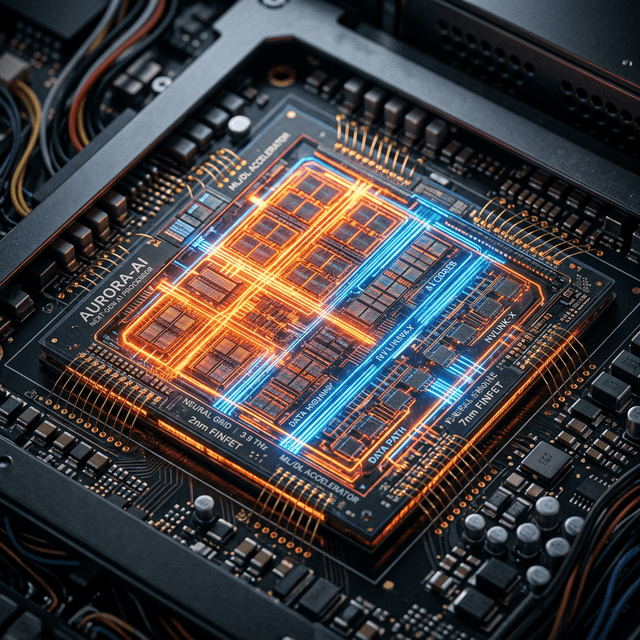
Delve into the next-generation AI hardware battle of March 2026. Explore NVIDIA's Vera Rubin H300, AMD's Ryzen AI 400 for PCs, and Meta's custom MTIA chips reshaping massive data center architectures.

Leaked data from a DHS technology incubator exposes multi-million dollar investments in automated airport surveillance and AI systems that turn national 911 data into predictive policing heat maps.

A constitutional battle looms as the Trump administration uses federal preemption to challenge state-level AI safety and disclosure laws in Washington and California.

Google's latest AI model, Gemini 3.1 Pro, sets new world records in PhD-level science reasoning and logical pattern solving, challenging the dominance of OpenAI's GPT-5.4.

OpenAI's latest model, GPT-5.4, achieves a 75% success rate on OSWorld benchmarks, officially making it more proficient at computer desktop navigation than the average human expert.

Turn natural language into Cypher queries. Learn how to build robust prompts that allow an LLM to dynamically generate graph traversals based on a user's intent and your graph schema.

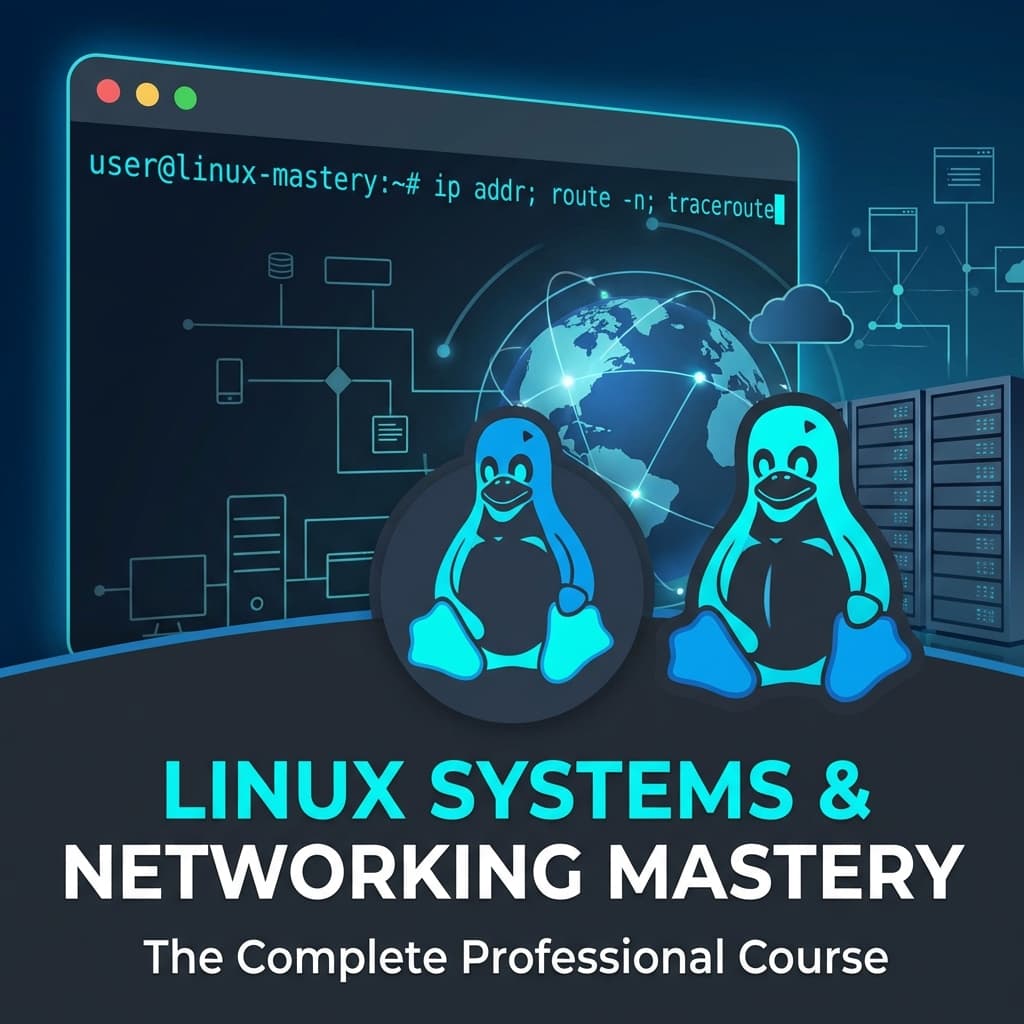
See the invisible packets. Master the tools for deep network inspection. Learn to use 'tcpdump' for terminal-based capture, 'Wireshark' for visual analysis, and 'nmap' for security auditing and port scanning.

Model the behavior. Learn how to use Few-Shot examples to teach your LLM how to parse graph triplets and follow multi-hop reasoning paths correctly.

The syntax of success. Explore the pros and cons of different data formats for presenting Knowledge Graph subgraphs to an LLM and find the one that balances token cost with reasoning accuracy.

Solve the 'Duplicate Entity' problem mathematically. Learn how to use Similarity algorithms to identify when multiple nodes actually represent the same real-world object.

Prepare your knowledge for the spotlight. Learn how to combine centrality, community, and similarity scores into a single 'Retrieval Score' that guides your AI to the best facts in milliseconds.

The two paths to truth. Learn the difference between letting the LLM 'Guess' the connections (Implicit) and providing the exact topological path (Explicit) for reliable answers.

Master the art of 'Chain-of-Topology' prompting. Learn how to instruct an LLM to navigate a series of relationships step-by-step to arrive at a multi-hop logical conclusion.

Iterate to clarity. Learn how to build 'Recursive' retrieval loops where the AI agent queries the graph, evaluates the results, and performs follow-up queries until the information gap is closed.

Stay in the lines. Learn how to inject hard business constraints—like time, budget, or department—into your AI's reasoning chain to ensure its conclusions are practical and permitted.

Solve the 'Conflicting Fact' problem. Learn how to instruct an LLM to identify when two different paths in the graph lead to contradictory conclusions and how to resolve the conflict using 'Mathematical Authority' scores.

The final proof. Learn how to implement a 'Verification Step' that programmatically checks if every claim in the AI's final answer can be traced back to an explicit edge in your Knowledge Graph.

Master the KPIs of Graph RAG. Learn how to calculate Recall, Precision, and Faithfulness, and why these metrics differ when you are measuring connections vs. simple semantic similarity.

Let the AI grade itself. Learn how to use G-Eval to build a 'Judge LLM' that evaluates the reasoning chains and relationship accuracy of your Graph RAG system.

Challenge your AI with the impossible. Learn how to create a diverse suite of test questions that stress-test your graph's depth, breadth, and multi-hop reasoning capabilities.

Detect the invisible lies. Learn how multi-hop reasoning increases the risk of 'Imaginary Links' and how to build automated checks to verify every step of the AI's logical chain.

Measure the speed of thought. Learn how to profile the entire Graph RAG pipeline—from embedding generation to complex graph traversal—to identify the bottlenecks in your AI infrastructure.

Build a self-improving system. Learn how to use user feedback (thumbs up/down) to automatically identified 'Weak Spots' in your graph and refine your ingestion and retrieval strategies over time.

Package your intelligence for the cloud. Learn how to build a production-grade Docker Compose setup that integrates Neo4j, your Python API, and vector stores into a single deployment unit.

Take your Knowledge Graph to the enterprise. Learn the specific deployment patterns for Amazon Neptune, Google Cloud Graph Databases, and Azure Cosmos DB for Apache Gremlin.