Tech
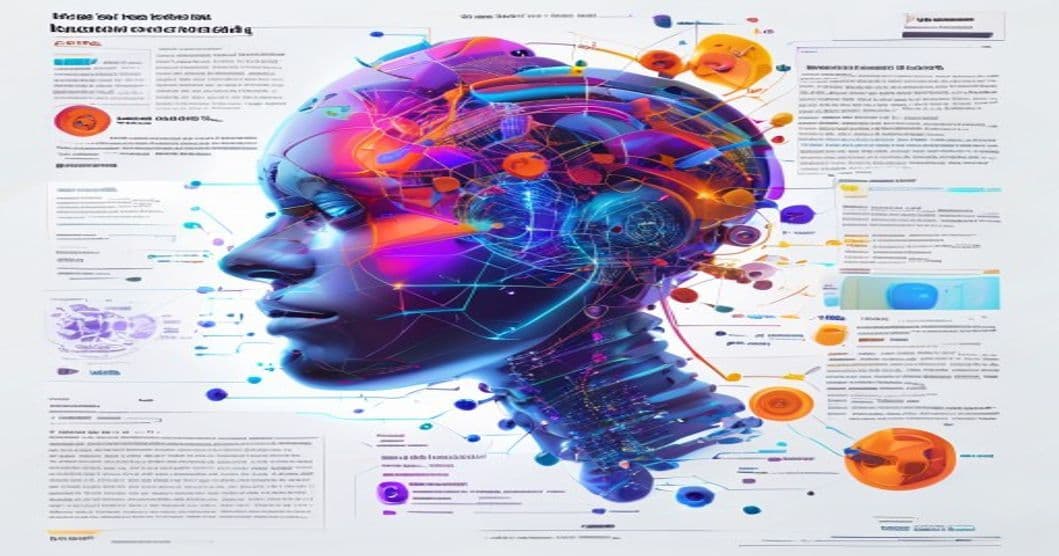
DeepRAG vs. Long-Context: The Engineering Battle for Memory
Does a 2-million-token context window make RAG obsolete? A benchmark study on 'Lost in the Middle' phenomena versus optimized vector search for agentic workflows.
Read Article →
Does a 2-million-token context window make RAG obsolete? A benchmark study on 'Lost in the Middle' phenomena versus optimized vector search for agentic workflows.
Pull back the curtain on Linux identity. Master the architecture of user storage. Understand why passwords don't live in '/etc/passwd' and deep dive into the hashed world of '/etc/shadow'. Learn to manage password aging and identify weak hashes.
How does Linux decide if you are who you say you are? Master 'Pluggable Authentication Modules' (PAM). Understand the modular architecture of Linux identity. Learn to set password complexity rules, implement account lockouts, and customize the login experience.
Grant power without losing control. Master the 'sudo' system and the '/etc/sudoers' file. Learn to give specific users permission to run only certain commands. Understand why you should never edit the file without 'visudo' and how to implement passwordless sudo safely.
Lock down your primary entry point. Master advanced SSH security configurations. Learn to disable password authentication, implement 2FA, change default ports, and use 'Match' blocks for per-user security policies. Understand the logic of sshd_config.
Protect your server while you sleep. Master the security monitoring of Linux. Learn to analyze 'auth.log' for suspicious activity and implement 'Fail2Ban' to automatically block attackers by their IP address. Turn your logs into a weapon against hackers.
Turn raw numbers into actionable insight. Discover the modern observability stack. Learn how 'Prometheus' collects metrics from your Linux server and how 'Grafana' builds beautiful real-time dashboards. Understand the role of the 'Node Exporter' agent.
Stop the disk overflow. Master 'logrotate', the automated cleanup tool for Linux logs. Learn to set up rotation schedules, compress old records to save space, and implement retention policies for compliance. Understand why 'copytruncate' is a lifesaver.
Build a single source of truth. Master 'rsyslog', the enterprise logging daemon. Learn to filter logs into specific files based on severity and facility. Understand how to send your logs to a central 'Log Server' for security and auditing.
Sift through millions of logs in seconds. Master 'journalctl', the powerful query tool for Systemd. Learn to filter by time, by service, and by priority. Discover how to find exactly what happened during the last boot or a specific hour.
Everything that happens in Linux is recorded. Master the dual architecture of Linux logging. Understand the binary 'Systemd Journal' and the plain-text 'Syslog'. Learn where to find critical logs and how they interact to tell the story of your server.
Predict the future of your hardware. Master the 'SMART' self-test system built into every modern hard drive. Learn to use 'smartctl' to identify failing disks before they crash and use 'hdparm' to benchmark your storage performance.
Prepare for the inevitable. Hardware fails, but your data doesn't have to. Master Linux Software RAID with 'mdadm'. Learn the differences between RAID 1 (Mirroring), RAID 5 (Parity), and RAID 10. Understand how to replace a failed drive without losing a single bit.
Ditch the rigid partitions of the past. Master 'Logical Volume Management' (LVM). Learn to pool your disks together, resize volumes while the system is running, and take instant backups using snapshots. Understand the PV -> VG -> LV hierarchy.
Ensure your disks wake up with you. Learn to manage the system's mount table. Master the syntax of the '/etc/fstab' file, understand mount options like 'noatime' and 'nofail', and learn to troubleshoot a system that won't boot due to a missing disk.
Choosing the right floor for your data. Master the formatting of Linux partitions. Learn the differences between the reliable ext4, the high-performance XFS, and the next-gen Btrfs. Understand the 'Label' and 'UUID' identity system.
Before you can store data, you must build the foundation. Master the architecture of Linux partitions. Understand the differences between the classic MBR and the modern GPT formats. Learn to use 'fdisk', 'gdisk', and 'parted' to prepare your disks.
See the invisible packets. Master the tools for deep network inspection. Learn to use 'tcpdump' for terminal-based capture, 'Wireshark' for visual analysis, and 'nmap' for security auditing and port scanning.
Bridge the distance. Learn to connect remote servers securely across the public internet. Master 'WireGuard', the modern, fast, and simple VPN standard. Explore 'OpenVPN' for enterprise scale and understand the logic of Tun/Tap interfaces.
Warp through firewalls and surf securely. Master the art of SSH Tunneling. Learn Local Port Forwarding to access private databases, Remote Port Forwarding to share your local work, and Dynamic SOCKS proxies to encrypt your entire web experience.
Know your weaknesses before a hacker does. Master 'Lynis', the industry-standard security auditing tool for Linux. Learn to perform a full system scan, interpret the security index, and follow the remediation guide to harden your server.
Why are standard permissions not enough? Discover the power of Mandatory Access Control (MAC). Learn the difference between DAC (Discretionary) and MAC. Understand why a 'Root Compromise' shouldn't mean the end of your server.
Face the most powerful security system in the world. Master 'Security-Enhanced Linux' (SELinux). Learn to manage labels (Contexts), troubleshoot denials with 'sealert', and use 'Booleans' to toggle security features without a reboot.
Master the security shield of Ubuntu and Debian. Explore 'AppArmor'. Learn to manage security profiles based on file paths. Understand how to put individual programs in 'Complain' mode and how to 'Harden' a profile to prevent unauthorized file access.
Detect the invisible intruder. Master 'AIDE' (Advanced Intrusion Detection Environment). Learn to take a 'Snapshot' of your system's integrity and use file hashes to detect even the slightest unauthorized change to critical system binaries like 'ls' or 'ssh'.
Fortify the brain of Linux. Learn to use 'sysctl' to tune kernel parameters for maximum security. Master 'Anti-Spoofing', 'IP Forwarding' controls, and 'ASLR' (Address Space Layout Randomization). Protect the bootloader with GRUB passwords.
Coordinate your defense. Discover the world of 'Security Information and Event Management' (SIEM). Learn how to aggregate logs from 100 servers into a single dashboard. Explore the ELK/Elastic stack and understand the logic of 'Alert Correlation'.
Zero downtime is the goal. Discover the architecture of High Availability (HA). Learn the difference between Active-Passive and Active-Active clusters. Understand the concepts of 'Failover', 'Heartbeats', and 'The Split-Brain' problem.
Build your first failover cluster. Master 'Keepalived' and the VRRP protocol. Learn to share a single IP address between two servers. Understand priority settings, health checks, and how to trigger scripts when a failover happens.
Build a high-performance traffic controller. Master 'HAProxy', the industry standard for load balancing. Learn to distribute traffic between multiple web servers, implement 'Sticky Sessions' for user login persistence, and use the 'Stats' dashboard to monitor your traffic flow.
Keep your cluster in perfect harmony. Master 'rsync' for efficient file transfers and 'lsyncd' for real-time, event-based synchronization. Learn to mirror your web assets across 10 servers in milliseconds without manual intervention.
Protect your most valuable asset: your data. Master the architecture of Database High Availability. Learn the difference between 'Primary-Replica' and 'Multi-Primary' clusters. Understand the logic of the Binlog and the 'Read-Write Split'.
Bring the world closer. Master the logic of Global High Availability. Learn to use 'Geo-Routing' to send users to the closest data center, understand 'Anycast' for ultra-reliable DNS, and learn to automate failover between whole cities using Dynamic DNS.
Why is your server slow? Master the methodology of performance troubleshooting. Learn to distinguish between CPU-Bound, RAM-Bound, and I/O-Bound issues. Understand the 'Load Average' and learn where to look when the system starts to crawl.
Master the most common tools in the Linux world. Go beyond basic sorting. Learn to use 'top' in batch mode, color-code your 'htop' view, and understand the difference between VIRT, RES, and SHR memory. Identify which process is truly killing your server.
Solve the mysterious slowness. Master the tools for disk performance analysis. Learn to use 'iostat' to measure disk throughput and 'iotop' to identify exactly which process is 'Thrashing' your hard drive. Understand why 100% disk usage can break a 16-core CPU.
Squeeze every megabit out of your connection. Master the art of Linux network optimization. Learn to tune TCP 'Backlogs', increase 'Window Sizes' for high-latency links, and understand the logic of 'Congestion Control' (BBR).
Master the logic of Linux memory allocation. Learn why 'Free RAM' is actually a waste. Understand the 'Swappiness' parameter and how it affects performance. Learn to handle the 'OOM (Out of Memory) Killer'—the kernel's final tool for survival.
Go deeper than the dashboard. Master the tools for atomic-level troubleshooting. Learn to use 'strace' to watch a program's interaction with the kernel and 'perf' to find exactly which line of code is consuming your CPU.
How does Docker actually work? Peek behind the curtain of Linux Namespaces. Learn how the kernel creates the 'Illusion' of a private system for a single process. Understand PID, Network, and Mount namespaces.
Keep your processes in check. Master Linux 'Control Groups' (Cgroups). Learn how the kernel limits CPU usage, RAM allocation, and Disk I/O speed. Understand why a single runaway container can't crash your entire server.
Peel back the layers of a container. Master 'OverlayFS' and Union Filesystems. Learn how Linux stacks multiple directories to create a single 'View'. Understand 'Copy-on-Write' and why container images are so space-efficient.

How did we get here? Trace the history of containerization. From the 1979 'chroot' jail to modern 'OCI' standards. Learn the difference between Docker, Containerd, and RunC. Understand why Docker is just a 'User Interface' for the kernel.
How does Linux manage 10,000 containers? Master the relationship between the Linux Kernel and Kubernetes (K8s). Understand the logic of the 'Pod', the 'CRI', and how the kernel handles K8s-defined networking and storage.
Lock down your containers for production. Master Linux 'Capabilities' and 'Seccomp' profiles. Learn to remove the 'Root' power from within a container and restrict which kernel functions a process is allowed to call.
Stop clicking, start coding. Master 'Infrastructure as Code' (IaC) with Terraform. Learn to define your Linux servers, networks, and firewalls in simple text files. Understand the 'State File' and how to version your infrastructure like your code.
Configure 1,000 servers simultaneously. Master 'Ansible', the agentless configuration management tool. Learn to write 'Playbooks' (YAML) to install software, manage users, and deploy configurations. Understand why 'Idempotency' is your new best friend.
How does a cloud server know your SSH key before you log in? Master 'Cloud-Init', the multi-distribution package that handles early initialization. Learn to automate user creation, package installation, and script execution at the very first boot.
Master the heart of modern development. Learn how Linux powers CI/CD pipelines. Understand 'Runners', 'Agents', and 'Build Servers'. Learn to write a deploy script that updates a production server securely from a GitHub or GitLab action.
Build perfectly repeatable systems. Master 'Packer', the tool for creating 'Golden Images'. Learn to automate the creation of Amazon AMIs, Azure VHDs, and VMware templates. Eliminate the 'Configuration Drift' of the first boot.