AI News
xAI's Grok 4.3 Voice Push Turns Cheap Multimodal AI Into a Platform Weapon
xAI shipped Grok 4.3 and a fast voice-cloning suite, using low pricing and media generation to pressure larger AI labs.
Read Article →
xAI shipped Grok 4.3 and a fast voice-cloning suite, using low pricing and media generation to pressure larger AI labs.

Google's April AI updates connect Gemini Enterprise agents, Gemma 4, chips, Vids, Colab, and Deep Research into one stack.

Huawei's expected AI chip gains in China show how export controls are pushing inference hardware, software, and sovereignty together.

China's move to block Meta's Manus AI deal shows how autonomous-agent startups are becoming national technology assets.

China's new campaign against disorder in AI apps highlights filing, security review, training data, and labeling as control points.

EU outreach to Anthropic over Mythos turns frontier AI safety into a live cybersecurity and banking resilience question.
OpenAI is reportedly building a multibillion-dollar enterprise AI deployment vehicle with private-equity backers.
Microsoft is framing AI adoption around four modes of human-agent work: author, editor, director, and orchestrator.

CAISI is reportedly expanding pre-deployment testing with Google DeepMind, Microsoft, and xAI, making frontier model release governance harder to ignore.
U.S. officials are reportedly escalating claims that Chinese AI firms used distillation to replicate American frontier model capability.
Meta’s Q1 2026 results raised capex guidance to $125B-$145B as AI infrastructure becomes the company’s main strategic bet.
IBM’s watsonx Orchestrate eCommerce pilot packages partner-built AI agents with procurement, governance, and workflow orchestration.
Google is rolling Gemini into cars with Google built-in, while GM prepares OTA updates for roughly 4 million vehicles.

Anthropic is reportedly nearing a $1.5B Wall Street joint venture to sell AI tools into private-equity-backed companies.
NVIDIA Ising open AI models target quantum calibration and error correction, positioning AI as the control layer for practical quantum computing.

Google DeepMind announced an AI co-clinician research initiative for AI-augmented care, aiming to amplify doctors rather than replace them.
Anthropic released Claude connectors for Adobe, Blender, Autodesk Fusion, Ableton, Splice, and other creative tools, turning Claude into a production-side agent.
The Pentagon signed AI agreements with OpenAI, Google, NVIDIA, and four others for classified military networks. Anthropic was ejected after refusing to drop its prohibition on autonomous lethal weapons.
Colorado's proposed AI Act revision shifts from regulating high-risk systems to regulating high-risk decisions. The change could set the template for the entire US approach to AI governance.
OpenAI's GPT-5.5 'Spud' redefines the frontier as a worker-class model built for autonomous task completion. Benchmarks reveal a neck-and-neck battle with Claude Opus 4.7 across agentic workloads.
AI startups captured 80% of all global venture funding in Q1 2026, signaling a fundamental economic shift rather than a trend. Here is where the $242 billion is flowing.
Locus Robotics launches Locus Array, marking the transition from 'Smart Robots' to autonomous 'Physical AI Agents' in our shared spaces.
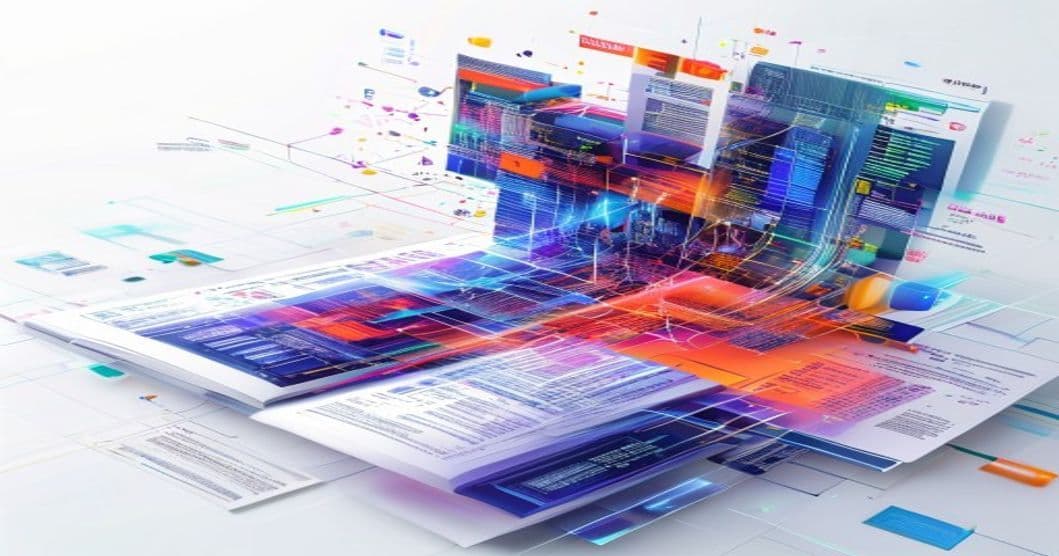
As autonomous agents dominate the enterprise, the A2A (Agent-to-Agent) Protocol emerges to standardize how digital workers collaborate.
Meta is pivoting from social media to 'Personal Superintelligence,' backed by $135B in 2026 infrastructure spending and a flurry of secret hardware prototypes designed for zero-latency AI.
April 2026 marks a strategic divergence in the AI labs' M&A playbooks: OpenAI is building a media fortress, while Anthropic is embedding itself in the code of life.
Google Research has unveiled TurboQuant, a revolutionary algorithm that reduces AI memory usage by 6x, potentially ending the 'GPU drought' and enabling frontier models to run on mobile devices.
Researchers at USC have broken the thermal barrier of AI hardware with new memristor-based memory devices capable of operating at extreme temperatures.

Analyzing Google DeepMind's landmark contract with the DoD and the internal dissent it sparked. We explore the ethics of autonomous systems, Project Maven 2.0, and the debate over machine consciousness.

A deeply technical architectural exploration of Google's dual-architecture TPU 8 series, the 121-exaflop superpods, and the coopetitive integration of NVIDIA's Vera Rubin.

A comprehensive analysis of the late April 2026 model releases. We compare GPT-5.5's agentic dominance, Claude 4.7's reasoning prowess, and DeepSeek-V4's hardware-fused disruption on Huawei silicon.
GitHub Copilot CLI reaches General Availability, introducing the 'Rubber Duck' cross-model verification protocol to the command line.
Google DeepMind's 'Decoupled DiLoCo' allows for model training across heterogeneous hardware, ending the dependency on massive, uniform superclusters.
AI is moving beyond drug discovery into the mapping of the 'biological dark matter.' The Billion Cell Atlas is using multimodal agents to identify the exact triggers of disease before they manifest.

A technical deep dive into Google DeepMind's Decoupled DiLoCo. Learn how this new asynchronous training architecture enables resilient, distributed AI training across the globe, powering the next wave of autonomous agents.
The pharmaceutical industry is undergoing an AI-native transformation. We explore how predictive toxicology and multi-omics are accelerating drug discovery and chemical safety in 2026.

A deep dive into the $100 billion, 5-gigawatt deal between Amazon and Anthropic. We analyze the shift to custom silicon, the nuclear energy strategies powering 2026's AI hubs, and the race for compute sovereignty.
A landmark study from the University of Southern California reveals a disturbing trend: as we use AI to create, our thinking is becoming increasingly uniform.
A new CAMH study reveals how clinical AI risk-prediction models are inadvertently reinforcing systemic biases against marginalized populations in psychiatry.
Does a 2-million-token context window make RAG obsolete? A benchmark study on 'Lost in the Middle' phenomena versus optimized vector search for agentic workflows.
OpenAI models, Codex, and Managed Agents are entering Amazon Bedrock in limited preview, changing enterprise AI procurement and governance.

Anthropic’s Claude Security public beta gives enterprise teams AI-assisted code scanning, validation, and patch workflows powered by Opus 4.7.

Meta’s plan to add tens of millions of AWS Graviton cores reframes agentic AI infrastructure beyond GPUs and training clusters.

NIST’s AI RMF critical infrastructure concept note gives utilities and operators an early map for trustworthy AI risk management.

The Pentagon’s classified AI agreements show how frontier models are moving from demos into defense networks with unresolved governance stakes.

ServiceNow and Google Cloud’s AI agent partnership brings A2A, A2UI, MCP, governance, and workflow execution into one enterprise story.
OpenAI Advanced Account Security brings passkeys, hardware keys, stricter recovery, and training exclusion to ChatGPT and Codex accounts.
Google DeepMind's TurboQuant breakthrough at ICLR 2026 promises to solve the KV cache bottleneck. We analyze the math behind cognitive density and inference optimization.

Anthropic's Project Glasswing restricts access to its most powerful model, Claude Mythos, for cybersecurity defense. We explore the 'Dual-Use' dilemma of 2026.

In the spring of 2026, the hype of Agentic AI has hit a wall of organizational reality. We explore the governance, data, and evaluation gaps preventing the 90% from reaching production.

Explore the massive shift from reactive chatbots to autonomous agentic workflows in 2026. A deep dive into enterprise adoption, ROI metrics, and the technical architecture of the new digital baseline.