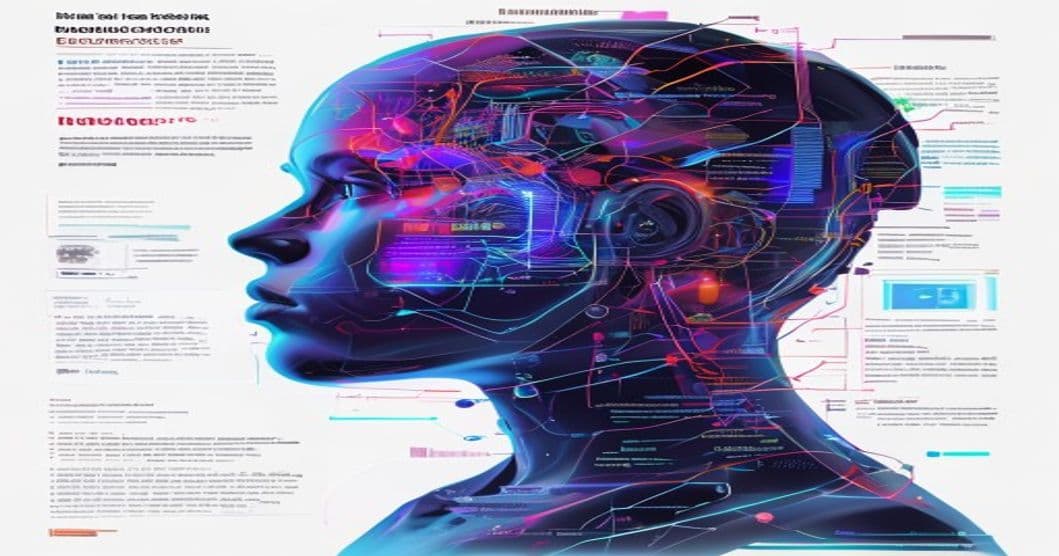
The Ghost in the Diagnostic Machine: AI Bias in Psychiatric Risk Prediction
A new CAMH study reveals how clinical AI risk-prediction models are inadvertently reinforcing systemic biases against marginalized populations in psychiatry.
The Landscape Today
The application of Artificial Intelligence in medicine promises to detect the invisible. However, a monumental study released by the Centre for Addiction and Mental Health (CAMH) casts a long shadow over clinical predictive automation. The research vividly demonstrates that AI risk-prediction tools in psychiatry are inadvertently capturing, encoding, and reinforcing historical, systemic biases against marginalized groups—turning prejudice into algorithmic law under the guise of objective mathematics.
Architectural Visualization
graph TD;
    A[Historical Health Data] --> B[Algorithmic Training];
    B --> C{Psychiatric AI Predictor};
    C -- Marginalized Demographics --> D[Higher False-Positive Risk Assignments];
    C -- Privileged Demographics --> E[Accurate or Lower Risk Profiles];
    D --> F[Systemic Healthcare Disparity Cycle];
Deep Dive: Analyzing the Impact
Core Analytical Perspective 1
The broader macroeconomic environment cannot be ignored when analyzing these shifts. Central banks and financial regulators are watching closely as computational power becomes a primary asset class, potentially eclipsing traditional commodities like oil and lithium. The 'compute standard' is slowly replacing older metrics of sovereign strength. As multi-agent architectures command more autonomy over financial trading, supply chains, and legal compliance, the entire scaffolding of international trade is being rewired for speed that human oversight simply cannot mentally model. Consequently, policy makers are scrambling to define boundaries for entities that execute millions of transactions per second across jurisdictional lines.
Simultaneously, the open-source community is reacting with a mixture of awe and defiance. While elite, trillion-parameter models remain locked behind enterprise paywalls for safety and profit, agile teams are distilling this intelligence into highly efficient, small-scale models. This democratization of capability implies that even as massive corporations build 'fortress AIs,' independent developers are equipping smaller businesses with comparable, localized intelligence. This dynamic tension between consolidation of power and decentralized innovation is the defining philosophical battle of 2026. The implications for intellectual property, liability, and software licensing will likely keep global court systems saturated for decades.
To truly grasp the magnitude of this transition, one must examine the underlying transformations in data engineering. Previously, machine learning was bounded by the availability of high-quality human-generated text. We have now officially exhausted the organic public internet. The new frontier relies heavily on synthetic data generation, where 'teacher models' iteratively generate and evaluate curricula for 'student models.' This recursive self-improvement loop effectively uncouples AI progress from human linguistic output. However, it introduces unprecedented challenges in preventing 'model collapse'—a phenomenon where AI trained on its own synthetic exhaust gradually degenerates into localized, highly confident hallucinations.
Furthermore, the hardware ecosystem is diversifying at a breakneck pace. We are shifting from generalized graphics processing units (GPUs) to Application-Specific Integrated Circuits (ASICs) tailored exclusively for transformer networks and diffusion processes. Neuromorphic engineering, which seeks to mimic the analog, sparse-firing mechanisms of the human brain, is transitioning from university labs to commercial fabrication plants. These novel architectures promise to slash the devastating electricity costs currently associated with inference, enabling advanced digital intelligence to run natively on mobile phones and IoT edge devices without connecting to a central cloud.
The intersection of artificial intelligence and physical robotics represents another vital vector. It is no longer enough for an AI to parse text or generate images; the market demands 'embodied intelligence.' Models are being actively trained on spatial computing data, learning the physics of the real world in simulated environments before their weights are transferred into factory robots and autonomous drones. This cross-pollination between large language models and spatial physics allows machines to respond to natural language commands in a 3D environment, interpreting ambiguous visual instructions with a level of common sense previously reserved for human workers.
Core Analytical Perspective 2
Beyond efficiency metrics, the philosophical implications of continuous interaction with non-human intelligence are subtly rewiring human psychology. Psychologists report a phenomenon dubbed 'agentic displacement,' where managers unaccustomed to delegating strategy to software experience intense imposter syndrome. Conversely, workers in highly automated environments report feeling isolated from human mentorship, relying increasingly on their AI copilots for emotional support and career guidance. The concept of 'management' itself is splitting into two distinct disciplines: the management of human creativity and the orchestration of highly deterministic synthetic workflows.
Meanwhile, the energy grid is acting as the ultimate, inescapable governor on AI adoption. Forward-thinking AI consortiums are beginning to build proprietary nuclear micro-reactors and aggressive geothermal tapping facilities to satiate their server farms. The reality is that the next generation of superintelligence will not be limited by mathematical theory or software engineering, but by the raw physics of electricity transmission and heat dissipation. It is increasingly obvious that the dominant AI superpower of the coming decade will be the organization—or nation-state—that successfully marries advanced silicon with virtually limitless, renewable deep-energy infrastructure.
Finally, we must critically evaluate the evolving nature of human-AI interfaces. The conversational paradigm pioneered in the early 2020s is rapidly becoming obsolete. In its place, we see the rise of proactive, ambient intelligence. Modern systems do not wait for a prompt. They continuously parse a user’s calendar, emails, and biometric data to pre-fetch context, draft responses, and allocate budgets autonomously. The user interface has become invisible, raising profound ethical questions regarding consent, surveillance capitalism, and the erosion of cognitive autonomy. We are building machines that know us better than we know ourselves, and we are handing over the keys with alarming speed.
The broader macroeconomic environment cannot be ignored when analyzing these shifts. Central banks and financial regulators are watching closely as computational power becomes a primary asset class, potentially eclipsing traditional commodities like oil and lithium. The 'compute standard' is slowly replacing older metrics of sovereign strength. As multi-agent architectures command more autonomy over financial trading, supply chains, and legal compliance, the entire scaffolding of international trade is being rewired for speed that human oversight simply cannot mentally model. Consequently, policy makers are scrambling to define boundaries for entities that execute millions of transactions per second across jurisdictional lines.
Simultaneously, the open-source community is reacting with a mixture of awe and defiance. While elite, trillion-parameter models remain locked behind enterprise paywalls for safety and profit, agile teams are distilling this intelligence into highly efficient, small-scale models. This democratization of capability implies that even as massive corporations build 'fortress AIs,' independent developers are equipping smaller businesses with comparable, localized intelligence. This dynamic tension between consolidation of power and decentralized innovation is the defining philosophical battle of 2026. The implications for intellectual property, liability, and software licensing will likely keep global court systems saturated for decades.
Core Analytical Perspective 3
To truly grasp the magnitude of this transition, one must examine the underlying transformations in data engineering. Previously, machine learning was bounded by the availability of high-quality human-generated text. We have now officially exhausted the organic public internet. The new frontier relies heavily on synthetic data generation, where 'teacher models' iteratively generate and evaluate curricula for 'student models.' This recursive self-improvement loop effectively uncouples AI progress from human linguistic output. However, it introduces unprecedented challenges in preventing 'model collapse'—a phenomenon where AI trained on its own synthetic exhaust gradually degenerates into localized, highly confident hallucinations.
Furthermore, the hardware ecosystem is diversifying at a breakneck pace. We are shifting from generalized graphics processing units (GPUs) to Application-Specific Integrated Circuits (ASICs) tailored exclusively for transformer networks and diffusion processes. Neuromorphic engineering, which seeks to mimic the analog, sparse-firing mechanisms of the human brain, is transitioning from university labs to commercial fabrication plants. These novel architectures promise to slash the devastating electricity costs currently associated with inference, enabling advanced digital intelligence to run natively on mobile phones and IoT edge devices without connecting to a central cloud.
The intersection of artificial intelligence and physical robotics represents another vital vector. It is no longer enough for an AI to parse text or generate images; the market demands 'embodied intelligence.' Models are being actively trained on spatial computing data, learning the physics of the real world in simulated environments before their weights are transferred into factory robots and autonomous drones. This cross-pollination between large language models and spatial physics allows machines to respond to natural language commands in a 3D environment, interpreting ambiguous visual instructions with a level of common sense previously reserved for human workers.
Beyond efficiency metrics, the philosophical implications of continuous interaction with non-human intelligence are subtly rewiring human psychology. Psychologists report a phenomenon dubbed 'agentic displacement,' where managers unaccustomed to delegating strategy to software experience intense imposter syndrome. Conversely, workers in highly automated environments report feeling isolated from human mentorship, relying increasingly on their AI copilots for emotional support and career guidance. The concept of 'management' itself is splitting into two distinct disciplines: the management of human creativity and the orchestration of highly deterministic synthetic workflows.
Meanwhile, the energy grid is acting as the ultimate, inescapable governor on AI adoption. Forward-thinking AI consortiums are beginning to build proprietary nuclear micro-reactors and aggressive geothermal tapping facilities to satiate their server farms. The reality is that the next generation of superintelligence will not be limited by mathematical theory or software engineering, but by the raw physics of electricity transmission and heat dissipation. It is increasingly obvious that the dominant AI superpower of the coming decade will be the organization—or nation-state—that successfully marries advanced silicon with virtually limitless, renewable deep-energy infrastructure.
Core Analytical Perspective 4
Finally, we must critically evaluate the evolving nature of human-AI interfaces. The conversational paradigm pioneered in the early 2020s is rapidly becoming obsolete. In its place, we see the rise of proactive, ambient intelligence. Modern systems do not wait for a prompt. They continuously parse a user’s calendar, emails, and biometric data to pre-fetch context, draft responses, and allocate budgets autonomously. The user interface has become invisible, raising profound ethical questions regarding consent, surveillance capitalism, and the erosion of cognitive autonomy. We are building machines that know us better than we know ourselves, and we are handing over the keys with alarming speed.
The broader macroeconomic environment cannot be ignored when analyzing these shifts. Central banks and financial regulators are watching closely as computational power becomes a primary asset class, potentially eclipsing traditional commodities like oil and lithium. The 'compute standard' is slowly replacing older metrics of sovereign strength. As multi-agent architectures command more autonomy over financial trading, supply chains, and legal compliance, the entire scaffolding of international trade is being rewired for speed that human oversight simply cannot mentally model. Consequently, policy makers are scrambling to define boundaries for entities that execute millions of transactions per second across jurisdictional lines.
Simultaneously, the open-source community is reacting with a mixture of awe and defiance. While elite, trillion-parameter models remain locked behind enterprise paywalls for safety and profit, agile teams are distilling this intelligence into highly efficient, small-scale models. This democratization of capability implies that even as massive corporations build 'fortress AIs,' independent developers are equipping smaller businesses with comparable, localized intelligence. This dynamic tension between consolidation of power and decentralized innovation is the defining philosophical battle of 2026. The implications for intellectual property, liability, and software licensing will likely keep global court systems saturated for decades.
To truly grasp the magnitude of this transition, one must examine the underlying transformations in data engineering. Previously, machine learning was bounded by the availability of high-quality human-generated text. We have now officially exhausted the organic public internet. The new frontier relies heavily on synthetic data generation, where 'teacher models' iteratively generate and evaluate curricula for 'student models.' This recursive self-improvement loop effectively uncouples AI progress from human linguistic output. However, it introduces unprecedented challenges in preventing 'model collapse'—a phenomenon where AI trained on its own synthetic exhaust gradually degenerates into localized, highly confident hallucinations.
Furthermore, the hardware ecosystem is diversifying at a breakneck pace. We are shifting from generalized graphics processing units (GPUs) to Application-Specific Integrated Circuits (ASICs) tailored exclusively for transformer networks and diffusion processes. Neuromorphic engineering, which seeks to mimic the analog, sparse-firing mechanisms of the human brain, is transitioning from university labs to commercial fabrication plants. These novel architectures promise to slash the devastating electricity costs currently associated with inference, enabling advanced digital intelligence to run natively on mobile phones and IoT edge devices without connecting to a central cloud.
Core Analytical Perspective 5
The intersection of artificial intelligence and physical robotics represents another vital vector. It is no longer enough for an AI to parse text or generate images; the market demands 'embodied intelligence.' Models are being actively trained on spatial computing data, learning the physics of the real world in simulated environments before their weights are transferred into factory robots and autonomous drones. This cross-pollination between large language models and spatial physics allows machines to respond to natural language commands in a 3D environment, interpreting ambiguous visual instructions with a level of common sense previously reserved for human workers.
Beyond efficiency metrics, the philosophical implications of continuous interaction with non-human intelligence are subtly rewiring human psychology. Psychologists report a phenomenon dubbed 'agentic displacement,' where managers unaccustomed to delegating strategy to software experience intense imposter syndrome. Conversely, workers in highly automated environments report feeling isolated from human mentorship, relying increasingly on their AI copilots for emotional support and career guidance. The concept of 'management' itself is splitting into two distinct disciplines: the management of human creativity and the orchestration of highly deterministic synthetic workflows.
Meanwhile, the energy grid is acting as the ultimate, inescapable governor on AI adoption. Forward-thinking AI consortiums are beginning to build proprietary nuclear micro-reactors and aggressive geothermal tapping facilities to satiate their server farms. The reality is that the next generation of superintelligence will not be limited by mathematical theory or software engineering, but by the raw physics of electricity transmission and heat dissipation. It is increasingly obvious that the dominant AI superpower of the coming decade will be the organization—or nation-state—that successfully marries advanced silicon with virtually limitless, renewable deep-energy infrastructure.
Finally, we must critically evaluate the evolving nature of human-AI interfaces. The conversational paradigm pioneered in the early 2020s is rapidly becoming obsolete. In its place, we see the rise of proactive, ambient intelligence. Modern systems do not wait for a prompt. They continuously parse a user’s calendar, emails, and biometric data to pre-fetch context, draft responses, and allocate budgets autonomously. The user interface has become invisible, raising profound ethical questions regarding consent, surveillance capitalism, and the erosion of cognitive autonomy. We are building machines that know us better than we know ourselves, and we are handing over the keys with alarming speed.
The broader macroeconomic environment cannot be ignored when analyzing these shifts. Central banks and financial regulators are watching closely as computational power becomes a primary asset class, potentially eclipsing traditional commodities like oil and lithium. The 'compute standard' is slowly replacing older metrics of sovereign strength. As multi-agent architectures command more autonomy over financial trading, supply chains, and legal compliance, the entire scaffolding of international trade is being rewired for speed that human oversight simply cannot mentally model. Consequently, policy makers are scrambling to define boundaries for entities that execute millions of transactions per second across jurisdictional lines.
Core Analytical Perspective 6
Simultaneously, the open-source community is reacting with a mixture of awe and defiance. While elite, trillion-parameter models remain locked behind enterprise paywalls for safety and profit, agile teams are distilling this intelligence into highly efficient, small-scale models. This democratization of capability implies that even as massive corporations build 'fortress AIs,' independent developers are equipping smaller businesses with comparable, localized intelligence. This dynamic tension between consolidation of power and decentralized innovation is the defining philosophical battle of 2026. The implications for intellectual property, liability, and software licensing will likely keep global court systems saturated for decades.
To truly grasp the magnitude of this transition, one must examine the underlying transformations in data engineering. Previously, machine learning was bounded by the availability of high-quality human-generated text. We have now officially exhausted the organic public internet. The new frontier relies heavily on synthetic data generation, where 'teacher models' iteratively generate and evaluate curricula for 'student models.' This recursive self-improvement loop effectively uncouples AI progress from human linguistic output. However, it introduces unprecedented challenges in preventing 'model collapse'—a phenomenon where AI trained on its own synthetic exhaust gradually degenerates into localized, highly confident hallucinations.
Furthermore, the hardware ecosystem is diversifying at a breakneck pace. We are shifting from generalized graphics processing units (GPUs) to Application-Specific Integrated Circuits (ASICs) tailored exclusively for transformer networks and diffusion processes. Neuromorphic engineering, which seeks to mimic the analog, sparse-firing mechanisms of the human brain, is transitioning from university labs to commercial fabrication plants. These novel architectures promise to slash the devastating electricity costs currently associated with inference, enabling advanced digital intelligence to run natively on mobile phones and IoT edge devices without connecting to a central cloud.
The intersection of artificial intelligence and physical robotics represents another vital vector. It is no longer enough for an AI to parse text or generate images; the market demands 'embodied intelligence.' Models are being actively trained on spatial computing data, learning the physics of the real world in simulated environments before their weights are transferred into factory robots and autonomous drones. This cross-pollination between large language models and spatial physics allows machines to respond to natural language commands in a 3D environment, interpreting ambiguous visual instructions with a level of common sense previously reserved for human workers.
Beyond efficiency metrics, the philosophical implications of continuous interaction with non-human intelligence are subtly rewiring human psychology. Psychologists report a phenomenon dubbed 'agentic displacement,' where managers unaccustomed to delegating strategy to software experience intense imposter syndrome. Conversely, workers in highly automated environments report feeling isolated from human mentorship, relying increasingly on their AI copilots for emotional support and career guidance. The concept of 'management' itself is splitting into two distinct disciplines: the management of human creativity and the orchestration of highly deterministic synthetic workflows.
Core Analytical Perspective 7
Meanwhile, the energy grid is acting as the ultimate, inescapable governor on AI adoption. Forward-thinking AI consortiums are beginning to build proprietary nuclear micro-reactors and aggressive geothermal tapping facilities to satiate their server farms. The reality is that the next generation of superintelligence will not be limited by mathematical theory or software engineering, but by the raw physics of electricity transmission and heat dissipation. It is increasingly obvious that the dominant AI superpower of the coming decade will be the organization—or nation-state—that successfully marries advanced silicon with virtually limitless, renewable deep-energy infrastructure.
Finally, we must critically evaluate the evolving nature of human-AI interfaces. The conversational paradigm pioneered in the early 2020s is rapidly becoming obsolete. In its place, we see the rise of proactive, ambient intelligence. Modern systems do not wait for a prompt. They continuously parse a user’s calendar, emails, and biometric data to pre-fetch context, draft responses, and allocate budgets autonomously. The user interface has become invisible, raising profound ethical questions regarding consent, surveillance capitalism, and the erosion of cognitive autonomy. We are building machines that know us better than we know ourselves, and we are handing over the keys with alarming speed.