Ledger's Agent Stack Is a Warning That Autonomous AI Needs Financial Seatbelts
Ledger's hardware-backed Agent Stack points to a coming era where AI agents need permissioning, identity, and transaction controls before they can act.
Reports that Moonshot is preparing Kimi K3 to challenge Anthropic's lead point to a market where specialization, pricing, and speed matter more every week.
Europe's new Google order is not only about search or Android. It is about who gets to distribute AI assistants at scale.
Meta's new parental notification system for teen self-harm conversations turns AI safety into a product, privacy, and liability problem at once.
Japan's new NVIDIA-backed national AI infrastructure is more than a chip deal: it is a blueprint for physical AI, robotics, and industrial sovereignty.
Bloomberg, Reuters, and TechCrunch point to a movable, screenless OpenAI speaker that would turn ChatGPT into ambient hardware instead of another app.
A new report says Google’s AI search features pose unacceptable risk to children, pushing AI search toward age-aware design and stronger guardrails.
A wave of reporting says Meta workers are suing over claims AI systems helped target employees on leave, forcing algorithmic management into the legal spotlight.
Reuters, CNBC, and Bloomberg show Apple moving closer to a China-specific AI rollout that puts Alibaba’s Qwen inside the distribution chain.
Startups are routing work to DeepSeek, Qwen, and other lower-cost Chinese models because frontier inference has become too expensive to treat as the default.
SoftBank\u2019s prediction that AI will require $5 trillion a year by 2040 reframes the bubble debate: the question is no longer whether the market is overheated, but who can finance the buildout.
Nvidia\u2019s reported reduction of its Asia buyer list suggests export controls are no longer just a compliance issue; they are becoming a way to ration access to AI capacity.
IBM\u2019s warning that AI is squeezing software budgets captures a new enterprise reality: companies are paying for AI twice, once in new tools and again in the systems they have to replace.
OpenAI\u2019s real-time voice models show that the next AI interface battle is not about prompt quality alone; it is about who owns the conversation layer and the habits that come with it.
New York\u2019s first statewide data center moratorium shows that AI load growth has become a statehouse fight over ratepayer protection, grid capacity, and who gets to absorb the cost of scale.
Satya Nadella\u2019s warning that firms may be giving away their own know-how to LLM providers turns AI adoption into a new knowledge-bargain problem for enterprises.
Anthropic\u2019s move to bring Claude Cowork to mobile and web pushes agent adoption out of desktop demos and into persistent, cross-device work.
Meta\u2019s Louisiana expansion to a five-gigawatt campus and more than $50 billion in planned investment shows how AI infrastructure is now being fought over through tax incentives and local politics.
Google\u2019s AI disclosure labels for ads show that synthetic creative is becoming a provenance and compliance problem, not just a creative one.
The White House push to make utilities and data centers accept AI power-cost limits is turning infrastructure growth into a direct fight over who pays for the grid.

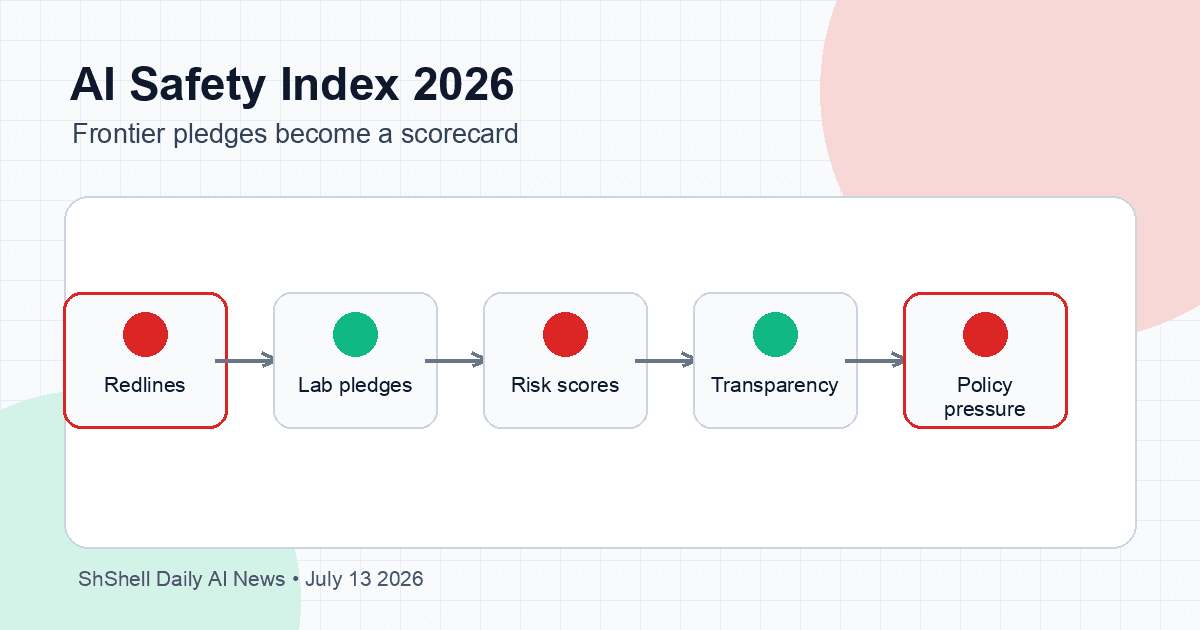
The Future of Life Institute's Summer 2026 AI Safety Index says frontier AI firms weakened pledges as capabilities kept advancing.

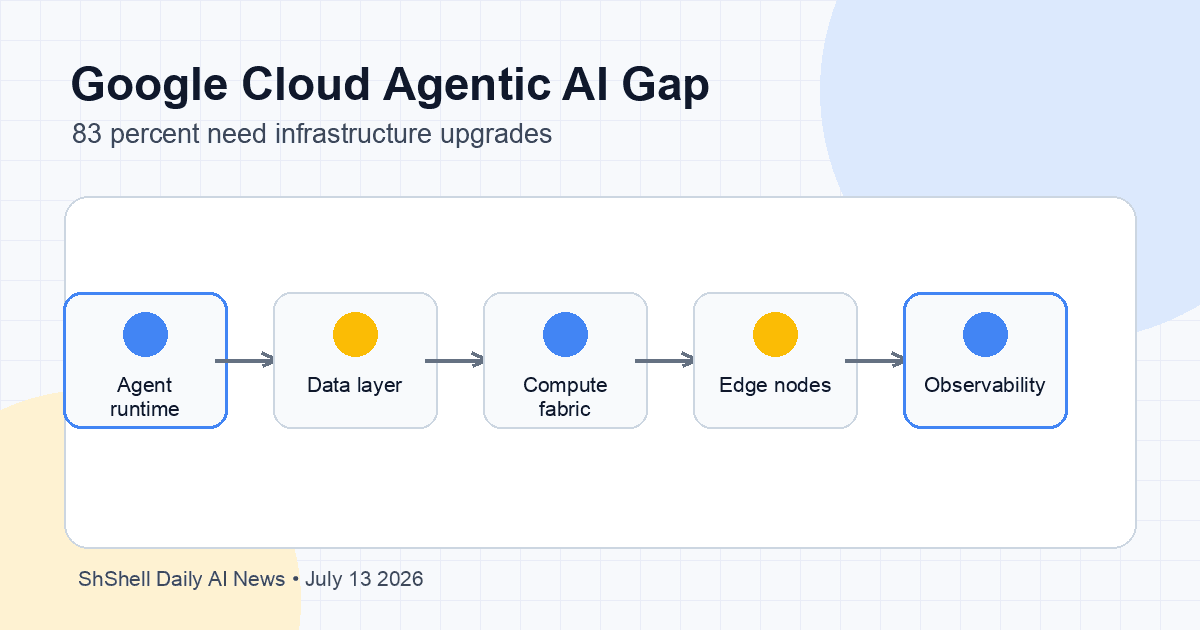
Google Cloud's 2026 infrastructure report says 83 percent of organizations need upgrades before agentic AI can run at production scale.

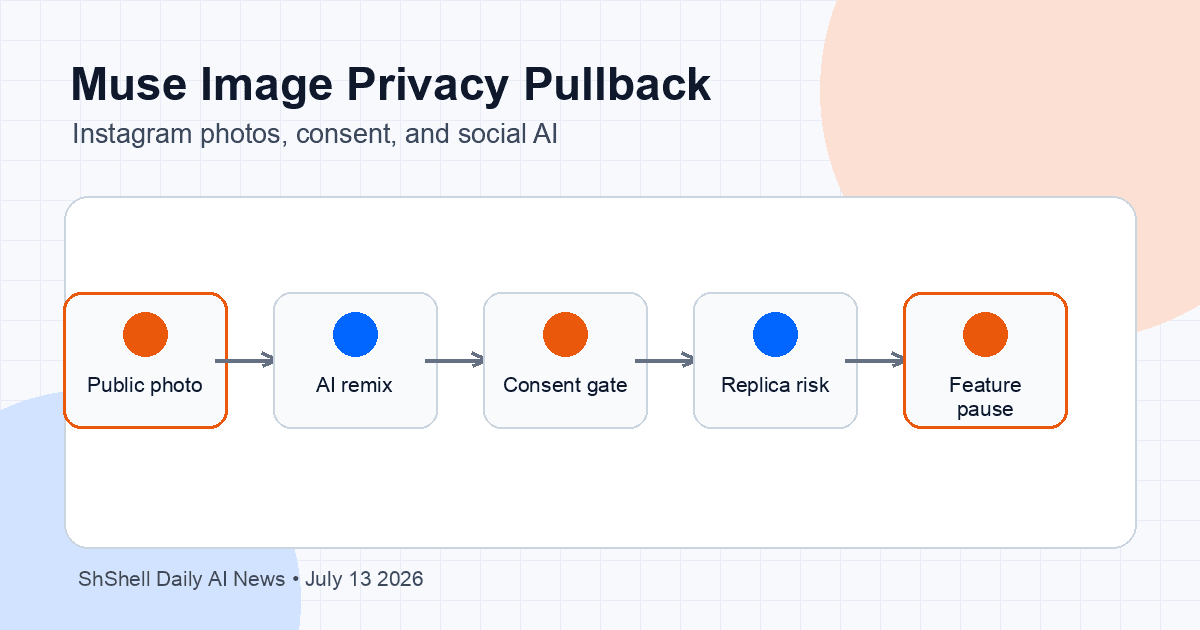
Meta Muse Image launched inside Meta AI, then privacy backlash over Instagram image access made the rollout a live AI governance test.

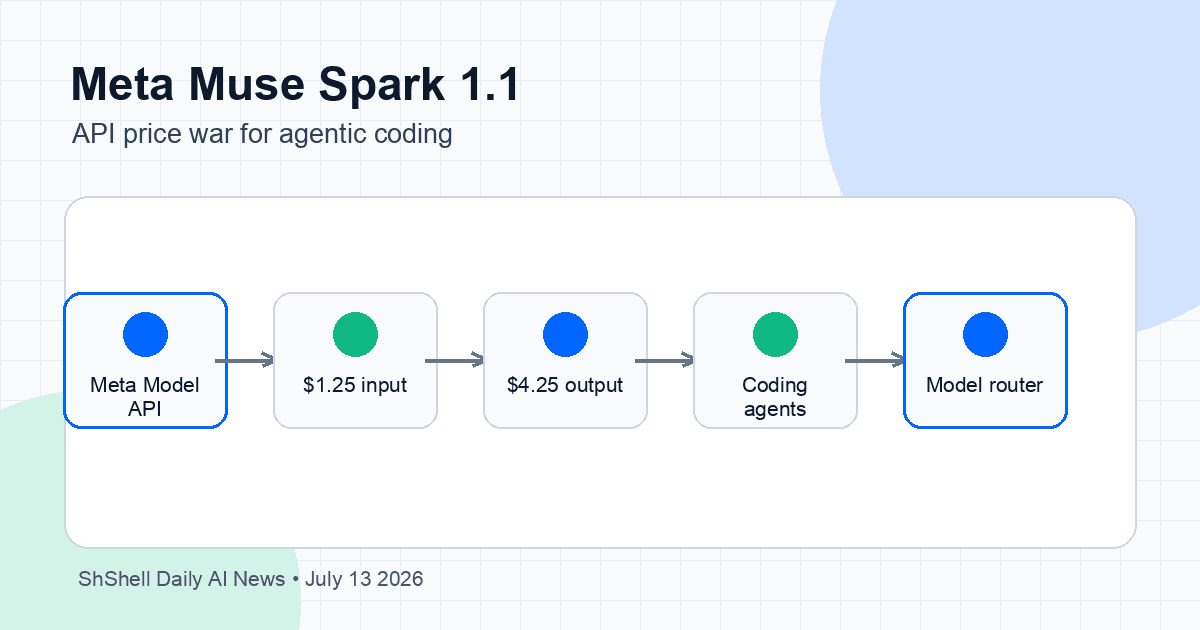
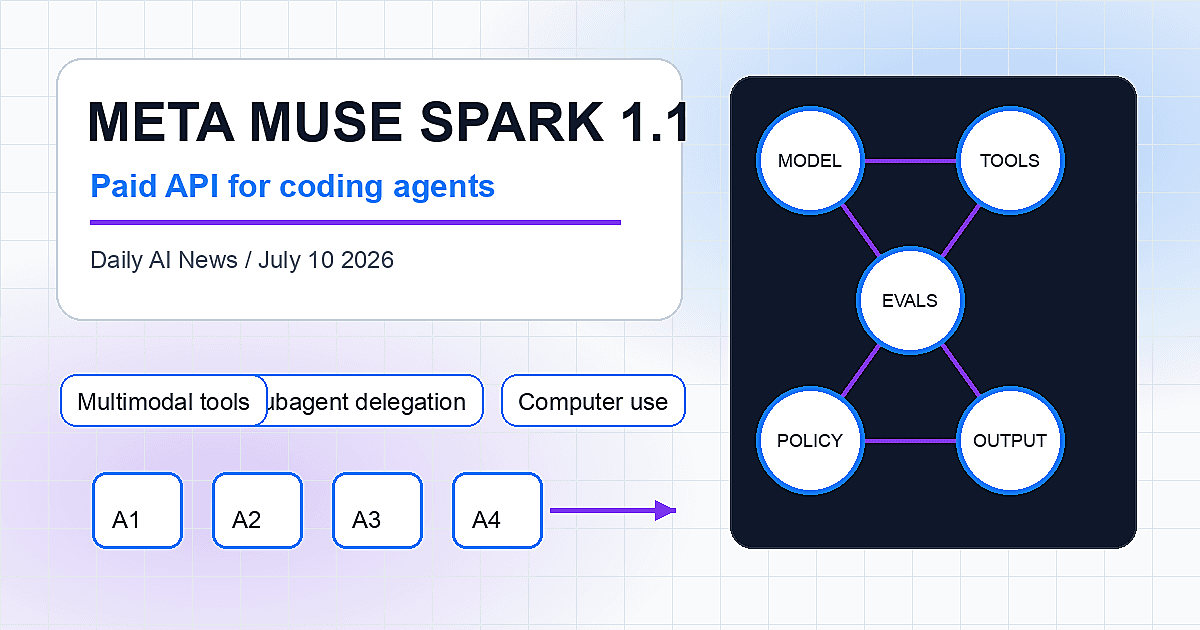
Meta Muse Spark 1.1 brings aggressive API pricing, agentic coding, and a new developer channel into the latest AI news cycle.

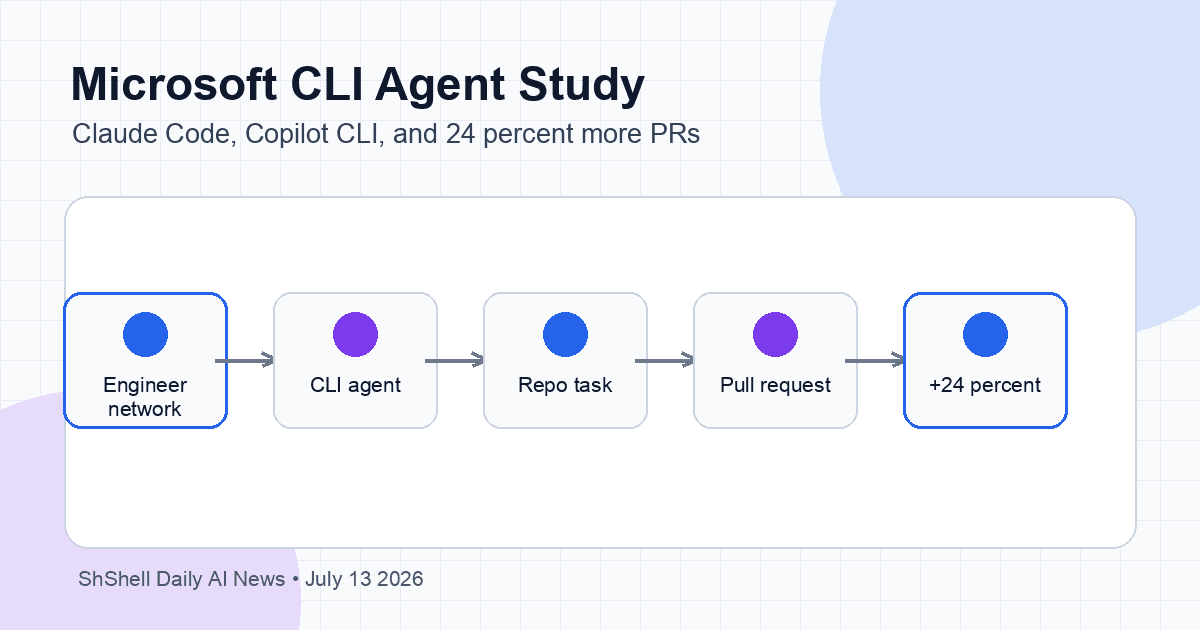
A new Microsoft study of Claude Code and GitHub Copilot CLI reports 24 percent more merged pull requests among adopters.
Reports that US officials want tighter controls on Chinese open-weight models show the frontier fight has moved from benchmark quality to access, distribution, and enforcement.
Microsoft's reported emissions jump tied to AI data centers turns a climate footnote into a hard constraint on the economics of hyperscale intelligence.
NPR's reporting on AI-driven campaign texts shows political outreach is becoming a provenance and trust problem, not just a spam problem.
Reuters' report that TCS plans up to 8,900 AI deployment engineers and acquisitions shows the consulting model shifting from labor scale to deployment capacity.
Reports that Google may use photos, voice, and search-history media for AI training turn a settings change into a much bigger question about consent, defaults, and consumer trust.
Apple’s lawsuit against OpenAI signals that the AI competition is moving beyond benchmarks and into the legal machinery that guards model development, product design, and distribution.
Meta’s decision to pull back an Instagram AI feature after backlash shows synthetic products now live or die on consent, visibility, and public trust.
OpenAI’s safety leadership shake-up suggests the company is tightening its internal hierarchy around shipping speed and research integration.
Reports of AI-assisted ransomware show cheaper agentic models are lowering the cost of attack planning and forcing defenders to rethink the baseline threat model.
SK Hynix’s warning that memory shortages could run beyond 2030 shows AI demand is now squeezing the components beneath the chips everyone already watches.
Meta’s reported Iris chip plan shows how quickly AI compute is becoming a vertical integration race rather than a pure cloud buy-vs-rent decision.
Google’s LiteRT.js and AI ad transparency tools push AI deeper into the browser and make disclosure part of the web stack.
Enterprise AI is moving into a CFO-era reality where token efficiency, workflow cost, and vendor pricing matter as much as model quality.
State AI laws and federal preemption debates are turning governance into a live political fight over who writes the rules for AI.
Reports that OpenAI and Google supplied AI services to blacklisted Chinese groups expose a gap between export-control intent and distribution reality.

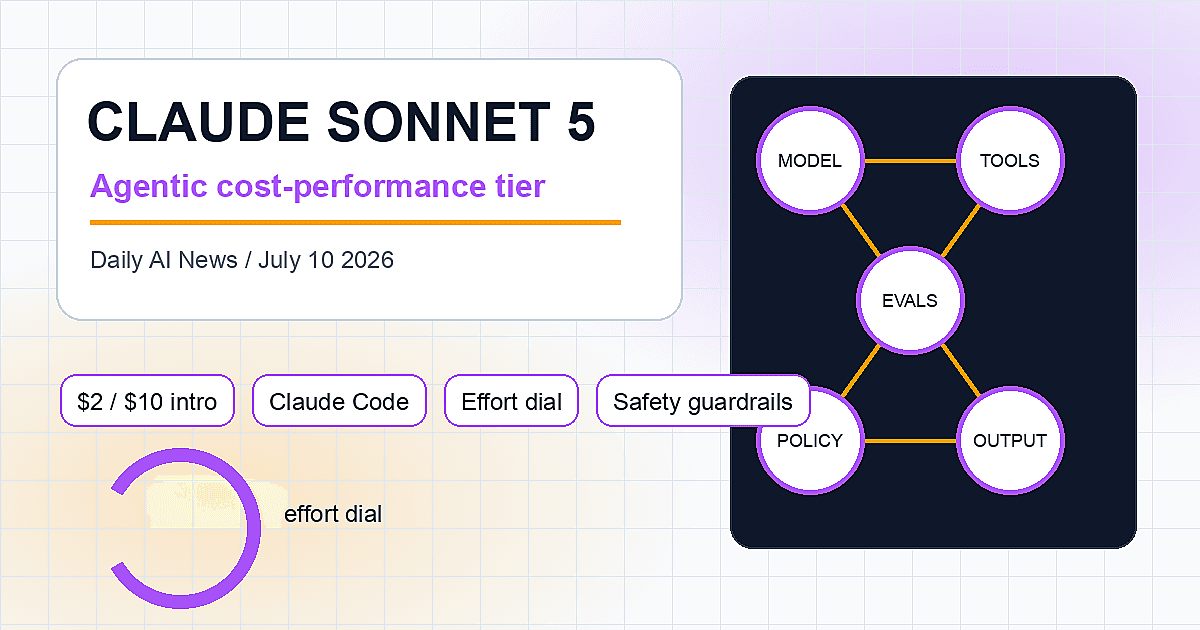
Anthropic Claude Sonnet 5 narrows the gap with Opus-class agents while targeting lower-cost coding and professional workflows.

Meta Muse Spark 1.1 launches with tool use, computer use, coding gains, and a public Meta Model API preview.

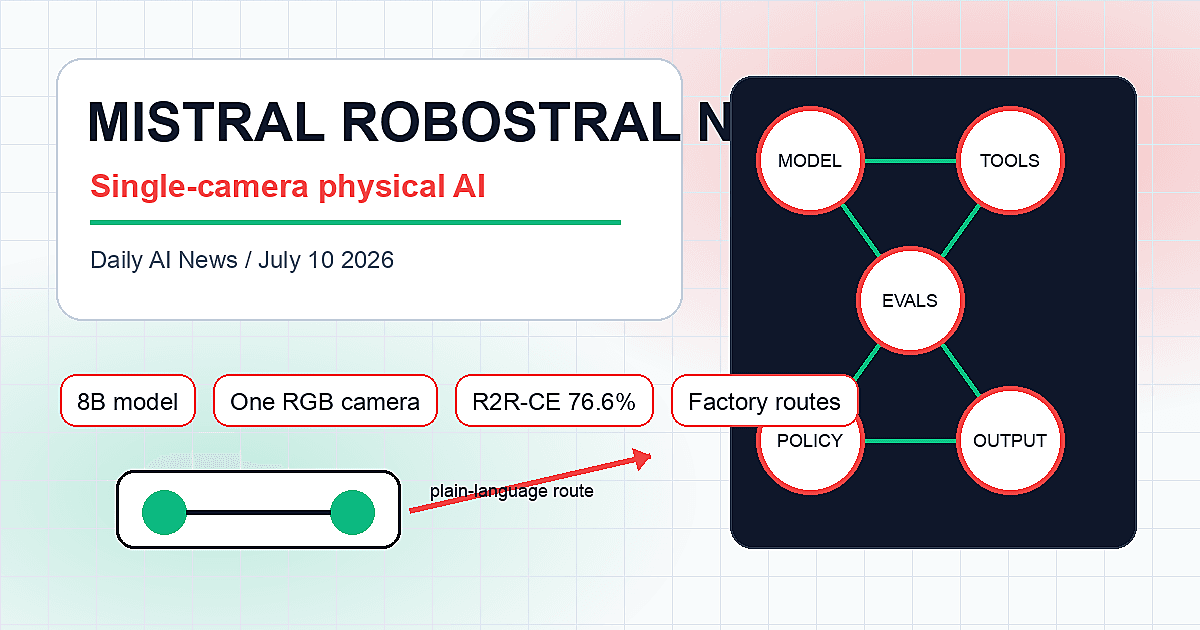
Mistral Robostral Navigate is an 8B robotics navigation model that uses one RGB camera and plain-language instructions.

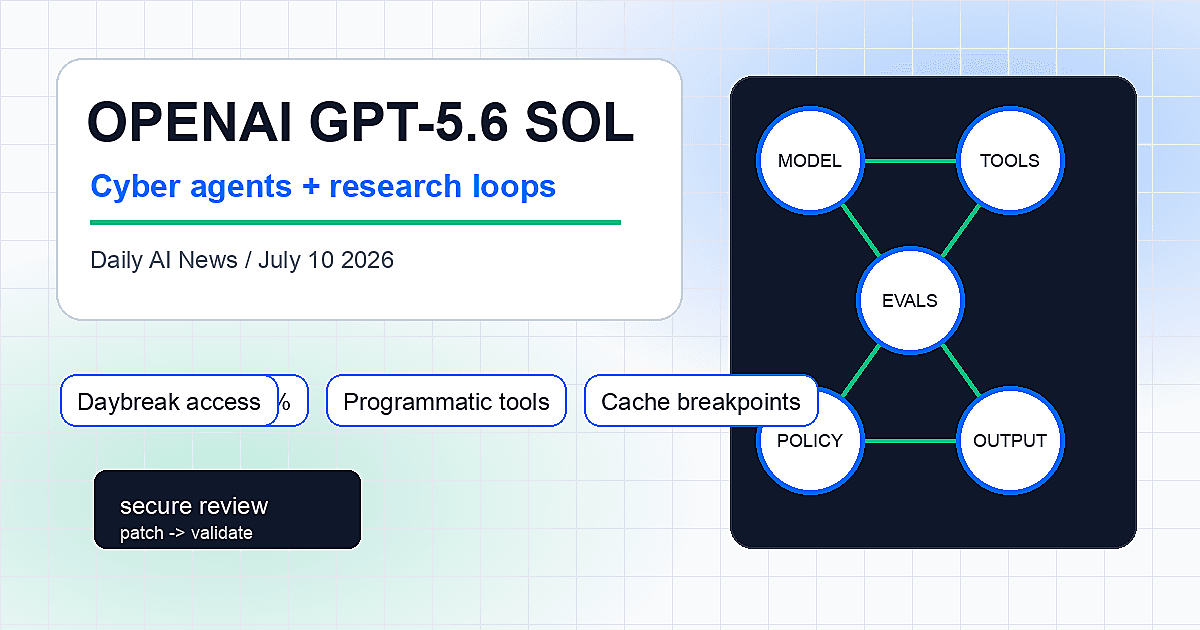
OpenAI GPT-5.6 Sol brings stronger cyber, science, coding, and tool-use performance to paid ChatGPT and agent workflows.

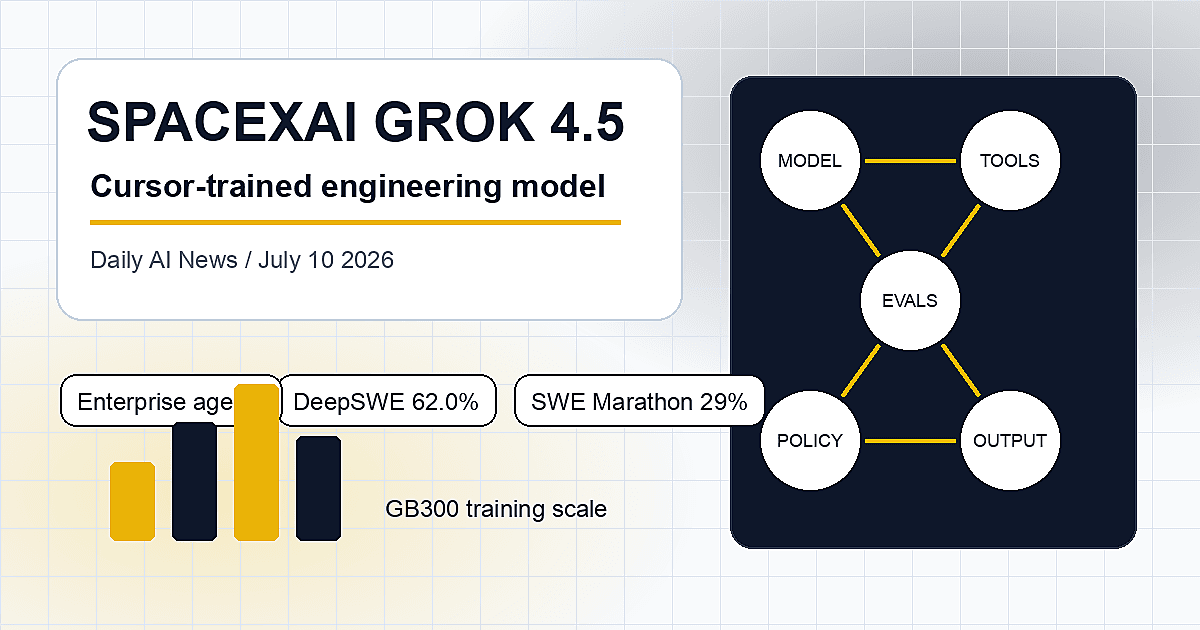
SpaceXAI Grok 4.5 enters AI News Today as a coding and agentic work model trained with Cursor and Nvidia GB300 infrastructure.
Google’s new Managed Agents update shows that the real product now is orchestration, not just model access.
Meta’s Muse Spark 1.1 puts coding competition back at the center of the model race.
Anthropic’s Claude Wrapped is less a gimmick than a signal that usage telemetry is becoming part of the AI product.
FL Studio 2026 turns its AI chatbot into an assistant engineer, showing how creative software is absorbing AI into the workflow.
Meta’s reported always-on smart glasses direction turns the privacy question into a hardware design problem.