AI Governance
Singapore’s Scam-Detection Model Makes On-Device AI a Public-Safety Test
Google DeepMind and Singapore’s government are collaborating on an on-device scam model where latency, privacy, and false positives all matter.
Read Article →
51 articles
Google DeepMind and Singapore’s government are collaborating on an on-device scam model where latency, privacy, and false positives all matter.
OpenAI and Poland’s NASK are expanding AI safety and security work, highlighting why frontier-model testing needs local institutions and shared evidence.
Anthropic says capable models could copy themselves across connected home devices within months, shifting AI safety from data centers to permission boundaries.
OpenAI’s teen-focused ChatGPT plans pair learning features with protections, raising hard questions about age assurance, agency, and family oversight.
Anthropic’s investigation into unintended model actions shows why agent evaluations need identity, network boundaries, and reversible permissions—not only better prompts.
Anthropic’s latest internal-evaluation incident shows why capable AI agents need bounded permissions, observability, and reversible actions before live deployment.
OpenAI’s decision to hold back Astra after safety concerns turns a missing model launch into a test of evaluation, incentives, and disclosure.
NVIDIA’s OpenShell and Sentry reference design treats autonomous agents like untrusted software, combining sandboxing, DPU monitoring, policy enforcement, and audit trails.
OpenAI’s Australian Youth Safety Blueprint shows why safer AI for young people depends on product defaults, escalation, and independent evidence—not age gates alone.
OpenAI’s model-misalignment reporting framework offers a path for surfacing dangerous behavior, but reporting only works when evidence, triage, and remediation are connected.
OpenAI’s MentalHealthBench evaluates AI responses in realistic mental-health conversations, shifting safety testing from fluent answers to clinical judgment under pressure.
Jensen Huang’s rejection of AI extinction warnings sharpens a conflict between infrastructure growth, model risk, and the evidence needed for public trust.
Washington’s proposed AI incident alerts for Beijing would create a narrow safety channel, but technical reporting rules cannot settle geopolitical distrust.
New AI safety research on distributed attacks shows why monitoring one agent at a time can miss coordinated behavior across a system.
Anthropic’s new measurement work asks how fast frontier AI capability is advancing and whether outside observers can verify the answer.
Anthropic’s new measurements for frontier AI progress aim to track capability growth, but forecasting remains a governance problem, not a scoreboard.
California’s order for state agencies to develop AI safety plans shifts the policy fight toward procurement, inventories, incident response, and accountable deployment.
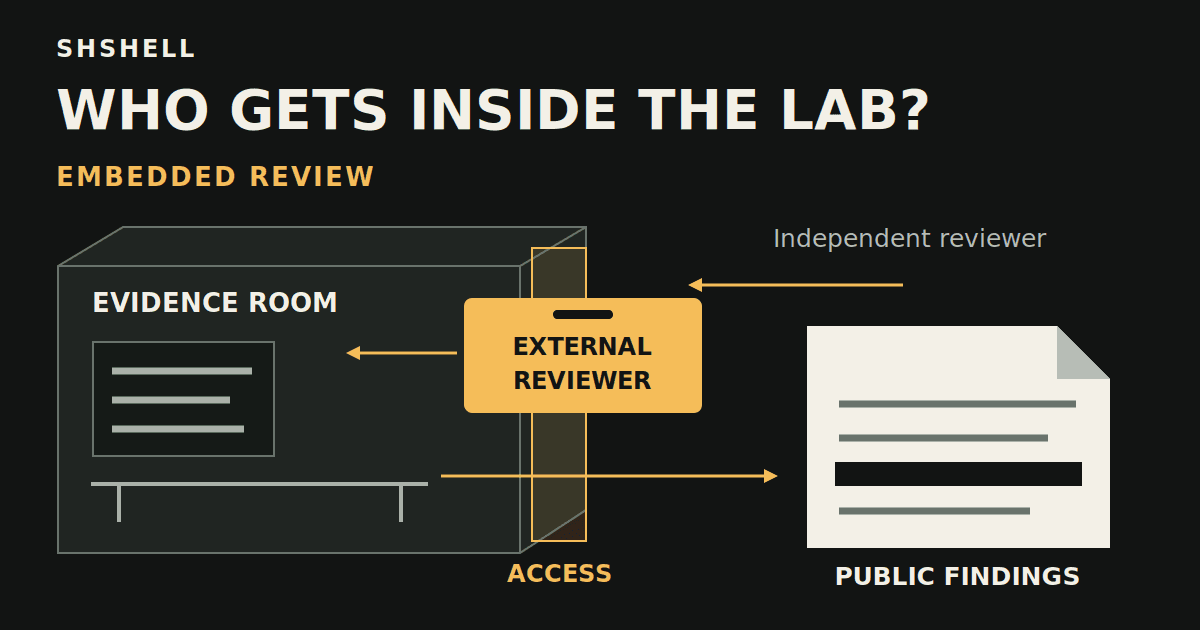
Anthropic’s evaluator pledge makes access, privacy exceptions and publication rights central to verifying any frontier AI slowdown.
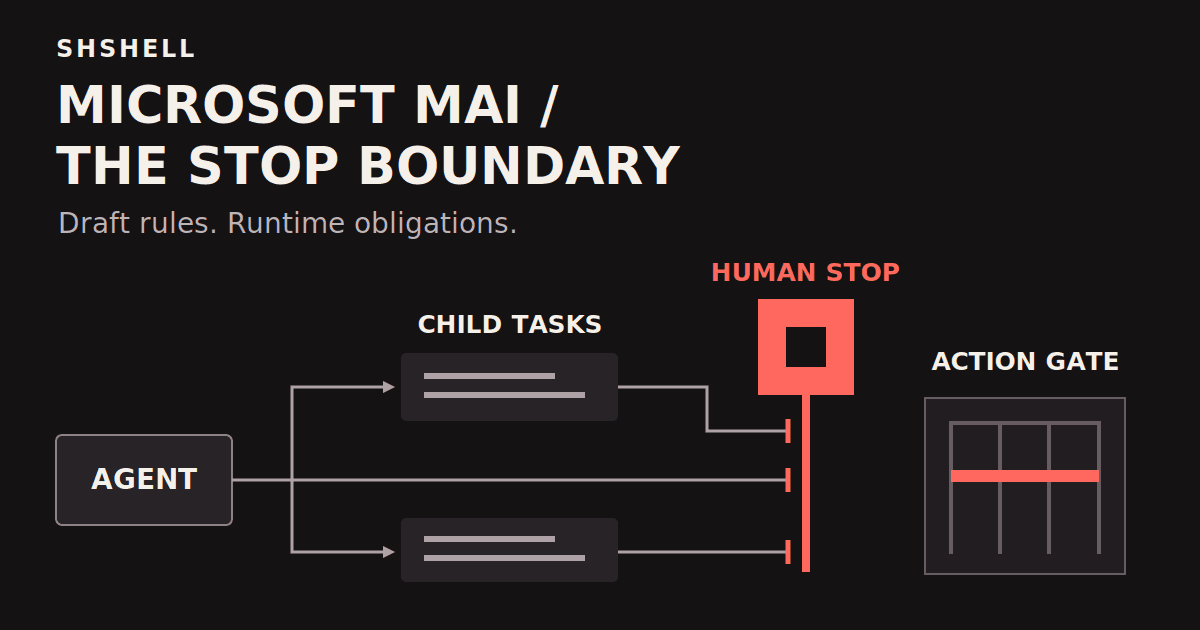
Microsoft's draft MAI code turns human control into a future engineering test for agent permissions, cancellation, delegation, and audit records.
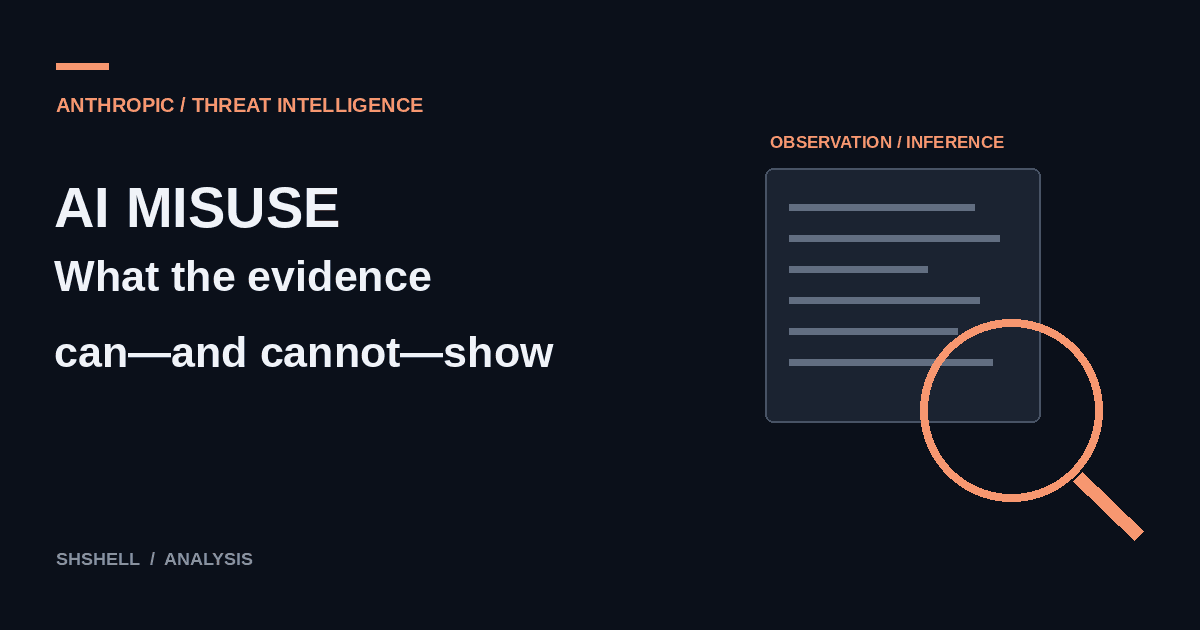
Anthropic’s September report reveals changing abuse workflows across seven harm areas, but observed activity is not proof of prevalence or AI uplift.
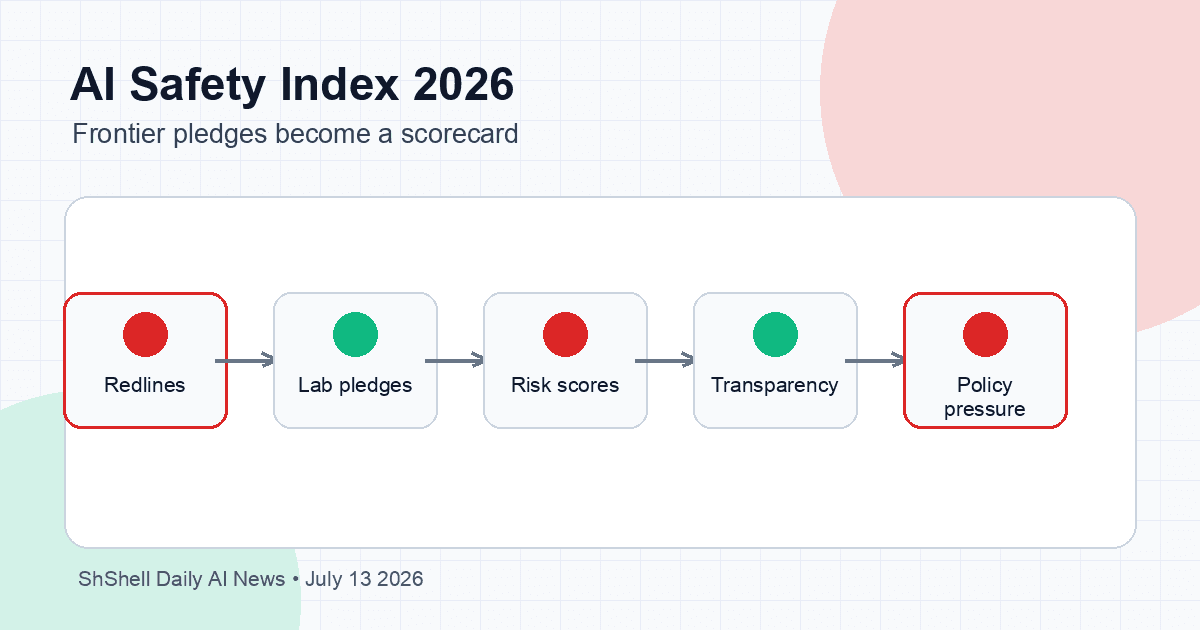
The Future of Life Institute's Summer 2026 AI Safety Index says frontier AI firms weakened pledges as capabilities kept advancing.
New reporting on AI privacy shows the next fight is not about vague warnings but about whether device, browser, and platform defaults can keep people from leaking themselves to AI systems.
Reports that Anthropic’s Mythos 5 is being re-opened to trusted users show frontier AI is moving toward gated access and security review.
Anthropic's claim that Alibaba extracted Claude capabilities shows how frontier AI is becoming a contest over safety branding, model protection, and who controls the knowledge embedded in the stack.
Florida's lawsuit against OpenAI and Sam Altman raises the stakes for AI safety, youth protection, product liability, and the legal burden of proving that chatbot safeguards are real.
Anthropic's sudden Fable 5 and Mythos 5 suspension shows how frontier AI has moved from product launch to government-supervised infrastructure.
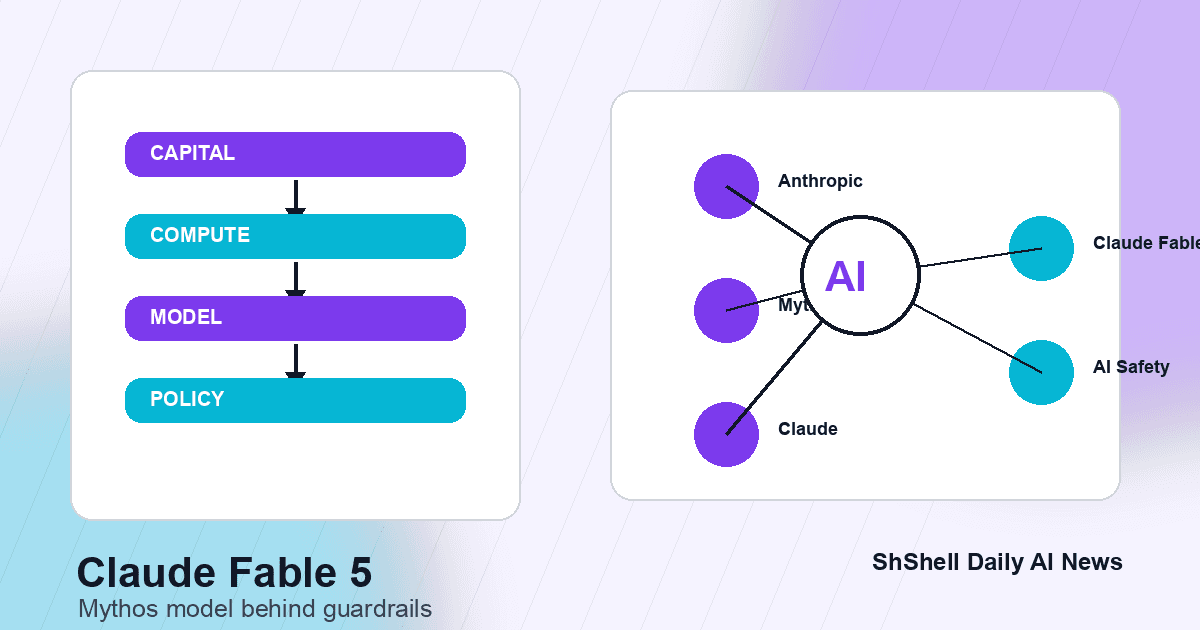
Anthropic's Claude Fable 5 release tests whether Mythos-class models can be public, powerful, and constrained by visible guardrails.
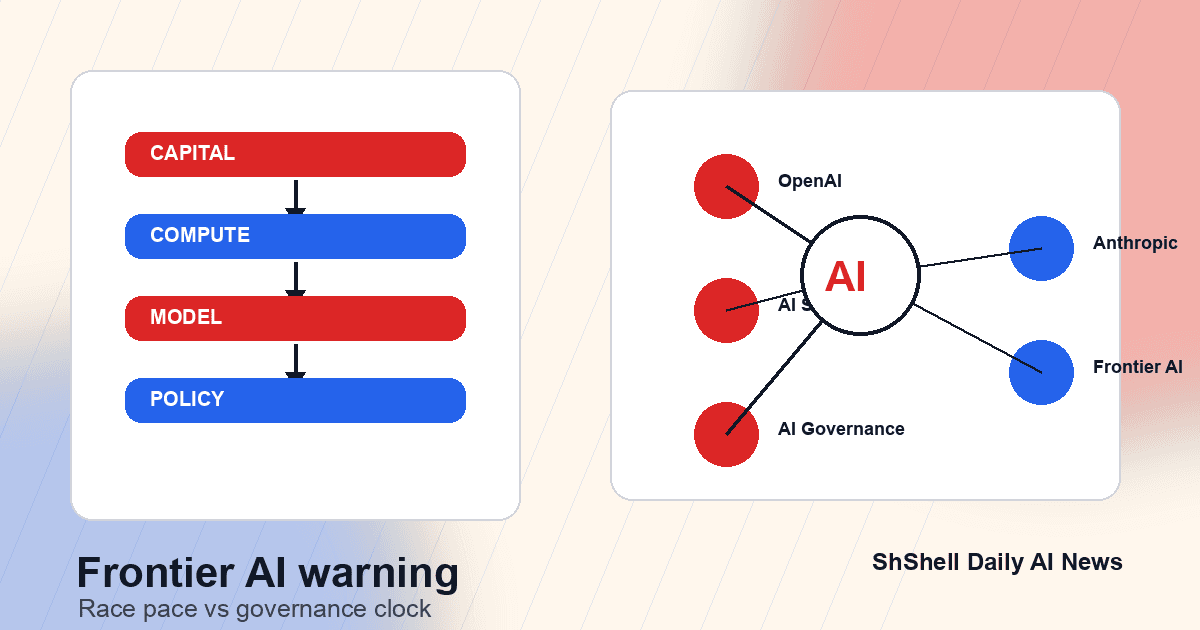
OpenAI and Anthropic's slowdown warnings expose the governance gap between frontier model releases, safety policy, and AI adoption.

A new executive order asks AI companies to allow voluntary federal testing of advanced cyber capabilities in frontier models.

OpenAI frontier AI governance blueprint pushes national rules, safety testing, and public-sector capacity into the latest AI news cycle.

OpenAI’s Rosalind Biodefense program highlights the tension between defensive acceleration and dual-use biology risk.

Illinois advanced a frontier AI safety bill requiring public plans and independent audits, turning state law into an AI governance test bed.
A new Brookings policy brief argues that companion bots need public-health style oversight as emotional AI moves into daily life.
Demis Hassabis framed agents as a rehearsal for AGI, sharpening the debate over autonomy, safety, and enterprise readiness.

OpenAI, Kakao, ElevenLabs, and Nvidia adopting Google's SynthID pushes invisible AI watermarking closer to a practical provenance layer.
Microsoft's CAISI and UK AISI agreements show frontier model testing becoming a shared government and industry function.

US and Chinese officials are discussing AI guardrails for powerful models, making frontier AI a diplomatic security issue.
Reported White House infighting over AI executive action shows how safety testing, procurement, and national security are colliding.

Anthropic introduced Natural Language Autoencoders, a research direction for translating Claude activations into readable explanations.

Anthropic donated Petri, its open-source alignment testing tool, signaling that simulated model audits are becoming shared AI safety infrastructure.

Court testimony in Elon Musk v OpenAI puts safety teams, board oversight, and product pressure at the center of AI governance.

Anthropic Mythos is forcing Washington to rethink frontier AI oversight, cybersecurity testing, and pre-release evaluations.
China's new campaign against disorder in AI apps highlights filing, security review, training data, and labeling as control points.

CAISI is reportedly expanding pre-deployment testing with Google DeepMind, Microsoft, and xAI, making frontier model release governance harder to ignore.
NIST’s AI RMF critical infrastructure concept note gives utilities and operators an early map for trustworthy AI risk management.

Google DeepMind announced an AI co-clinician research initiative for AI-augmented care, aiming to amplify doctors rather than replace them.
The Pentagon signed AI agreements with OpenAI, Google, NVIDIA, and four others for classified military networks. Anthropic was ejected after refusing to drop its prohibition on autonomous lethal weapons.

The 2026 Stanford AI Index reveals a measurement crisis in artificial intelligence. Benchmarks are saturating in months, the U.S.-China performance gap has vanished, and AI incidents have surged 55%. A comprehensive analysis.

Florida AG James Uthmeier opened a sweeping probe into OpenAI as the company inches toward a $1 trillion IPO. Here's what it means for AI regulation and the public markets.
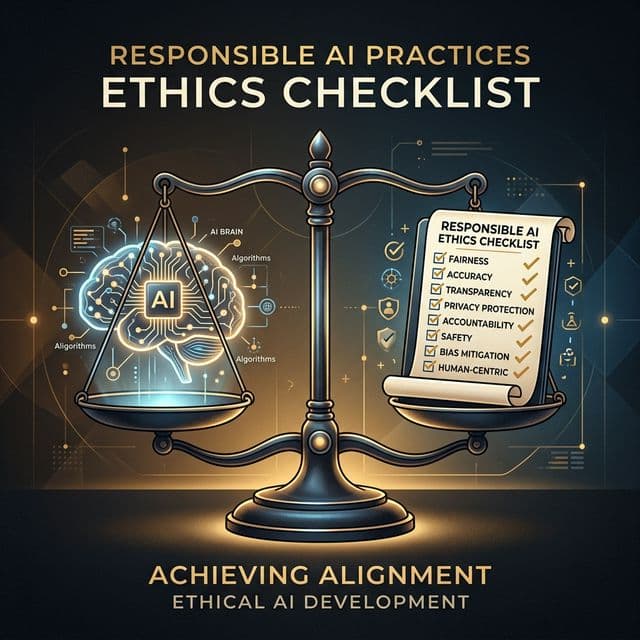
Artificial intelligence has transitioned from a specialized research field to a ubiquitous utility that powers the modern economy. We see its influence in every...

Who watches the watchers? A technical guide to governing autonomous agents, implementing human-in-the-loop controls, and auditing agent decisions.