Claude Opus 4.8 Turns Agent Swarms Into the New Coding Benchmark
Anthropic released Claude Opus 4.8 with Dynamic Workflows, pushing large codebase migrations and parallel subagents into focus.
Claude Opus 4.8 Turns Agent Swarms Into the New Coding Benchmark
The most important sentence in the Claude Opus 4.8 launch was not about a benchmark. It was about migrations. Anthropic is now framing frontier models around whether they can move a real codebase from kickoff to merge.
That is a meaningful shift. Coding assistants used to be judged by how well they completed a function. Coding agents are now judged by whether they can hold a plan, coordinate subtasks, respect tests, and surface uncertainty before a human reviewer finds the problem.
What changed
Here is the practical reading: That is a meaningful shift. Coding assistants used to be judged by how well they completed a function. Coding agents are now judged by whether they can hold a plan, coordinate subtasks, respect tests, and surface uncertainty before a human reviewer finds the problem.
The verified facts are narrow but meaningful. TechCrunch reported that Anthropic released Opus 4.8 on May 28, 2026. The release arrived 41 days after Opus 4.7, a faster cycle than usual for Anthropic. The launch included Dynamic Workflows, a research preview for managing complex tasks across many parallel subagents. Anthropic described Claude Code with Opus 4.8 as capable of codebase-scale migrations across hundreds of thousands of lines with test suites as the bar. Those details are enough to explain why this story belongs in the daily AI file rather than the general technology feed.
The immediate business question is not whether the announcement sounds impressive. It is whether the move changes the constraints facing builders, buyers, and competitors. In this case it does, because it touches capability, distribution, governance, and operating cost at the same time.
For enterprise teams, the lesson is to separate promise from deployment mechanics. A new model, funding round, acquisition, product leak, or chip architecture matters only when it changes what can be shipped, secured, measured, or afforded. That is the lens this piece uses.
The second-order effect is competitive pressure. Once one major player reframes the market, others have to respond. They may respond with pricing, partnerships, faster releases, deeper integrations, or stronger governance claims. The headline fades, but the response cycle shapes the products teams actually use.
There is also a procurement angle. AI buying is becoming less like buying a SaaS seat and more like choosing an operating dependency. Buyers now ask about audit logs, model routing, data residency, latency, controls, failure modes, and vendor durability. Announcements that improve those answers become commercially important.
A useful way to judge this story is to ask what would become harder if the announcement disappeared tomorrow. If the answer is nothing, it is noise. If the answer is that a platform roadmap, customer budget, or infrastructure plan would have to change, it is signal. This one has signal because it points at a structural shift already underway.
The caution is that AI markets reward narrative before they reward operating proof. Teams should avoid adopting a technology just because the market has blessed it. They should run small tests with real data, real permissions, realistic latency expectations, and clear exit criteria. The best AI strategy is still empirical.
Source trail
The article below synthesizes those source reports with ShShells analysis of enterprise AI adoption, agent infrastructure, model economics, and the operational patterns already visible across the market.
The system map
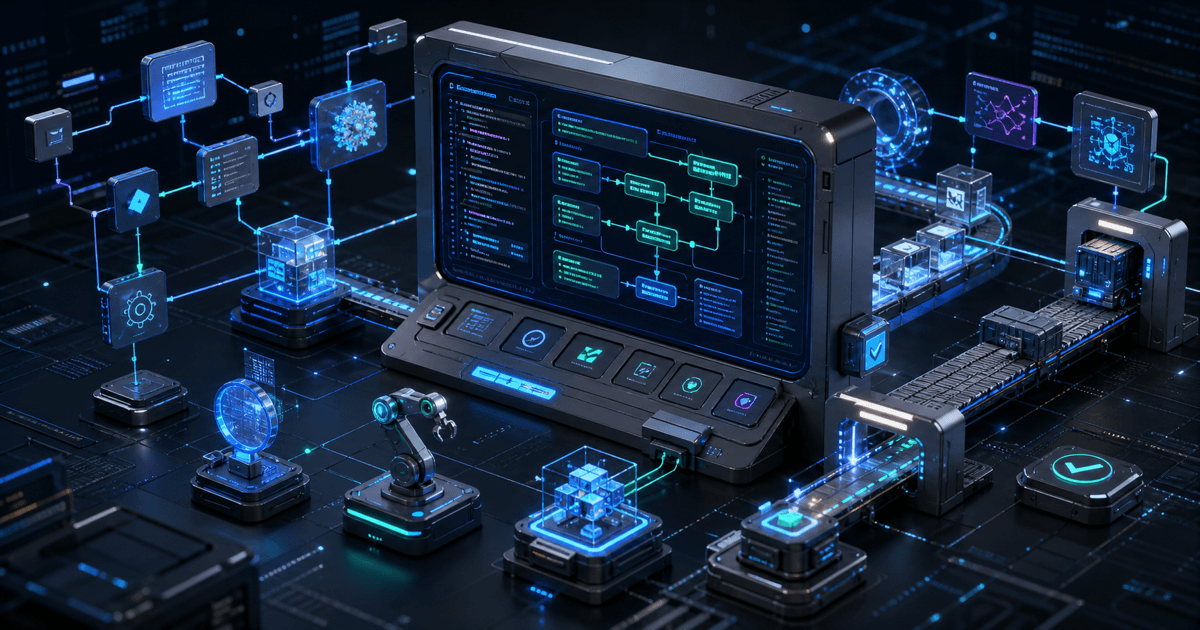
graph TD
Engineer --> Goal
Goal --> Dynamic Workflows
Dynamic Workflows --> Subagent A
Dynamic Workflows --> Subagent B
Dynamic Workflows --> Subagent C
Subagent A --> Test Suite
Subagent B --> Test Suite
Subagent C --> Test Suite
Test Suite --> Merge Review
The benchmark moved from snippets to systems
The old coding demo was a clean prompt and a small function. The new demo is messier: a mature repository, partial documentation, failing tests, local conventions, stale dependencies, hidden business rules, and reviewers who will reject a clever patch if it breaks production habits. Opus 4.8 is important because Anthropic is talking directly to that reality. Dynamic Workflows suggests that the frontier is no longer one model writing one answer. It is one model supervising many bounded workers.
That distinction matters because AI adoption is no longer limited to pilots. Teams are turning model capability into recurring process, and recurring process exposes every weakness in reliability, ownership, data access, and cost. A tool can look magical in a demo and still fail when it has to run every weekday against messy company systems. The announcement should therefore be read as one piece of a larger operating model shift, not as an isolated product update.
The best teams will translate this news into a short checklist. What new capability is actually available. What existing workflow could it improve. What new dependency would it introduce. What data would it need. What failure would be unacceptable. What metric would prove value after thirty days. Those questions cut through the noise and keep the story grounded in execution.
Dynamic Workflows is a control problem
Parallel subagents sound powerful, but the hard part is coordination. If ten agents edit the same repository without a clear contract, they create conflicts, duplicate work, and inconsistent assumptions. The orchestration layer has to decompose work, assign boundaries, collect evidence, reconcile patches, and know when to stop. That resembles distributed systems more than autocomplete. The value of Opus 4.8 will depend on whether the model can make good control decisions while still being humble about bad inputs and uncertain outputs.
That distinction matters because AI adoption is no longer limited to pilots. Teams are turning model capability into recurring process, and recurring process exposes every weakness in reliability, ownership, data access, and cost. A tool can look magical in a demo and still fail when it has to run every weekday against messy company systems. The announcement should therefore be read as one piece of a larger operating model shift, not as an isolated product update.
The best teams will translate this news into a short checklist. What new capability is actually available. What existing workflow could it improve. What new dependency would it introduce. What data would it need. What failure would be unacceptable. What metric would prove value after thirty days. Those questions cut through the noise and keep the story grounded in execution.
Honesty is a feature for agentic coding
Anthropic highlighted that Opus 4.8 is more willing to flag uncertainty and unsupported claims. That sounds modest, but it matters for software work. A coding agent that says nothing while inventing a migration strategy can waste hours. A model that names a risky assumption gives the engineer a chance to intervene early. As agents become more autonomous, truthfulness is not just a safety virtue. It is a productivity feature. The agent that catches its own weak evidence may be slower in a demo and better in a repository.
That distinction matters because AI adoption is no longer limited to pilots. Teams are turning model capability into recurring process, and recurring process exposes every weakness in reliability, ownership, data access, and cost. A tool can look magical in a demo and still fail when it has to run every weekday against messy company systems. The announcement should therefore be read as one piece of a larger operating model shift, not as an isolated product update.
The best teams will translate this news into a short checklist. What new capability is actually available. What existing workflow could it improve. What new dependency would it introduce. What data would it need. What failure would be unacceptable. What metric would prove value after thirty days. Those questions cut through the noise and keep the story grounded in execution.
Claude Code is becoming the enterprise wedge
Claude Code gives Anthropic a direct channel into developer workflows. That matters because code is one of the few domains where model output can be tested quickly. If a migration compiles, passes tests, preserves behavior, and produces understandable diffs, the value is concrete. The same pattern can later move into finance models, legal review, compliance checks, and operations workflows. Coding is the proving ground for agentic reliability because the feedback loop is sharper than most knowledge work.
That distinction matters because AI adoption is no longer limited to pilots. Teams are turning model capability into recurring process, and recurring process exposes every weakness in reliability, ownership, data access, and cost. A tool can look magical in a demo and still fail when it has to run every weekday against messy company systems. The announcement should therefore be read as one piece of a larger operating model shift, not as an isolated product update.
The best teams will translate this news into a short checklist. What new capability is actually available. What existing workflow could it improve. What new dependency would it introduce. What data would it need. What failure would be unacceptable. What metric would prove value after thirty days. Those questions cut through the noise and keep the story grounded in execution.
The pressure from Codex and Gemini is visible
The faster release cadence also says something about competition. OpenAI is pushing Codex deeper into remote software work, and Google keeps improving Gemini models for speed and context. Anthropic cannot rely on a reputation for carefulness if rivals become good enough and more available. Opus 4.8 reads like a response to that pressure: keep the Claude quality story, but show that the product can move at agent speed.
That distinction matters because AI adoption is no longer limited to pilots. Teams are turning model capability into recurring process, and recurring process exposes every weakness in reliability, ownership, data access, and cost. A tool can look magical in a demo and still fail when it has to run every weekday against messy company systems. The announcement should therefore be read as one piece of a larger operating model shift, not as an isolated product update.
The best teams will translate this news into a short checklist. What new capability is actually available. What existing workflow could it improve. What new dependency would it introduce. What data would it need. What failure would be unacceptable. What metric would prove value after thirty days. Those questions cut through the noise and keep the story grounded in execution.
What engineering leaders should test
Teams should not evaluate Opus 4.8 by asking it to solve toy problems. They should give it bounded migrations with known acceptance criteria: upgrade a dependency, replace an internal API, improve type coverage, or refactor a service with tests. Measure the number of human interventions, failed assumptions, review comments, and regressions. The key question is not whether the model writes impressive code. The question is whether it reduces the total coordination cost of change.
That distinction matters because AI adoption is no longer limited to pilots. Teams are turning model capability into recurring process, and recurring process exposes every weakness in reliability, ownership, data access, and cost. A tool can look magical in a demo and still fail when it has to run every weekday against messy company systems. The announcement should therefore be read as one piece of a larger operating model shift, not as an isolated product update.
The best teams will translate this news into a short checklist. What new capability is actually available. What existing workflow could it improve. What new dependency would it introduce. What data would it need. What failure would be unacceptable. What metric would prove value after thirty days. Those questions cut through the noise and keep the story grounded in execution.
Where agent swarms can go wrong
The risk is silent overreach. A swarm can produce a large diff that looks comprehensive but hides conceptual drift. It can optimize for passing tests while missing product intent. It can generate confident migration notes that reviewers skim because the patch is large. For now, the best workflow keeps humans in the merge path and uses test suites, static analysis, and small change batches as guardrails. Dynamic Workflows may be the right direction, but agentic coding still needs disciplined engineering process around it.
That distinction matters because AI adoption is no longer limited to pilots. Teams are turning model capability into recurring process, and recurring process exposes every weakness in reliability, ownership, data access, and cost. A tool can look magical in a demo and still fail when it has to run every weekday against messy company systems. The announcement should therefore be read as one piece of a larger operating model shift, not as an isolated product update.
The best teams will translate this news into a short checklist. What new capability is actually available. What existing workflow could it improve. What new dependency would it introduce. What data would it need. What failure would be unacceptable. What metric would prove value after thirty days. Those questions cut through the noise and keep the story grounded in execution.
What this means for the next quarter
The next quarter will separate announcement value from operating value. Watch for customer case studies with measurable latency, cost, accuracy, migration, or workflow results. Watch for integrations that reduce setup time rather than simply adding another AI button. Watch for pricing changes, safety language, and partner moves from competitors. In AI, the first announcement is often the opening bid. The market response tells you what the announcement was really worth.
For builders, the practical path is straightforward. Pick one workflow where the new capability might matter. Define the current baseline. Run a contained test. Measure the delta. Keep the human review path intact until the system proves it can handle edge cases. The companies that benefit most from AI news are not the ones that chase every launch. They are the ones that convert a few relevant launches into disciplined experiments.
For executives, the message is equally direct. AI strategy is becoming infrastructure strategy, workflow strategy, risk strategy, and talent strategy at the same time. These stories are connected. Funding affects compute access. Model releases affect product design. Acquisitions affect workflow control. Operating system integrations affect distribution. Chip startups affect inference economics. The winners will understand the chain rather than treating each headline as a separate event.
The useful posture is neither hype nor dismissal. The useful posture is technical curiosity with operational restraint. Study the shift, test the claim, protect the downside, and move when the evidence is strong enough. That is how daily AI news becomes an advantage instead of a distraction.
The operator checklist
For teams deciding whether this story should change plans, the first move is to translate the headline into operating questions. What budget line does it affect. What engineering dependency does it introduce. What compliance conversation does it simplify or complicate. What vendor risk changes if the company behind the announcement becomes more central to the stack. A daily news item becomes useful only when it changes a decision, a test plan, or a roadmap assumption.
For Claude Opus 4.8, the most relevant checklist starts with dependency mapping. Identify which workflows already depend on similar AI capability. Identify where data crosses trust boundaries. Identify where a human currently makes the final decision. Identify the latency and cost tolerance of the workflow. Identify the fallback path if the model, platform, or hardware layer becomes unavailable. This may sound conservative, but it is the difference between using AI as leverage and turning it into invisible operational debt.
The second item is measurement. Too many AI projects still rely on subjective demos. Teams should define before-and-after metrics: minutes saved per task, defects avoided, tickets resolved, migration size, review cycles reduced, cost per completed workflow, or percentage of cases escalated to a human. The metric should match the job. If the workflow is research, measure source quality and time to usable brief. If the workflow is coding, measure accepted diffs and regression rate. If the workflow is infrastructure, measure latency, throughput, and unit economics.
The third item is reversibility. AI systems are improving quickly, but vendor lock-in is also getting stronger. A model embedded in a work graph, an assistant embedded in an operating system, or a chip embedded in an inference architecture can become hard to replace. Reversibility does not mean avoiding commitment. It means keeping interfaces clean, retaining logs, documenting assumptions, and avoiding designs where one vendor-specific feature becomes the only way the business process can function.
The fourth item is governance at the point of work. Central AI policy is necessary, but it is not enough. The most important controls live where the work happens: repository permissions, task approvals, data connectors, customer records, model routing, prompt libraries, test suites, and monitoring dashboards. That is where mistakes become expensive. The teams that treat governance as a practical design constraint will move faster than teams that treat it as a legal document nobody reads.
The final item is user behavior. People route around tools that slow them down, and they overtrust tools that look authoritative. Both failure modes are common with AI. A successful rollout gives users a clear mental model of what the system can do, what it cannot do, and when they remain accountable. The best interface is not the one that makes AI look most powerful. It is the one that helps a competent person make a better decision with less wasted effort.
The wider pattern
The wider pattern is that AI is becoming a stack of negotiated dependencies. Models depend on data centers. Data centers depend on chips, memory, power, and networking. Enterprise adoption depends on workflow software, identity, audit logs, and procurement confidence. Consumer adoption depends on distribution surfaces and trust. Every major AI announcement now sits somewhere in that stack.
That is why Claude Opus 4.8 deserves attention beyond the launch-day cycle. It is not just another item in the feed. It is one more sign that AI competition is moving from isolated model quality toward systems that combine intelligence, context, control, and economics. The winners will not simply have the best demo. They will have the strongest route from capability to repeated useful work.
Author note
Sudeep Devkota writes ShShells AI coverage for builders, operators, and technical leaders who need to understand where model capability meets real systems. This article was produced from current public sources, cross-checked against the sites publishing standards, and written to emphasize practical implications over launch-day theater.