OpenAI's Ultrafast GPT-5.6 Sol Turns Speed Into a Product Line
OpenAI's GPT-5.6 Sol Ultrafast tier suggests the next competition in model markets will be measured in latency, throughput, and access policy, not only benchmark crowns.
9 articles

OpenAI's GPT-5.6 Sol Ultrafast tier suggests the next competition in model markets will be measured in latency, throughput, and access policy, not only benchmark crowns.

OpenAI's GPT-5.6-Cyber and expanded Daybreak program show that cyber capabilities are no longer a side effect of general models; they are becoming a product line with their own rules, customers, and risk profile.
Google’s Gemini Flash, Flash-Lite, and Flash Cyber releases show that model markets are splitting into fast, cheap, and security-tuned tiers.
OpenAI’s GPT-5.6 release limits point to a model market where access rules matter as much as benchmark scores.

Reports that OpenAI will publicly release GPT 5.6 after a government-requested delay show that model access is now a policy lever.
Meta’s Muse Spark push suggests the company is trying to rebuild its AI story around coding, agents, and a tighter model stack.
The latest wave of Chinese model progress suggests the frontier is less about one universal benchmark leader and more about a fast-moving, price-sensitive contest across ecosystems.
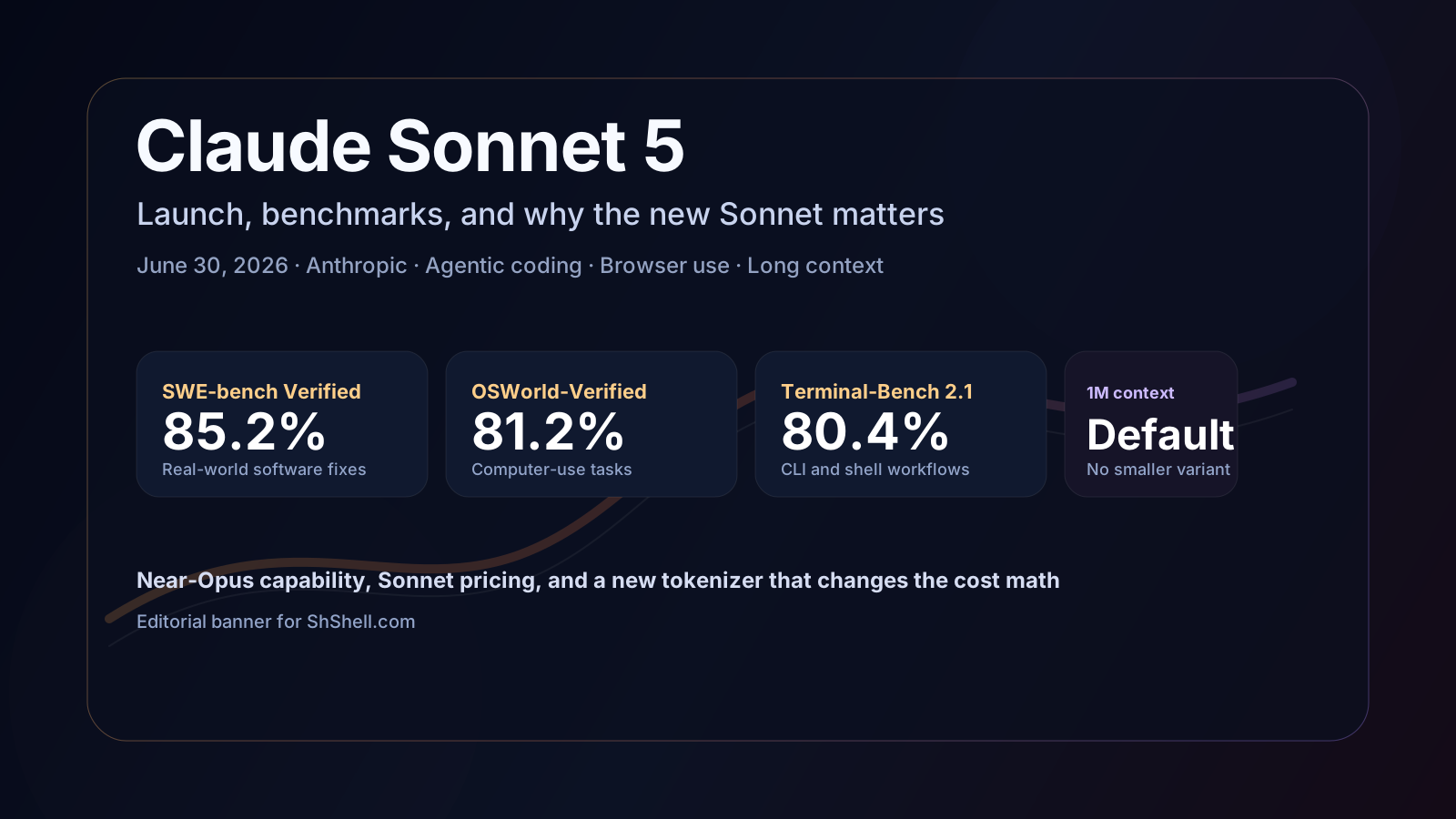
Anthropic's June 30 launch of Claude Sonnet 5 pairs a 1M-token context window and new defaults with benchmark gains that matter for coding and agents.

OpenAI limiting the GPT-5.6 rollout after a government request suggests frontier model launches are entering an era of policy-sensitive pacing.