Apple’s macOS Agent Permissions Put User Intent Back Into the Security Model
Apple’s new macOS controls split sensitive access for AI agents, exposing the limits of treating automation as an ordinary desktop app.
34 articles

Apple’s new macOS controls split sensitive access for AI agents, exposing the limits of treating automation as an ordinary desktop app.

Google’s Gemini 4 Neon launch pairs faster coding claims with lower token prices, shifting the model comparison toward completed software work.

Google Cloud’s threat-intelligence report says attackers are using AI agents in cyber campaigns, raising the value of identity, telemetry, and human response speed.

The openEuler Summit 2026 puts the operating system, scheduling, and open collaboration at the center of infrastructure for agentic AI.

A UK Equity-Pact deal gives performers consent and payment protections for digital replicas, making AI rights a bargaining and enforcement problem.

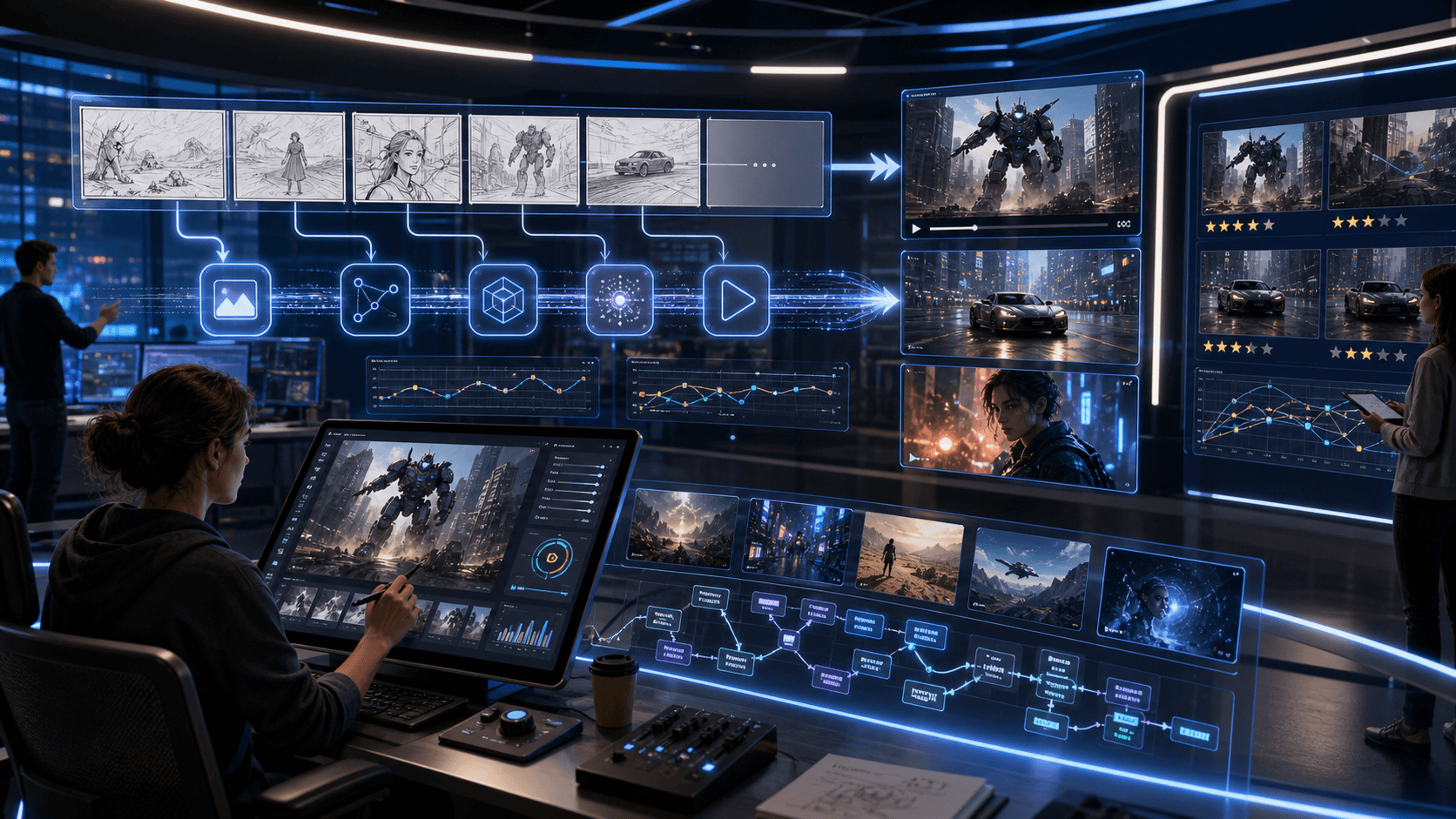
Figma AI’s MotionGraphicsBench uses programmatic verification for motion graphics; that shift could make visual generation more measurable and useful.

OpenAI’s Images 2.6 adds faster generation, GIF creation, more precise editing, and new API controls across ChatGPT, Codex, and the API.

Microsoft Research’s synthetic enterprise-data evaluation work connects benchmark design to Copilot confidence, exposing why realistic tasks matter more than polished demos.

NVIDIA’s account of AI agents helping search for extraterrestrial signals shows how scientific discovery changes when software can filter, rank, and revisit evidence.

The shutdown of privacy-focused AI assistant Ollie turns a product promise about local context, memory, and control into a test of sustainable privacy economics.

OpenAI’s frontier-model misalignment research focuses on detecting dangerous behavior in actions and outputs, not assuming that training intent guarantees safe deployment.

OpenAI’s October 29 Model Spec update makes model behavior, instruction hierarchy, and safety boundaries part of the product surface users can inspect.
Research on tracking AI agents and climate feedback loops points to a new measurement problem: autonomous software creates activity before organizations know what to count.

A BBC report on AI privacy highlights a risk that grows with memory and personalization: assistants can infer intimate facts from ordinary interactions.

Deepgram’s acquisition of Daily puts real-time voice infrastructure, interruption handling, and deployment reliability at the center of the voice-agent market.

Google and Microsoft are holding back fresh AI infrastructure forecasts as investors demand evidence that massive compute spending produces durable returns.

A study reported by the University of Kansas suggests that humanlike voice design can make users discount security risk, changing how voice AI should be evaluated.

Apple’s October 27 Creator Studio update adds AI assistance, MCP, MotionVFX, and cross-app workflows. The real change is workflow integration, not another model demo.

Google’s Universal Cart links shopping across Search and Gemini, shifting online retail from product discovery toward delegated purchase workflows.

Google’s Coral NPU initiative aims to make edge AI portable across wearable and industrial chips by separating model software from one accelerator design.

Google Cloud’s OpenAI model availability changes enterprise AI from a vendor decision into a practical routing, governance, and cost problem.

llm-d 1.0 brings open scheduling, routing, and cache-aware controls to large-model serving, making inference economics an infrastructure discipline.

NVIDIA’s OpenShell reference architecture treats agent safety as a runtime boundary involving identity, tools, networking, and continuous policy enforcement.

Reports about hidden WhatsApp AI instructions expose a sharper issue: assistants need transparent boundaries when users ask about privacy, regulators, and complaints.

Efforts to reduce chatbot delusions reveal a larger product lesson: useful AI must spend more compute and workflow time checking what it says.

Google Playground lets people create and play custom games with AI, shifting generative media from prompts toward interactive rules and authorship.

Meta’s Muse Image and Muse Video research shifts the generative-media question from prettier samples to controllable editing, temporal consistency, and accountable deployment.

Black Forest Labs’ FLUX.3 Action release points from image generation toward action-conditioned visual models for robotics and interactive systems.

Google’s Gemini 3.8 Live and 3.5 Transcribe releases shift voice agents from demos toward latency, interruption, and tool-use engineering.

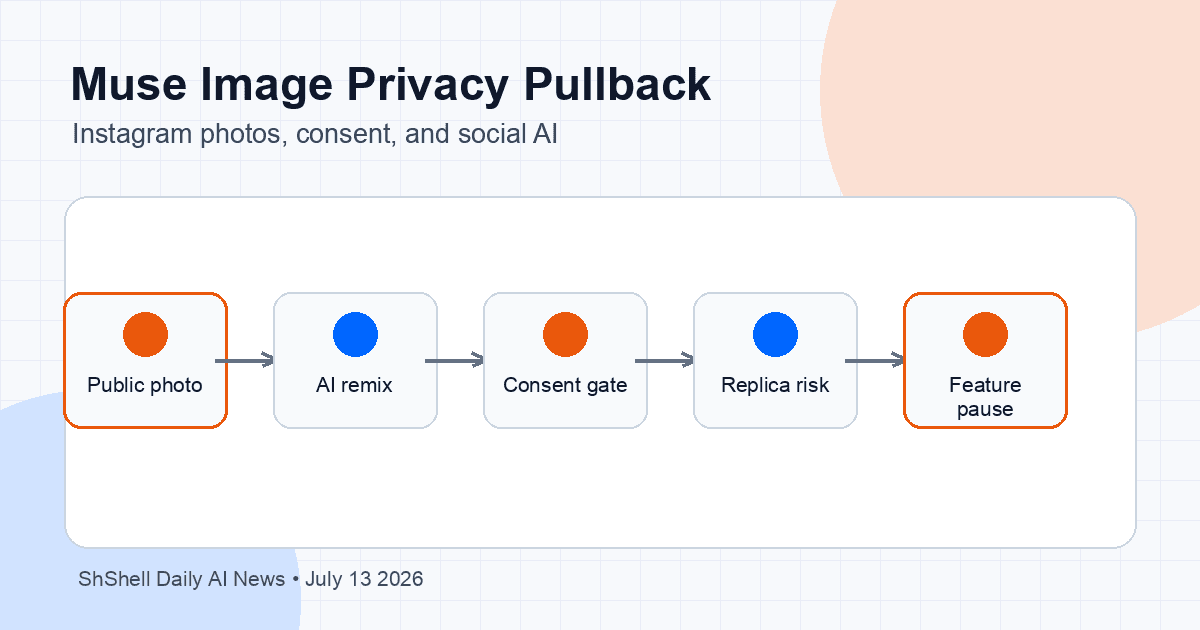
Meta Muse Image launched inside Meta AI, then privacy backlash over Instagram image access made the rollout a live AI governance test.

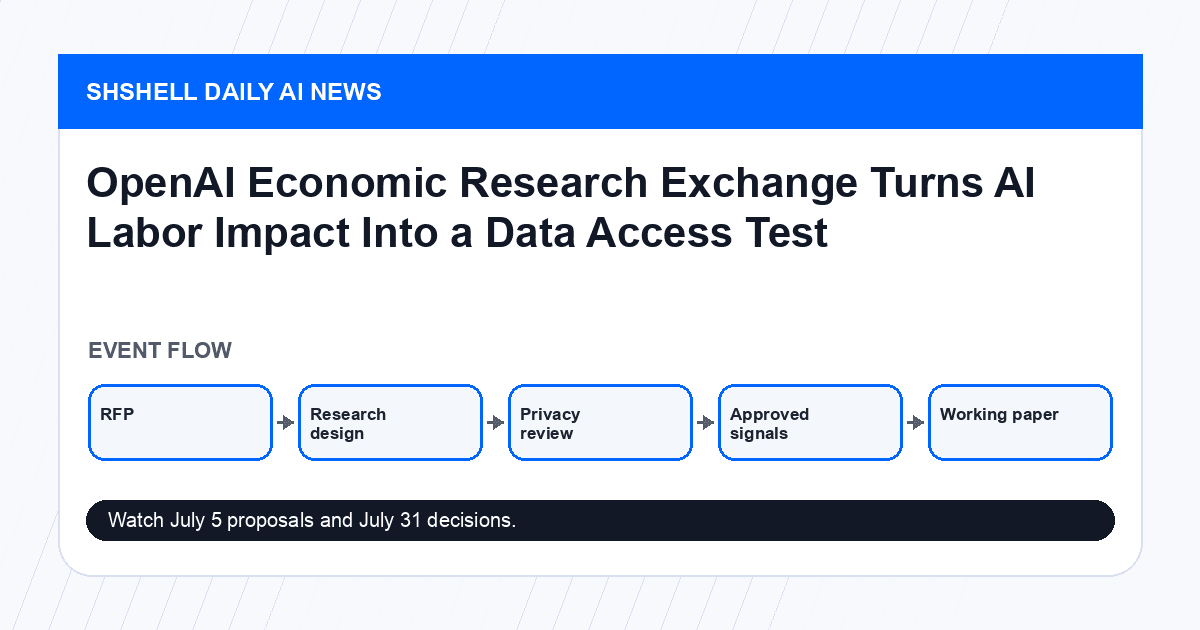
OpenAI's Economic Research Exchange offers grants and privacy-safe usage data for AI labor impact research.

xAI Grok Imagine Video 1.5 adds pressure to the generative AI video race, AI tools market, prompt engineering workflows, and creator APIs.

OpenAI GPT-Rosalind highlights how AI agents, LLMs, and generative AI could reshape life sciences research, evidence synthesis, and lab workflows.

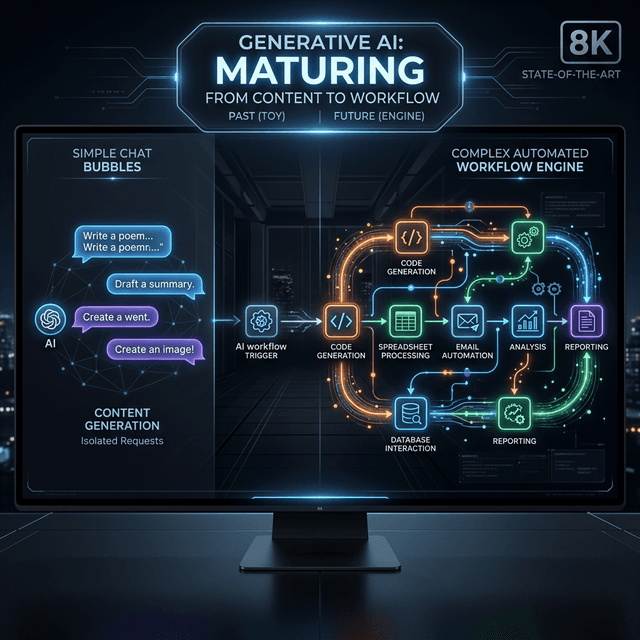
In 2026, the novelty of AI-generated poems is gone. Generative AI has matured into a powerful workflow engine, valued at over $91B. Explore how Google AI Mode and Claude are redefining productivity.