
AI News
Amazon’s Custom AI Chips Show the Next Battleground Is the Device Itself
Amazon’s push toward in-house AI chips for devices signals a broader move toward edge AI, cheaper inference, and more control over the hardware stack.
Read Article →
8 articles
Amazon’s push toward in-house AI chips for devices signals a broader move toward edge AI, cheaper inference, and more control over the hardware stack.
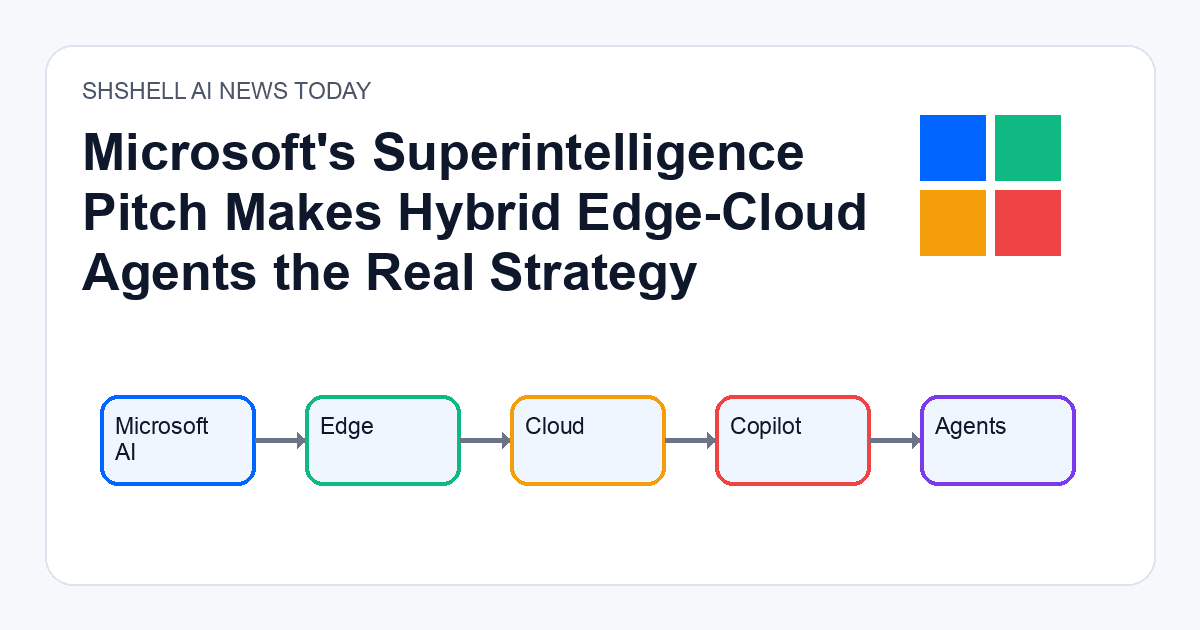
Microsoft AI's superintelligence comments point to hybrid edge-cloud agents, proprietary MAI models, and enterprise utility.

NVIDIA Space-1 and edge AI platforms point to orbital compute for satellites, geospatial intelligence, autonomous operations, and AI factories beyond Earth.

Intel hired Qualcomm veteran Alex Katouzian to lead Client Computing and Physical AI, signaling a wider shift beyond traditional PCs.

AI inference costs have plummeted 280-fold since 2024, enabling a new generation of 'Physical AI' where humanoid robots and edge devices can think in real-time.

In 2026, bigger isn't always better. Explore how Alibaba's Qwen3.5 Small Series and other sub-10B-parameter models are outperforming giants, enabling true on-device intelligence.

Bigger isn't always better in the world of AI. Discover why small language models (SLMs) are becoming the secret weapon for startups looking for cost-efficiency, low latency, and total control.

Why run logic in the cloud? We explore the rise of Edge AI, running small language models (SLMs) on devices, and the architecture of distributed agent swarms.