AI Engineering
GPT-Synopsys Puts AI Chip Design on a Revenue-Sharing Test
OpenAI and Synopsys announced GPT-Synopsys for semiconductor design, tying frontier models to engineering tools and commercial accountability.
Read Article →
28 articles
OpenAI and Synopsys announced GPT-Synopsys for semiconductor design, tying frontier models to engineering tools and commercial accountability.

OpenAI’s Astra report and the surrounding coverage show why frontier models are now being gated by cyber capability, not just benchmark scores.
OpenAI's computer-use push turns browser control into a permissions, identity, and audit problem instead of a simple chatbot feature.
OpenAI's zero-data-retention option shows enterprise buyers now judge AI on data handling, audit risk, and residency as much as model quality.

OpenAI’s low-latency voice system shows why conversational AI is moving from novelty to a product layer that can support retail, support, and assistant workflows.
OpenAI's reported $500 billion data-center push and Nvidia's backing show that AI scale is now a financing contest, not just a chip contest.

OpenAI’s model-evaluation incident with Hugging Face turns sandbox design, agent autonomy, and benchmark abuse into a live security problem.

OpenAI\u2019s real-time voice models show that the next AI interface battle is not about prompt quality alone; it is about who owns the conversation layer and the habits that come with it.

Leaked Q1 2026 figures reportedly show OpenAI at $5.7 billion in revenue and $3.7 billion in operating costs, a reminder that hypergrowth in AI still comes with a heavy compute bill.
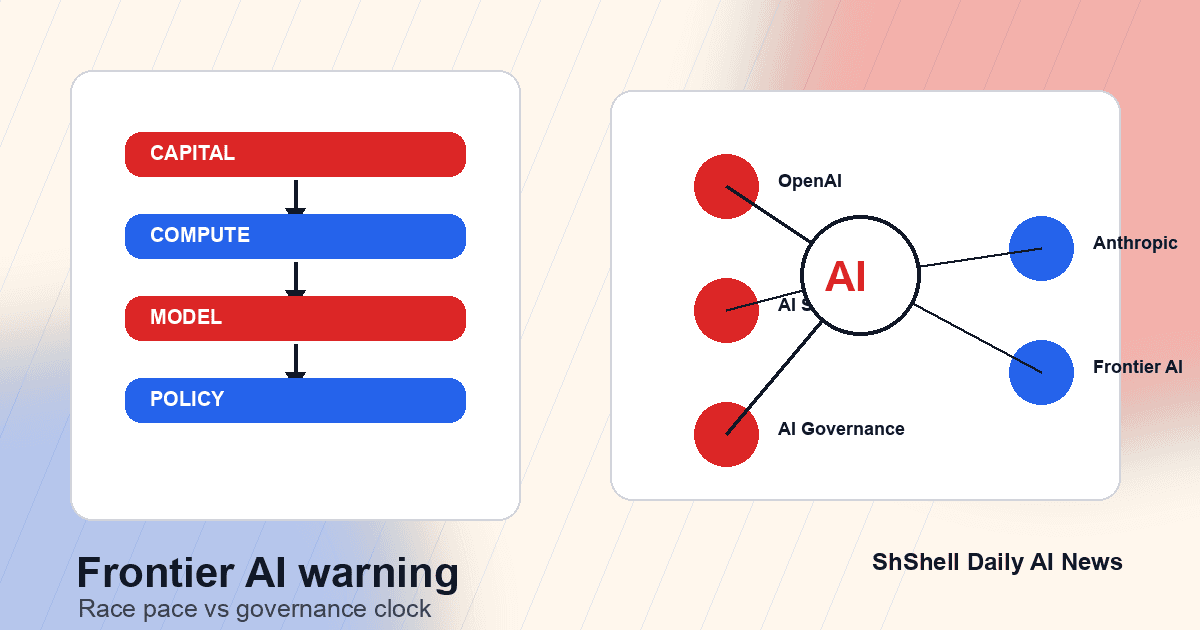
OpenAI and Anthropic's slowdown warnings expose the governance gap between frontier model releases, safety policy, and AI adoption.
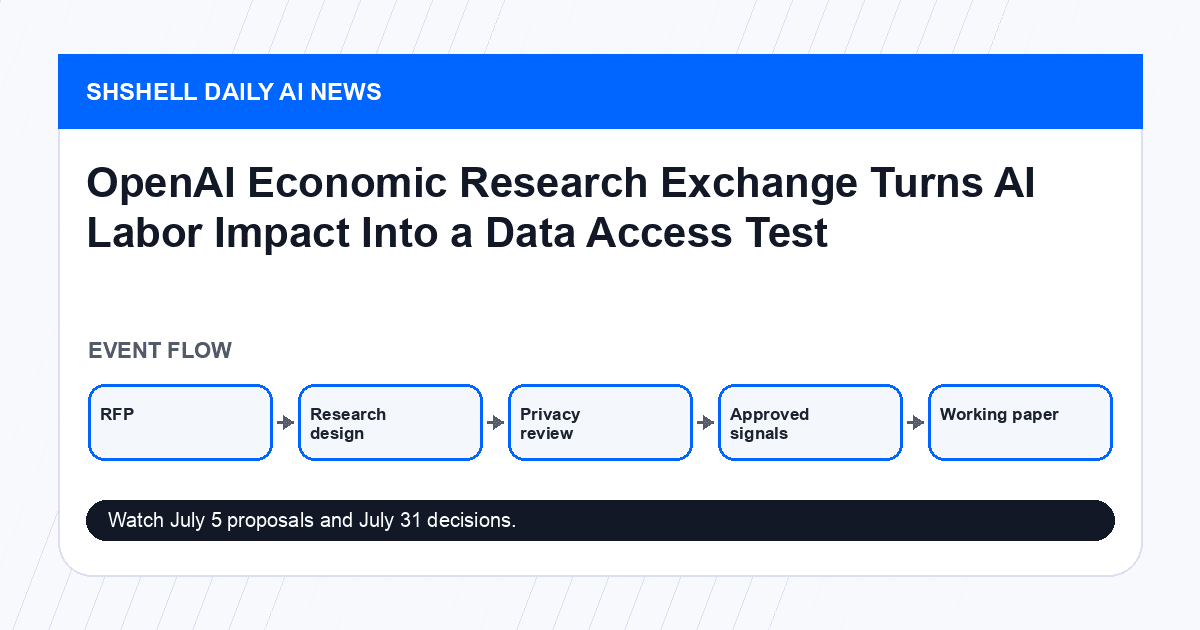
OpenAI's Economic Research Exchange offers grants and privacy-safe usage data for AI labor impact research.

OpenAI GPT-Rosalind highlights how AI agents, LLMs, and generative AI could reshape life sciences research, evidence synthesis, and lab workflows.

OpenAI frontier AI governance blueprint pushes national rules, safety testing, and public-sector capacity into the latest AI news cycle.
OpenAI's election safeguards combine AP results, Democracy Works voting information, cyber defense access, C2PA, and SynthID provenance.
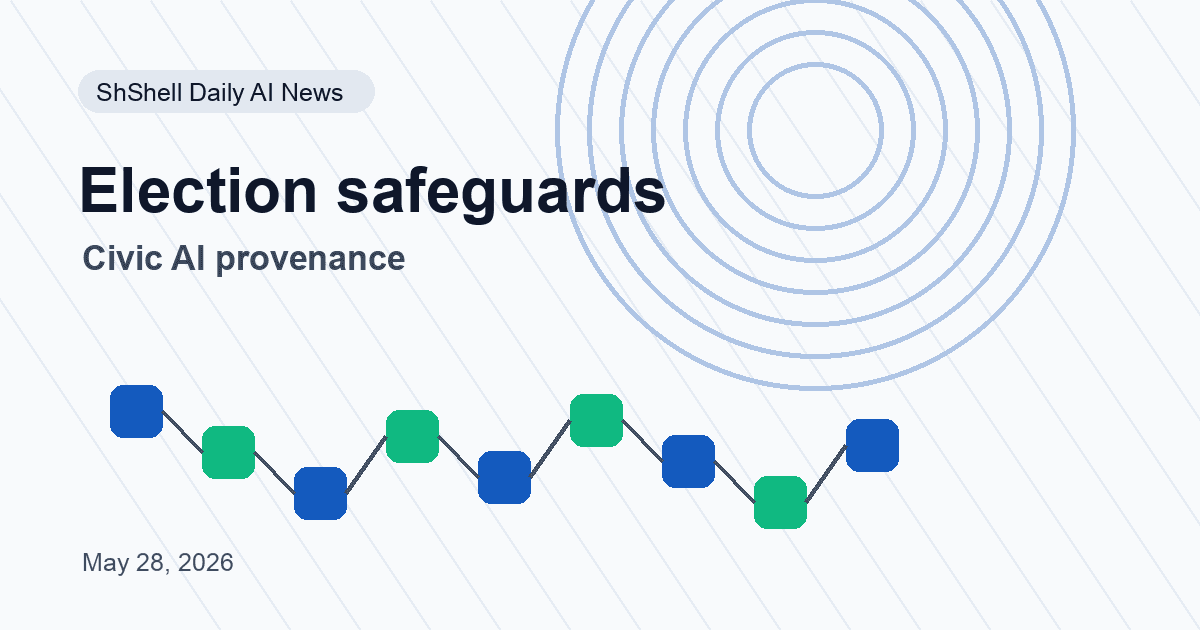
OpenAI's May 2026 election plan adds AP results, Democracy Works voting info, cyber defense support, SynthID and C2PA provenance.
OpenAI's Gartner recognition for Codex signals that enterprise coding agents are becoming a governed software buying category.

OpenAI says a general-purpose reasoning model disproved a famous Erdős unit distance conjecture, changing the research automation debate.
OpenAI and Dell are bringing Codex closer to hybrid and on-prem enterprise environments where sensitive code and workflows live.

Court disclosures around Microsoft's OpenAI spending reveal how frontier AI partnerships turn cloud infrastructure into balance-sheet strategy.

Court scrutiny of Sam Altman's outside stakes shows why frontier AI governance now has to account for capital networks.

OpenAI's Daybreak cyber platform intensifies the race to turn frontier models into controlled security infrastructure.
Ramp's AI Index shows Anthropic edging past OpenAI in paid business adoption, signaling a shift in enterprise AI demand.
OpenAI Daybreak pushes Codex Security into vulnerability review, patch validation, and trusted cyber workflows.

OpenAI's new realtime voice models bring reasoning, translation, and streaming transcription into production voice agents.
OpenAI is reportedly building a multibillion-dollar enterprise AI deployment vehicle with private-equity backers.

OpenAI has released GPT-5.4, featuring an unprecedented 1-million-token context window and a new reasoning kernel optimized for long-running autonomous workflows.
OpenAI releases GPT-OSS-120B, a 117-billion parameter mixture-of-experts model under Apache 2.0, bringing frontier-level reasoning to every developer's local machine.
OpenAI's latest frontier model, GPT-5.4, has achieved a historic milestone by outperforming human experts on the OSWorld benchmark for autonomous software interaction.