AI & LLMs
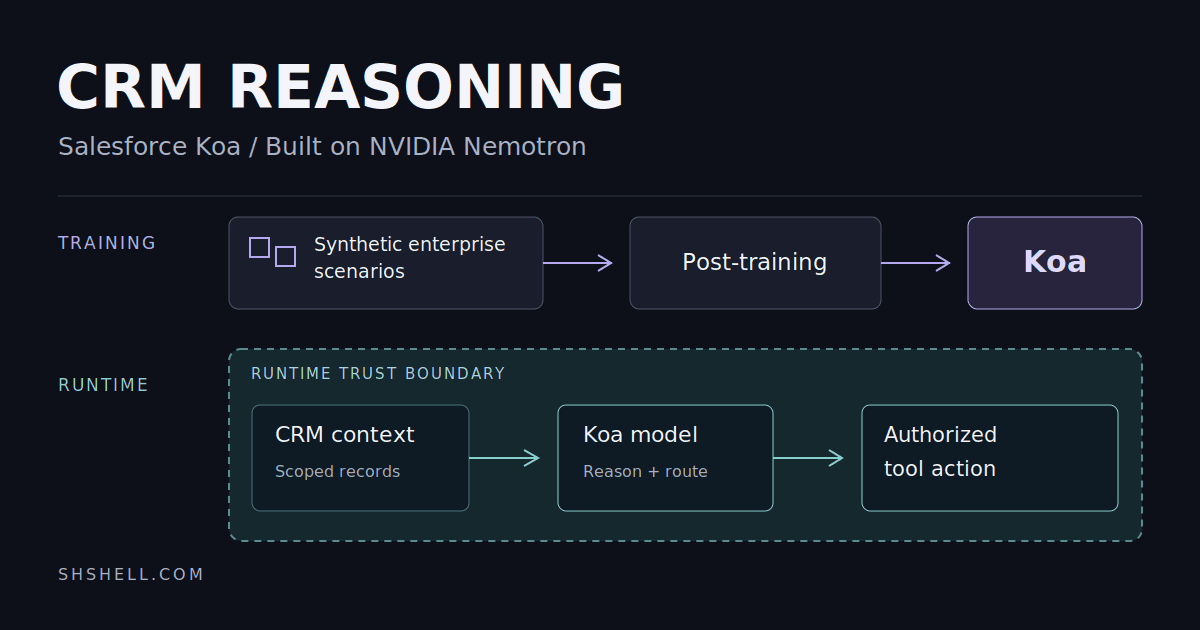
Salesforce’s Koa Moves the Model Contest Into the CRM Workflow
Koa brings domain post-training to Agentforce, making workflow execution and governed model routing the tests that matter.
Read Article →
21 articles
Koa brings domain post-training to Agentforce, making workflow execution and governed model routing the tests that matter.

Hudson River Trading's Rubin deployment on CoreWeave shows quantitative finance is becoming an early market for tightly integrated AI supercomputing.

NVIDIA’s physical AI push shows simulation, world models, and digital twins becoming the real platform for robotics adoption.

Nvidia's open secure AI alliance shows that model safety, supply-chain trust, and security tooling are moving from sidecar tasks to platform strategy.

OpenAI's reported $500 billion data-center push and Nvidia's backing show that AI scale is now a financing contest, not just a chip contest.

NVIDIA’s SIGGRAPH push shows that physical AI is becoming a simulation, tooling, and workflow business, not only a hardware story.

Nvidia\u2019s reported reduction of its Asia buyer list suggests export controls are no longer just a compliance issue; they are becoming a way to ration access to AI capacity.

Japan's new NVIDIA-backed national AI infrastructure is more than a chip deal: it is a blueprint for physical AI, robotics, and industrial sovereignty.
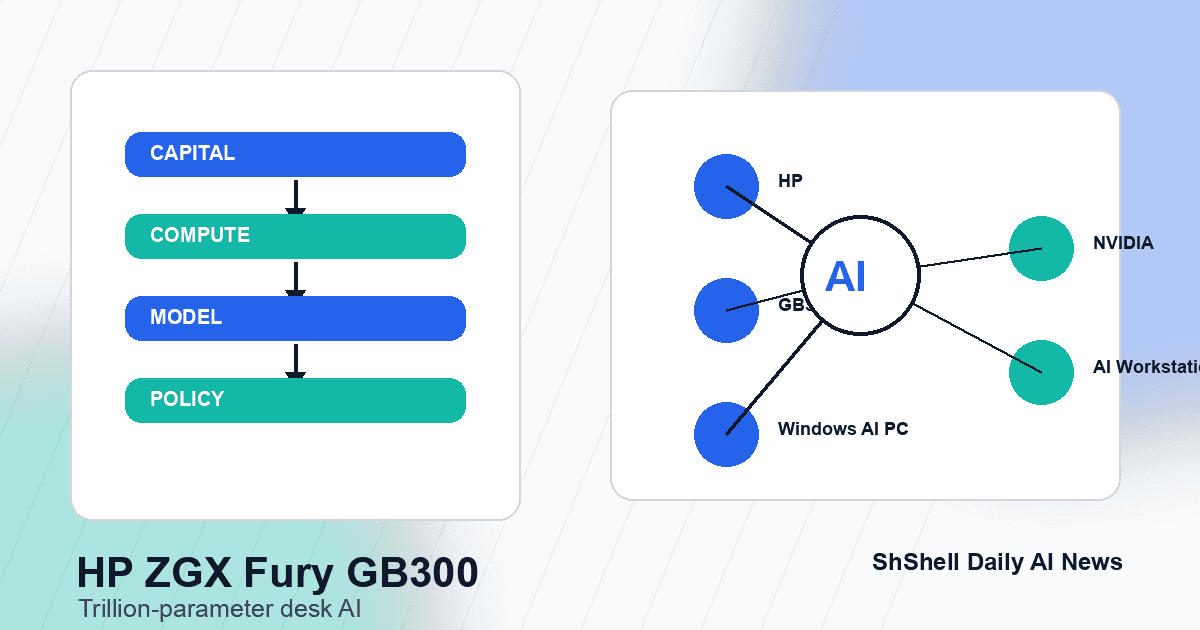
HP's ZGX Fury GB300 shows why enterprise AI workstations, local inference, and Nvidia's GB300 memory stack matter in AI News Today.

Nvidia RTX Spark superchip brings local AI agents, Arm Windows PCs, and unified memory into the Latest AI News spotlight.

Nvidia's Isaac GR00T reference humanoid combines Unitree hardware, Sharpa hands, Jetson Thor compute, and open robotics workflows.

Nvidia's latest quarter shows hyperscale AI demand is still expanding, with data center revenue dominating the economics of the model race.

Cerebras priced its IPO above range, testing public investor appetite for wafer-scale AI chips and inference infrastructure.

IREN's AI infrastructure volatility shows that GPU demand is real, but financing, power, and execution risk still decide winners.
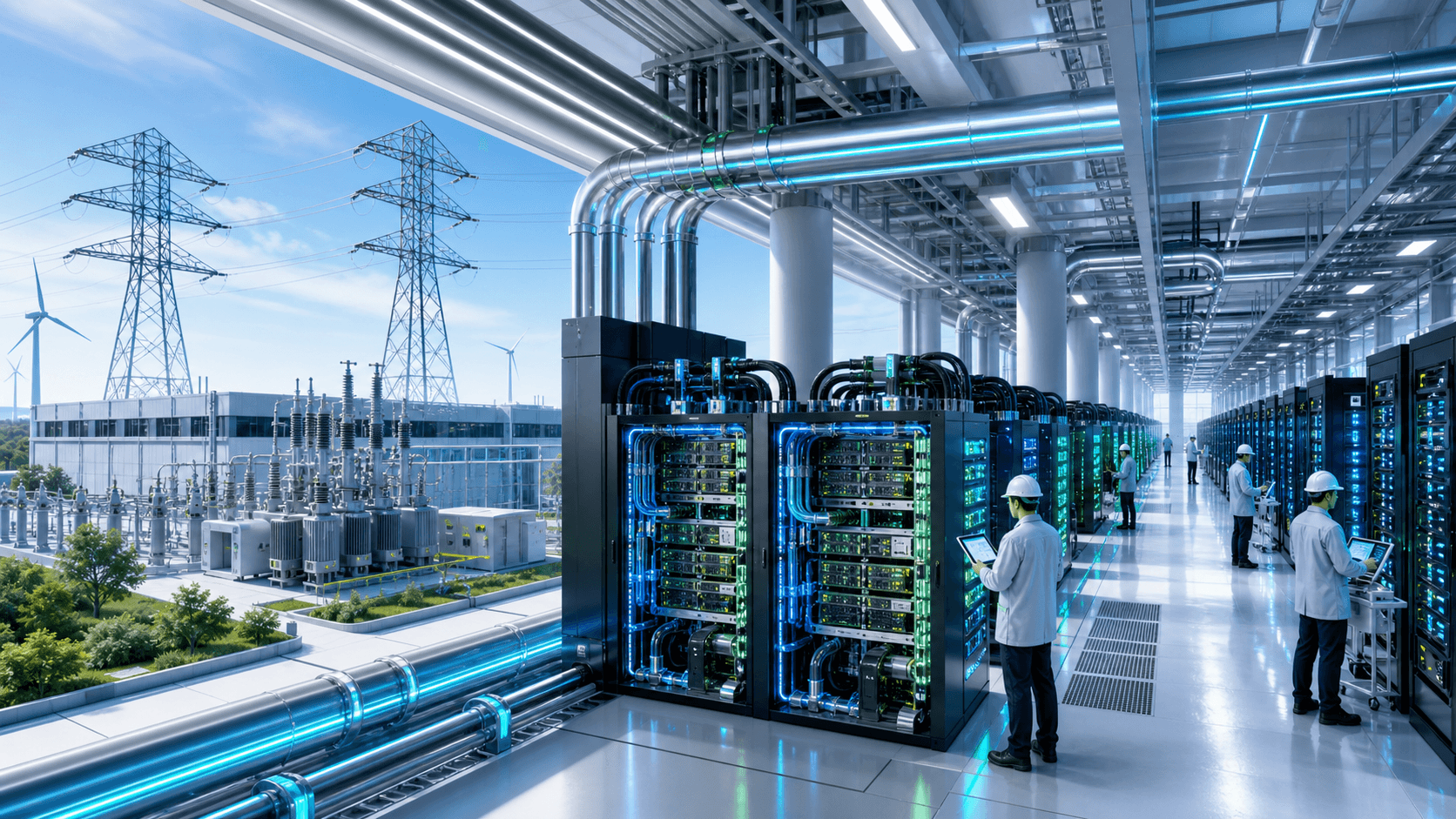
Amazon's reported Titus data-center effort highlights how power, cooling, and rack design now shape AI competition.

Nvidia's reported IREN cloud deal points to a new AI infrastructure market built around power, options, and secured demand.

Cerebras is reportedly targeting a valuation up to $26.6 billion, giving public investors a sharper test of AI chip demand beyond Nvidia.

A federal judge let key copyright claims against Nvidia proceed, keeping training-data risk close to the AI infrastructure boom.
Huawei's expected AI chip gains in China show how export controls are pushing inference hardware, software, and sovereignty together.

NVIDIA unveils the Vera Rubin platform, integrating the Vera CPU and Rubin GPU to power a new era of 'AI Factories' designed for autonomous agentic systems at scale.
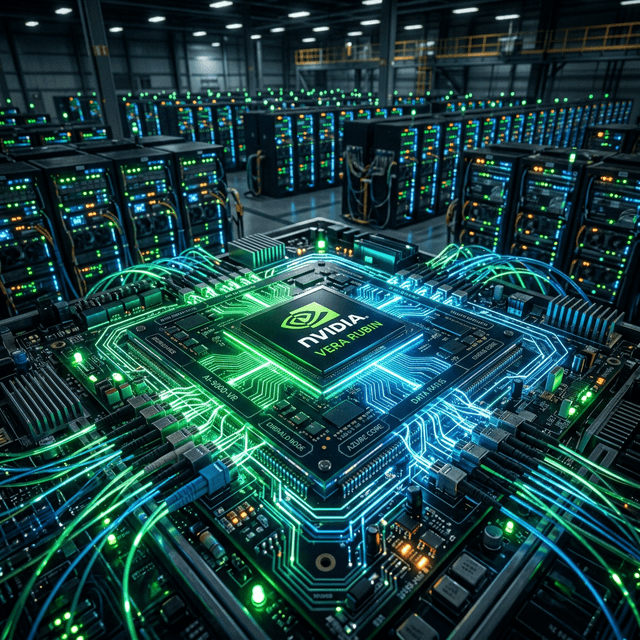
NVIDIA unveils its most powerful architecture yet, Vera Rubin, designed to facilitate the next generation of agentic AI and power global-scale AI factories.