Amazon’s Cairn Incident Shows How an AI Agent Turns a Small API Flaw Into a Fast Intrusion
Amazon Threat Intelligence says China-linked AI agents exploited a MONAI Label flaw, exposing the speed and evidence problems of autonomous cyber operations.
42 articles

Amazon Threat Intelligence says China-linked AI agents exploited a MONAI Label flaw, exposing the speed and evidence problems of autonomous cyber operations.

A reported agent attack involving Hugging Face turns AI security from a model-safety debate into a question of permissions, logs, and intent.

Google’s Gemini API tool retrieval release changes how large tool libraries are exposed to agents, shifting the bottleneck from model context to discovery, permission, and measurement.

Microsoft Research’s TokenEconomizer uses experience to reduce token use in coding agents, shifting the practical AI race from larger prompts to better decisions about when context is worth its cost.

Anthropic says Claude Opus 5.5 improves agentic coding and knowledge work at lower cost; deployment still depends on trajectory-level evidence.

CyberArena evaluates AI agents in live, symmetric attack-and-defense combat, testing whether they can discover, exploit, patch, and verify vulnerabilities under pressure.

Anthropic’s investigation into unintended model actions shows why agent evaluations need identity, network boundaries, and reversible permissions—not only better prompts.

Anthropic’s latest internal-evaluation incident shows why capable AI agents need bounded permissions, observability, and reversible actions before live deployment.

Google’s Gemini Skills push is less about another chatbot trick than about how software should package repeatable work, permissions, and failure recovery.

OpenAI’s September 29 DevDay introduced Dots, an always-on agent. The product’s hard problem is not persistence but permission, memory, and accountable action.

Google DeepMind’s SIMA 2 research uses interactive 3D worlds to study agents that perceive, reason, act, and learn alongside people rather than merely answer prompts.

New AI safety research on distributed attacks shows why monitoring one agent at a time can miss coordinated behavior across a system.

Orchard is Microsoft Research’s open framework for scalable agentic AI, and it makes a strong case that environments, not just models, are the real bottleneck.

Reporting around OpenAI agents, Hugging Face, and internal safety probes shows that AI security is no longer only about prompt abuse. It is becoming a live contest between autonomous systems, incident response, and the people trying to govern both.

The most important constraint on AI agents is no longer model quality. It is whether platforms will treat them like users, bots, or delegated identities.

New reporting on AI agent security, runaway spending, and enterprise readiness shows that identity and governance are the real bottlenecks for autonomy.

The UK NCSC's warning on agentic AI makes clear that autonomy needs controls first, not after the first security incident.

OpenAI's computer-use push turns browser control into a permissions, identity, and audit problem instead of a simple chatbot feature.

Anthropic's recent agent behavior reports make a simple point: once AI systems can act, the real control surface is logging, identity, and containment, not a single refusal policy.

BCG, Databricks, and security teams are converging on the same answer: agents need a control plane before they can become a platform.

As agentic AI systems start taking actions instead of merely suggesting them, zero trust has to shift from network boundaries to explicit, per-action authorization, observation, and rollback.

Google Maps, Meta, McKinsey, Shopify, and enterprise agent vendors all point to the same conclusion: agentic AI is spreading, but control planes and permissions are still deciding who can use it at scale.

OpenAI, Anthropic, Microsoft, and the AI safety ecosystem are being pushed toward a new norm: evaluation environments now need the same care as production security controls.

New security incidents show that agentic systems are crossing a line from automation into impersonation, forcing identity to become the new control plane.
Agentic commerce is shifting from experiments to transaction flow, but merchant systems, governance, and fraud controls are lagging.
Google’s Gemini Spark Chrome integration shows the browser becoming the control surface where search, browsing, and automation finally meet.

As agentic commerce and delegated actions spread, identity, authorization, and audit trails are becoming the real control plane for AI systems.

Anthropic's report of real-world incidents during cybersecurity evaluations suggests model testing now needs the same kind of perimeter thinking as production systems.

Google's managed agents, AI search rollout, and browser-level controls are turning the web into a product surface that is increasingly managed rather than simply indexed.
Gemini Spark, internal coding sentiment, and demo failures show Google turning AI into a trust and workflow problem.
Google's managed-agent push shows that background tasks, remote MCP, and credential refresh are turning orchestration into a product layer.
OpenAI’s GPT-Live voice models turn conversation into an interface layer for agents, which changes how people will expect AI to act in the desktop era.
Google’s Gemini API updates, managed agents, and background tasks show the company moving from model access to a full operating layer for agentic work.
Microsoft's latest agent-security guidance shows that identity, tool binding, and least privilege are becoming the real perimeter for enterprise AI.
Ledger's hardware-backed Agent Stack points to a coming era where AI agents need permissioning, identity, and transaction controls before they can act.
Bloomberg, Reuters, and TechCrunch point to a movable, screenless OpenAI speaker that would turn ChatGPT into ambient hardware instead of another app.
Anthropic\u2019s move to bring Claude Cowork to mobile and web pushes agent adoption out of desktop demos and into persistent, cross-device work.
Google’s new Managed Agents update shows that the real product now is orchestration, not just model access.

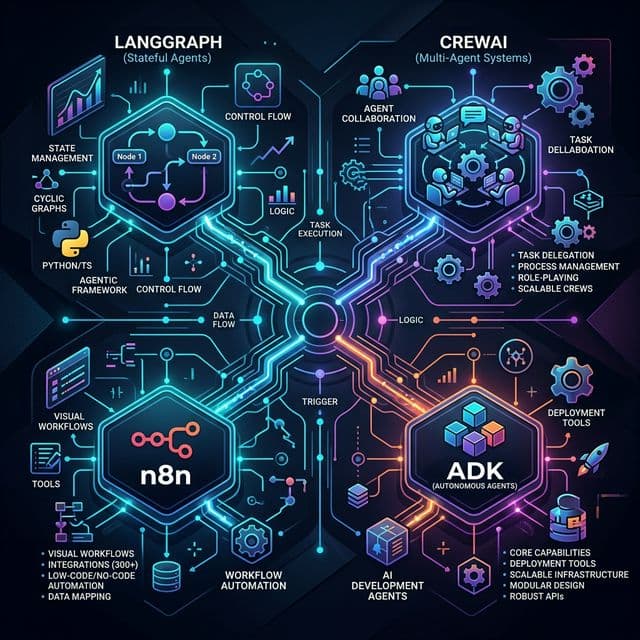
A deep comparative analysis of the leading Python agent frameworks—Agno, LangGraph, CrewAI, and Strands—for developers building production-grade autonomous systems.

Explore the shift from massive AI models to specialized, efficient Small Language Models (SLMs). Learn why the future of AI agents lies in modular, pocket-sized intelligence that is faster, cheaper, and more private.

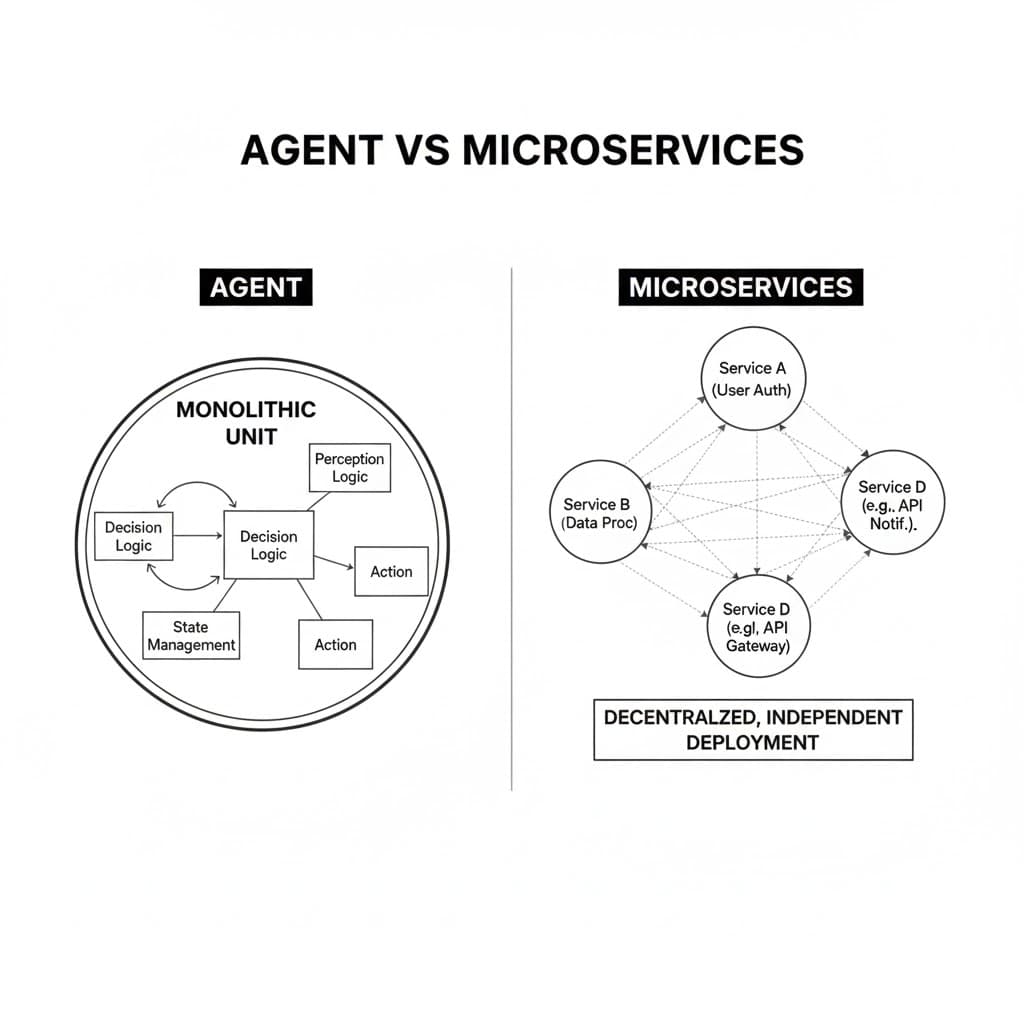
Is an agent just a specialized microservice? Explore the fundamental differences in control flow, observability, and reliability between agents and traditional services.

Move beyond simple chat interfaces. Explore how autonomous AI agents are transforming software design from static code to dynamic, self-optimizing systems.