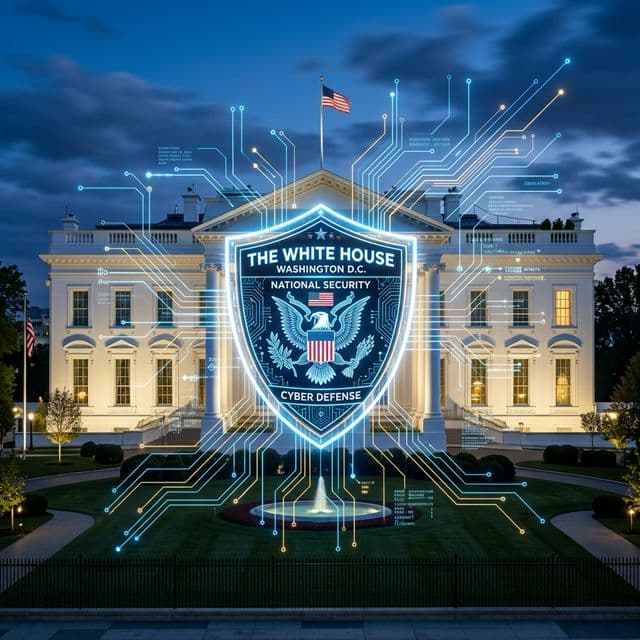
The Federal Blueprint: White House Unveils National AI Framework to Preempt State Regulations
The Trump administration releases a landmark legislative blueprint for AI, advocating for a 'light-touch' federal standard to ensure American dominance and prevent a patchwork of state laws.
The Federal Blueprint: White House Unveils National AI Framework to Preempt State Regulations
In a move intended to provide "regulatory clarity" to the world's fastest-growing industry, the White House officially released the National AI Policy Framework (NAPF) on March 20, 2026. This legislative blueprint represents the administration’s definitive stance on artificial intelligence: prioritize innovation, protect core American values, and—most crucially—establish a unified federal standard that preempts the burgeoning "patchwork" of state-level AI regulations.
"AI is either going to be built in America using American values, or it will be built elsewhere," said the White House Press Secretary. "This framework ensures that our developers spend their time building the future, not navigating 50 different rulebooks."
Preemption: The Core Battleground
The most significant aspect of the NAPF is its focus on Federal Preemption. For the past two years, states like California, Colorado, and Texas have passed individual laws ranging from "algorithmic accountability" to "AI disclosure requirements."
The White House argues that these disparate laws create "unnecessary friction" that hampers American competitiveness against China and the EU. The NAPF calls on Congress to enact legislation that makes federal AI standards the sole authority over:
- Model Training Transparency.
- Risk Assessment Protocols.
- Labeling for AI-Generated Media (Deepfakes).
- Standardized Ethics Audits.
The Legislative Landscape (March 2026)
graph TD
    A[Unregulated AI Market] --> B{TRUMP AMERICA Act / NAPF}
    B --> C[Federal Standard: Light Touch]
    B --> D[Preempt State Laws]

    subgraph "State Activity"
    E[California: Safety Audits]
    F[Colorado: Bias Testing]
    G[Texas: Consumer Data]
    end

    C -.-> |Uniformity| H[Accelerated Innovation]
    D -.-> |Override| E
    D -.-> |Override| F
    D -.-> |Override| G

    style C fill:#002868,stroke:#333,stroke-width:2px,color:#fff
    style D fill:#BF0A30,stroke:#333,stroke-width:2px,color:#fff
Key Pillars of the Framework
The NAPF is structured around several "High-Priority Action Areas" that aim to balance safety with speed.
1. Protecting Children and Empowering Parents
While the framework is "light-touch" for enterprise, it is stringent on child safety. It mandates that AI social platforms implement "Age-Assurance" technologies and grants parents the right to "Personalized Digital Enclosures"—AI filters that prevent toxic or self-harm-inducing content from reaching minors.
2. Ensuring American Energy Independence for AI
Recognizing that AI is an energy-intensive industry, the framework streamlines the permitting process for Nuclear and On-Site Power Generation at data centers. It explicitly encourages AI "factories" to generate their own power to avoid spiking electricity costs for local ratepayers.
3. Respecting Intellectual Property (The Court Deferral)
In a notable policy shift, the White House is recommending that Congress avoid creating new "Training Copyright" laws. The NAPF explicitly states the administration's belief that training AI models on copyrighted material constitutes Non-Violative Fair Use, recommending that current legal disputes be left to the courts rather than new bureaucracy.
4. Preventing "Government-AI Weaponization"
The framework prohibits federal agencies from using AI to "monitor, silence, or censor lawful political expression." It includes a "First Amendment Triple-Check" for any AI system used in national security or law enforcement.
Sector-Specific Regulation (No New Agency)
Notably, the NAPF rejects the calls from some industry leaders for a "Department of AI" (similar to the FDA or FCC). Instead, it advocates for Sector-Specific Oversight:
- The SEC will manage AI in finance.
- The DOT will manage AI in autonomous vehicles.
- The HHS will manage AI in medical diagnostics.
This approach keeps regulation within the hands of existing experts rather than creating a centralized "AI Czar."
The Economic Prognosis
| Provision | Anticipated Impact | ROI Estimate (2030) |
|---|---|---|
| Federal Preemption | 40% reduction in compliance costs | $1.2 Trillion (GDP) |
| Streamlined Permitting | 2x Data Center speed-to-market | $450 Billion (Infra) |
| Regulatory Sandboxes | Faster pilot deployments | 10k+ New AI Startups |
Frequently Asked Questions (FAQ)
Does this mean state AI laws are immediately void?
No. The NAPF is a legislative blueprint. For it to override state laws, Congress must pass the corresponding legislation (currently drafted as the TRUMP AMERICA Act).
How does this compare to the EU AI Act?
The EU AI Act is "Precautionary," placing significant burdens on models before they are released. The US NAPF is "Redressive," meaning it prioritizes freedom to innovate and focuses on policing harm after it occurs via existing consumer protection laws.
What about the privacy of my data?
The framework emphasizes "Consumer Sovereignty," suggesting that users should have the right to own their "Inference History," but it stops short of a national GDPR-style privacy law, focusing instead on industry self-governance for non-sensitive data.
Conclusion: The Race to 2030
The White House National AI Policy Framework released on March 20, 2026, is a clear signal to the world: America will not regulate its way into second place. By choosing a unified, light-touch federal standard, the administration is betting that the speed of innovation is the ultimate safety feature. As this blueprint moves to Congress, the coming months will determine if this "American Standard" becomes the global template for the age of intelligence.
This investigative report was synthesized by Sudeep Devkota. Policy data and analysis sourced from the White House March 2026 Press Portfolio and legislative drafts provided by the House Committee on Energy and Commerce.