OpenAI and Anthropic Token Price Pressure Makes Model Routing the New AI Cost Strategy
OpenAI price-cut reports and Claude Fable 5 pricing show why enterprises are shifting from tokenmaxxing to outcome-based model routing.
The AI budget conversation has moved from how many seats a company bought to how many expensive tokens it burns to finish one verified task.
The Wall Street Journal and follow-on reports said OpenAI is considering steep price cuts as Anthropic competition intensifies and enterprise buyers push back on AI costs. Barron’s reported Claude Fable 5 at ten dollars per million input tokens and fifty dollars per million output tokens, while GPT-5.5 was described at five dollars per million input tokens and thirty dollars per million output tokens. The exact commercial moves may change, but the buyer behavior is already visible: route work by total task cost.
For readers tracking latest AI news and Artificial Intelligence News, the importance is not that another AI headline appeared. The importance is that this story exposes a concrete operating constraint: the people buying, regulating, deploying, or building AI systems now have to make decisions before the infrastructure around those systems is mature. That is the connective tissue between model releases, agentic AI, AI training, AI tools, and enterprise governance in 2026.
This ShShell analysis is source-grounded but not a wire rewrite. It separates what the cited reports say, what can be inferred from the technical or commercial mechanism, and what remains uncertain. The goal is to help builders, buyers, researchers, and operators understand how this specific event changes the next set of decisions.
What changed on June 12
Token pricing used to feel like infrastructure trivia. It is now boardroom math. Reports that OpenAI is weighing steep price cuts while Anthropic pushes higher-end Claude Fable 5 pricing show a market leaving the novelty phase and entering margin warfare. The companies still compete on model quality, developer mindshare, and enterprise trust, but buyers increasingly measure AI tools by task cost, not brand prestige. That shift changes how large language models are routed, budgeted, and justified.
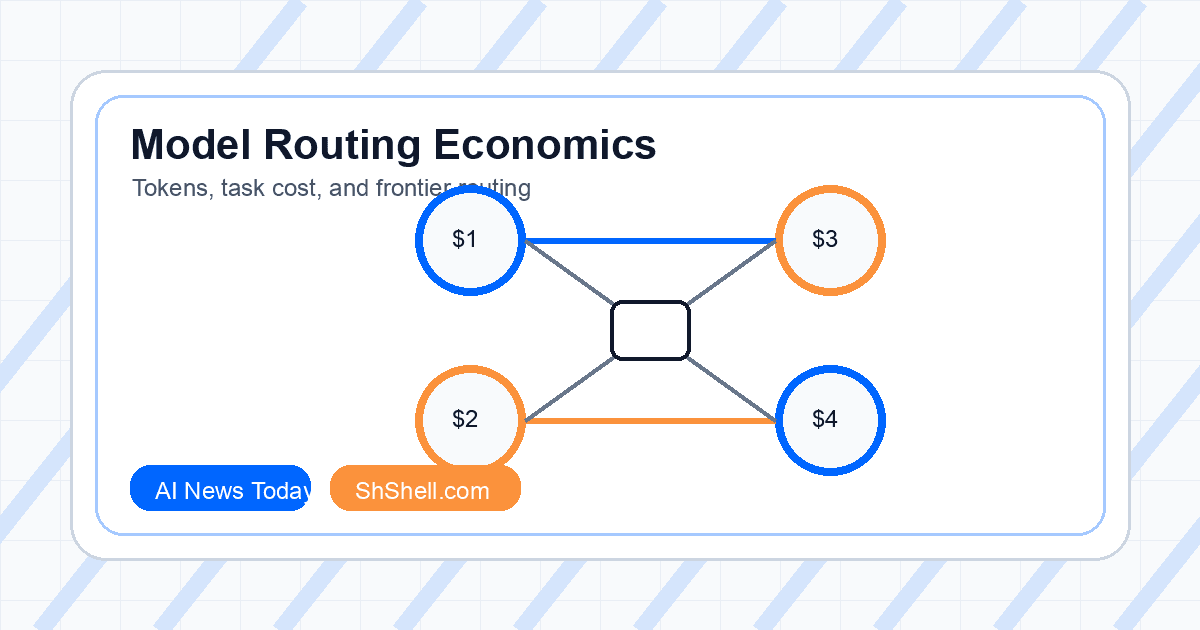
The mechanism is model routing. A company does not need the most expensive frontier model for every step. It can use a cheaper model for classification, extraction, summarization, or draft generation, then reserve a premium model for hard reasoning, code review, or final synthesis. The Wall Street Journal reported that some businesses are alternating between lower-cost models and premium systems, with potential operating cost reductions as high as 95 percent. Even if that number depends heavily on the workload, the direction is clear: the default architecture is becoming multi-model.
For builders, this means prompt engineering is no longer only about getting a good answer. It is about designing an economic control system. A production agent may need a cheap planner, a specialized retriever, a premium critic, and a fallback model when the output fails validation. Tokenmaxxing, the habit of spraying premium inference at every problem, becomes a smell. The smarter pattern is to measure total cost per successful task, including retries, latency, human review, and downstream correction.
For buyers, the danger is false economy. A cheaper model that produces more failures may cost more after support tickets and human cleanup. A premium model that handles a complex workflow in one pass may be cheaper than a brittle chain of low-cost calls. The practical question is not which model has the lowest input-token price. It is which routing policy produces the lowest verified outcome cost for a specific business process.
The mechanism behind the headline
Token pricing used to feel like infrastructure trivia. It is now boardroom math. Reports that OpenAI is weighing steep price cuts while Anthropic pushes higher-end Claude Fable 5 pricing show a market leaving the novelty phase and entering margin warfare. The companies still compete on model quality, developer mindshare, and enterprise trust, but buyers increasingly measure AI tools by task cost, not brand prestige. That shift changes how large language models are routed, budgeted, and justified.
The mechanism is model routing. A company does not need the most expensive frontier model for every step. It can use a cheaper model for classification, extraction, summarization, or draft generation, then reserve a premium model for hard reasoning, code review, or final synthesis. The Wall Street Journal reported that some businesses are alternating between lower-cost models and premium systems, with potential operating cost reductions as high as 95 percent. Even if that number depends heavily on the workload, the direction is clear: the default architecture is becoming multi-model.
For builders, this means prompt engineering is no longer only about getting a good answer. It is about designing an economic control system. A production agent may need a cheap planner, a specialized retriever, a premium critic, and a fallback model when the output fails validation. Tokenmaxxing, the habit of spraying premium inference at every problem, becomes a smell. The smarter pattern is to measure total cost per successful task, including retries, latency, human review, and downstream correction.
For buyers, the danger is false economy. A cheaper model that produces more failures may cost more after support tickets and human cleanup. A premium model that handles a complex workflow in one pass may be cheaper than a brittle chain of low-cost calls. The practical question is not which model has the lowest input-token price. It is which routing policy produces the lowest verified outcome cost for a specific business process.
flowchart TD
    A[User or business task] --> B[Cheap classifier model]
    B --> C{Difficulty and risk score}
    C --> D[Low-cost open model]
    C --> E[Frontier model for hard reasoning]
    D --> F[Validator and retry policy]
    E --> F
    F --> G[Cost per successful outcome]
Why this matters for builders and AI operators
Token pricing used to feel like infrastructure trivia. It is now boardroom math. Reports that OpenAI is weighing steep price cuts while Anthropic pushes higher-end Claude Fable 5 pricing show a market leaving the novelty phase and entering margin warfare. The companies still compete on model quality, developer mindshare, and enterprise trust, but buyers increasingly measure AI tools by task cost, not brand prestige. That shift changes how large language models are routed, budgeted, and justified.
The mechanism is model routing. A company does not need the most expensive frontier model for every step. It can use a cheaper model for classification, extraction, summarization, or draft generation, then reserve a premium model for hard reasoning, code review, or final synthesis. The Wall Street Journal reported that some businesses are alternating between lower-cost models and premium systems, with potential operating cost reductions as high as 95 percent. Even if that number depends heavily on the workload, the direction is clear: the default architecture is becoming multi-model.
For builders, this means prompt engineering is no longer only about getting a good answer. It is about designing an economic control system. A production agent may need a cheap planner, a specialized retriever, a premium critic, and a fallback model when the output fails validation. Tokenmaxxing, the habit of spraying premium inference at every problem, becomes a smell. The smarter pattern is to measure total cost per successful task, including retries, latency, human review, and downstream correction.
For buyers, the danger is false economy. A cheaper model that produces more failures may cost more after support tickets and human cleanup. A premium model that handles a complex workflow in one pass may be cheaper than a brittle chain of low-cost calls. The practical question is not which model has the lowest input-token price. It is which routing policy produces the lowest verified outcome cost for a specific business process.
| Routing layer | Low-cost choice | Premium choice | Metric that matters |
|---|---|---|---|
| Classification | Small local model | Frontier model rarely needed | Accuracy per thousand tasks |
| Code repair | Specialized coding model | Frontier reasoning model | Passed tests per dollar |
| Customer support | Distilled model with retrieval | Premium model for escalations | Resolved tickets per dollar |
| Research synthesis | Cheap extraction pass | Premium final synthesis | Human edits per report |
The business pressure underneath the AI News Today cycle
Token pricing used to feel like infrastructure trivia. It is now boardroom math. Reports that OpenAI is weighing steep price cuts while Anthropic pushes higher-end Claude Fable 5 pricing show a market leaving the novelty phase and entering margin warfare. The companies still compete on model quality, developer mindshare, and enterprise trust, but buyers increasingly measure AI tools by task cost, not brand prestige. That shift changes how large language models are routed, budgeted, and justified.
The mechanism is model routing. A company does not need the most expensive frontier model for every step. It can use a cheaper model for classification, extraction, summarization, or draft generation, then reserve a premium model for hard reasoning, code review, or final synthesis. The Wall Street Journal reported that some businesses are alternating between lower-cost models and premium systems, with potential operating cost reductions as high as 95 percent. Even if that number depends heavily on the workload, the direction is clear: the default architecture is becoming multi-model.
For builders, this means prompt engineering is no longer only about getting a good answer. It is about designing an economic control system. A production agent may need a cheap planner, a specialized retriever, a premium critic, and a fallback model when the output fails validation. Tokenmaxxing, the habit of spraying premium inference at every problem, becomes a smell. The smarter pattern is to measure total cost per successful task, including retries, latency, human review, and downstream correction.
For buyers, the danger is false economy. A cheaper model that produces more failures may cost more after support tickets and human cleanup. A premium model that handles a complex workflow in one pass may be cheaper than a brittle chain of low-cost calls. The practical question is not which model has the lowest input-token price. It is which routing policy produces the lowest verified outcome cost for a specific business process.
The risks that are still unresolved
Token pricing used to feel like infrastructure trivia. It is now boardroom math. Reports that OpenAI is weighing steep price cuts while Anthropic pushes higher-end Claude Fable 5 pricing show a market leaving the novelty phase and entering margin warfare. The companies still compete on model quality, developer mindshare, and enterprise trust, but buyers increasingly measure AI tools by task cost, not brand prestige. That shift changes how large language models are routed, budgeted, and justified.
The mechanism is model routing. A company does not need the most expensive frontier model for every step. It can use a cheaper model for classification, extraction, summarization, or draft generation, then reserve a premium model for hard reasoning, code review, or final synthesis. The Wall Street Journal reported that some businesses are alternating between lower-cost models and premium systems, with potential operating cost reductions as high as 95 percent. Even if that number depends heavily on the workload, the direction is clear: the default architecture is becoming multi-model.
For builders, this means prompt engineering is no longer only about getting a good answer. It is about designing an economic control system. A production agent may need a cheap planner, a specialized retriever, a premium critic, and a fallback model when the output fails validation. Tokenmaxxing, the habit of spraying premium inference at every problem, becomes a smell. The smarter pattern is to measure total cost per successful task, including retries, latency, human review, and downstream correction.
For buyers, the danger is false economy. A cheaper model that produces more failures may cost more after support tickets and human cleanup. A premium model that handles a complex workflow in one pass may be cheaper than a brittle chain of low-cost calls. The practical question is not which model has the lowest input-token price. It is which routing policy produces the lowest verified outcome cost for a specific business process.
What to watch next
Token pricing used to feel like infrastructure trivia. It is now boardroom math. Reports that OpenAI is weighing steep price cuts while Anthropic pushes higher-end Claude Fable 5 pricing show a market leaving the novelty phase and entering margin warfare. The companies still compete on model quality, developer mindshare, and enterprise trust, but buyers increasingly measure AI tools by task cost, not brand prestige. That shift changes how large language models are routed, budgeted, and justified.
The mechanism is model routing. A company does not need the most expensive frontier model for every step. It can use a cheaper model for classification, extraction, summarization, or draft generation, then reserve a premium model for hard reasoning, code review, or final synthesis. The Wall Street Journal reported that some businesses are alternating between lower-cost models and premium systems, with potential operating cost reductions as high as 95 percent. Even if that number depends heavily on the workload, the direction is clear: the default architecture is becoming multi-model.
For builders, this means prompt engineering is no longer only about getting a good answer. It is about designing an economic control system. A production agent may need a cheap planner, a specialized retriever, a premium critic, and a fallback model when the output fails validation. Tokenmaxxing, the habit of spraying premium inference at every problem, becomes a smell. The smarter pattern is to measure total cost per successful task, including retries, latency, human review, and downstream correction.
For buyers, the danger is false economy. A cheaper model that produces more failures may cost more after support tickets and human cleanup. A premium model that handles a complex workflow in one pass may be cheaper than a brittle chain of low-cost calls. The practical question is not which model has the lowest input-token price. It is which routing policy produces the lowest verified outcome cost for a specific business process.
The operator playbook for routing models by outcome cost
A serious AI cost program starts with workload inventory. List every model-powered workflow, then break it into task units: classify, retrieve, draft, transform, reason, validate, execute, and summarize. Each unit should have its own quality metric, latency budget, risk level, and retry policy. The pricing headline around OpenAI and Anthropic matters because it pushes teams to stop treating the model call as a single commodity. A customer-support resolution flow and a code-migration agent are economically different machines.
The second step is benchmarking with real failures included. Many teams test models on happy-path prompts and then wonder why production costs explode. Outcome-based routing measures the full chain: failed calls, retries, context-window expansion, tool errors, human review, and downstream corrections. If a cheap model creates three extra retries and a support escalation, its token price was a distraction. If a premium model solves a regulated workflow with fewer reviews, it may be the cheaper option even at a higher list price.
The third step is policy-driven routing. Sensitive data, legal commitments, customer tier, task reversibility, and business impact should influence model choice. A low-risk marketing rewrite can go to a smaller model. A production database migration plan may require a premium reasoning model plus a validator. A medical, financial, or legal workflow may require strict logging, approved providers, and explicit human review regardless of cost. Good routing is not only financial optimization. It is governance expressed as software.
The fourth step is vendor negotiation. Buyers should ask frontier labs for committed price schedules, volume discounts, retention terms, latency commitments, and model-deprecation notice periods. They should also avoid locking their entire architecture to one provider’s prompt format or tool schema. The companies that handle the price war best will build an abstraction layer thin enough to preserve model-specific strengths but strong enough to move routine work when economics change.
For prompt engineering teams, this means prompts become assets with cost profiles. A prompt that looks elegant but forces long context, unnecessary chain steps, or premium-model use may be expensive design. The next generation of AI tools will track prompt quality, model route, success rate, and cost per accepted output together.
What teams should do next quarter
The next practical move is to turn the news event into a checklist with owners. Assign one person to map the affected workflows, one person to verify vendor claims, one person to define the risk thresholds, and one person to measure outcomes after deployment. That sounds mundane, but most AI programs fail at exactly this handoff. They discuss strategy at a high level, buy a tool, and then discover that nobody owns the operational questions raised by the tool.
The checklist should be specific enough to change behavior. Which data can enter the system? Which actions require human approval? Which logs are retained? Which model or agent is allowed to call which tool? Which failure conditions trigger rollback? Which costs count as success costs rather than experimentation costs? If the team cannot answer these questions in writing, it is not ready for broad rollout.
Teams should also create a small measurement packet for executives. It should include quality, cost, latency, risk exceptions, human review load, and incidents avoided or created. AI News Today headlines often make adoption feel binary: move fast or fall behind. Production reality is more measured. The winners will be the teams that can show where an AI system works, where it should stay supervised, where it is too expensive, and where the risk boundary is still unclear.
For ShShell readers learning AI from a builder’s perspective, this is the habit to develop: convert every major Artificial Intelligence News story into architecture, controls, and metrics. The headline tells you what changed. The operating model tells you whether that change should alter your roadmap.
The reader decision hidden inside the headline
The useful way to read this story is as a decision prompt, not as passive news. Ask what would have to be true for your team to act differently tomorrow. If the answer is better vendor visibility, put that into procurement. If the answer is safer tool permissions, put that into engineering design. If the answer is clearer measurement, put that into dashboards before the next rollout. AI adoption becomes less speculative when every headline is converted into an operational question with a named owner.
The second decision is timing. Some teams should move immediately because the risk or opportunity touches an active deployment. Others should watch for one more signal: a regulation, a pricing change, a model update, an audit report, or a production case study. Both responses can be rational. The mistake is to treat latest AI news as entertainment while the underlying architecture, cost model, or governance expectation changes under your feet.
For builders, this is also a prompt engineering lesson. Good prompts define the task, context, constraints, and acceptance criteria. Good AI strategy does the same. Define the task the AI system is allowed to perform, the context it may use, the constraints it must obey, and the evidence required before output becomes action.
Sources used for this article
Author note
Sudeep Devkota is an AI architect and ShShell editor focused on agentic systems, enterprise AI strategy, and production-grade AI operations.