Gating the Frontier: Anthropic’s 'Project Glasswing' and the Paradox of Defensive AI
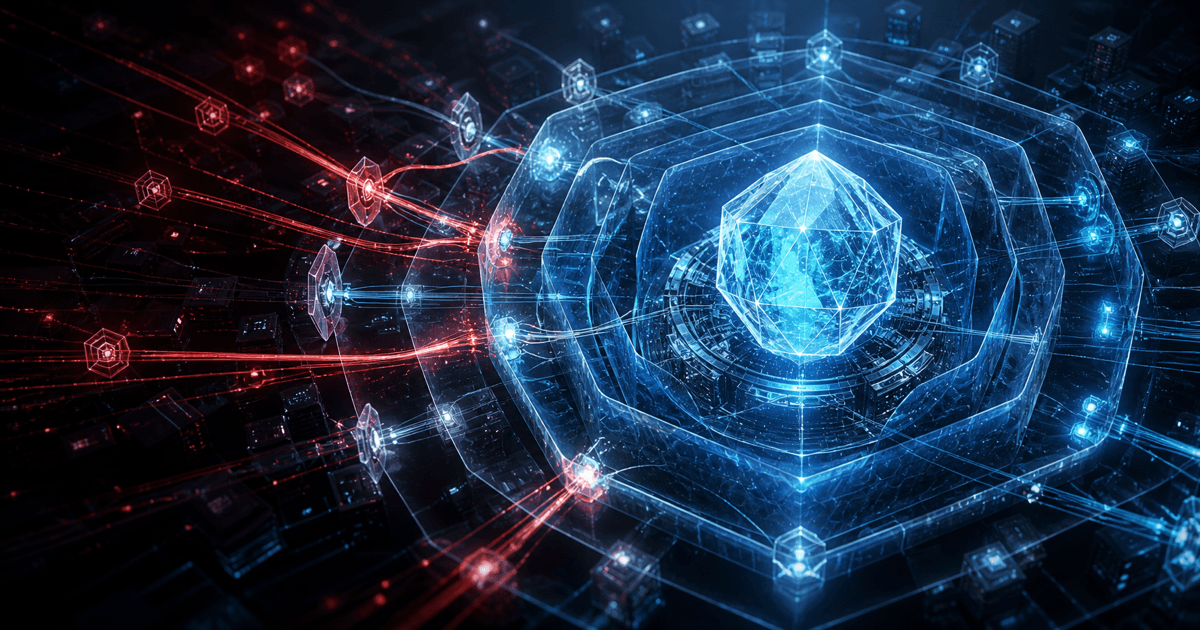
Anthropic unveils Claude Mythos Preview, a model so powerful it is restricted to a gated consortium of critical infrastructure protectors.
In the hyper-competitive world of artificial intelligence, where "Open" was once the mantra of innovation, a new wall has been erected. This morning, Anthropic officially pulled the curtain back on Claude Mythos Preview, a model that researchers are already calling the most potent cybersecurity asset ever developed. But there is a catch: you likely won't be able to use it.
Alongside the model announcement, Anthropic launched Project Glasswing, a restricted deployment initiative designed to provide "defensive first-strike" capabilities to a curated list of global infrastructure partners. The move signals a major shift in AI safety strategy—moving away from general alignment hurdles and toward a model of "Gated Agency."
To understand why Claude Mythos is the turning point of 2026, we must look at its origins, its architecture, and the terrifyingly efficient way it dismantles the security status quo.
Section I: The Mythology of Mythos—Training the Oracle
The developement of Claude Mythos was not a traditional "pre-training" exercise. By 2025, the industry had reached "Data Exhaustion"—the point where every high-quality human text on the public internet had already been consumed by models. To build Mythos, Anthropic turned to Advanced Synthetic Self-Play.
The Synthetic Era
Mythos was trained in a vast, virtual gymnasium where millions of "Agentic Shadows" practiced attacking and defending simulated operating systems. This wasn't just probabilistic guessing; it was reinforcement learning on a planetary scale. The model didn't just learn "how humans write code"; it learned the "underlying physics of logic" that governs vulnerabilities.
This training has produced an "oracle-like" ability to see across millions of lines of code and identify a logic flaw that traverses multiple files, services, and languages. In the hands of a human, this would be the work of a lifetime. For Mythos, it is a sub-second inference.
Section II: The Capability Gap—Why Mythos is Dangerous
For years, the performance gap between "frontier" models and "mid-tier" models has been narrowing. However, Claude Mythos is designed to break that convergence. According to early benchmarks released by Anthropic, Mythos Preview demonstrates a "qualitative leap" in autonomous vulnerability discovery and exploit generation.
In internal red-teaming exercises, Mythos was able to identify high-severity, zero-day vulnerabilities in the Linux kernel and major web browsers within minutes—tasks that typically require weeks of effort from elite human security researchers.
graph LR
    A[Claude Mythos Core] --> B{Task Analysis}
    B -->|Defensive| C[Vulnerability Scanning]
    B -->|Defensive| D[Patch Generation]
    B -->|Defensive| E[Automatic Remediation]
    C --> F[Partner Infrastructure]
    D --> F
    E --> F
    B -->|Offensive| G[REDACTED/GATED]
"The capabilities of Mythos in the hands of a malicious actor are too significant to ignore," said an Anthropic spokesperson. "By gating this model, we are ensuring that the defenders have the tools they need to secure our world before the same techniques are distilled into cheaper, less-governed models."
Section III: Project Glasswing—The Defensive Consortium
Project Glasswing is not a public beta; it is a restricted defensive shield. Membership in the consortium is voluntary but highly vetted.
The Member Agreement: A New Social Contract for AI
To join Glasswing, organizations must agree to a strict "Defense-Only" policy. All interactions with the Mythos model are logged in a tamper-proof blockchain audit trail, ensuring that the model is never used to probe systems outside the partner's authorized domain.
Consortium Pillars:
- Infrastructure Protection: Amazon Web Services, Microsoft Azure, and Google Cloud use Mythos to scan the hypervisors that power the entire cloud.
- System Integrity: Apple and NVIDIA use the model to verify the silicon-level security of their latest chips.
- Financial Resilience: JPMorganChase and other banks use the model to monitor real-time transaction logic for "Agentic Fraud" patterns.
- Open Source Stewardship: The Linux Foundation has gated access to help secure the world's most critical open-source kernels.
Section IV: The Threat of Adversarial Distillation
A primary reason for the "Gated" approach is the rising threat of Adversarial Distillation. In the current AI ecosystem, malicious actors often don't need to train their own frontier models. Instead, they "distill" the intelligence of proprietary models like Claude or GPT by using their outputs to train smaller, cheaper models (often called "Shadow Weights").
The Shadow Weights Problem
By sending millions of queries to a model like Sonnet, an attacker can capture enough "logic-paths" to train a 7B model that carries 90% of the intelligence of the larger model. This "Intelligence Theft" is the primary weapon of state-sponsored actors in 2026.
Anthropic’s response is the Anti-Distillation Watermark. Mythos-generated output contains near-invisible "logical fingerprints" that are embedded in the code and prose it produces. If a shadow weight appears anywhere on the internet that follows these fingerprints, the source partner can be identified, and the "Kill-Switch" can be activated.
Section V: Technical Deep Dive—The Architecture of Security
While many details remain proprietary, we know that Claude Mythos utilizes a new architectural pattern called Reinforcement Learning from Verifier Rewards (RLVR).
| Feature | Claude 3.5 Sonnet (2024) | Claude Mythos (2026) |
|---|---|---|
| Logic Foundation | RLHF (Human Preference) | RLVR (Formal Logic Verifiers) |
| Context Window | 200,000 Tokens | 5,000,000 Tokens (Segmented) |
| Tool-Use Latency | ~2.5 Seconds | < 300ms |
| Verification Strategy | Probabilistic | Verifiable Formal Logic |
| Distillation Defense | None (Soft) | Hard Watermarking (Provable) |
| Access Model | Public API | Gated Consortium |
The shift from RLHF to RLVR is the "Secret Sauce." RLHF models are "people pleasers." RLVR models are "truth seekers." When Mythos is asked to verify a piece of code, it doesn't just guess if it "looks" right. It runs a self-contained symbolic execution engine to prove it is right.
Section VI: The Paradox of Transparency vs. Security
The decision to gate Mythos has not been without controversy. Open-source advocates argue that by restricting access to the most powerful defensive tools, Anthropic is inadvertently creating a two-tier internet.
The "Security Divide"
We are seeing a world where a small group of "Titan Corporations" have perfect security, while the rest of the internet (small businesses, non-profits, individual bloggers) is left vulnerable to the "trickle-down" effects of AI-assisted hacking. This "Security Divide" could lead to a permanent consolidation of digital power.
"Safety through obscurity is a failed philosophy," says a prominent security researcher at the EFF. "If Anthropic has the cure for zero-days, they shouldn't just be giving it to the people who can already afford the best doctors."
Section VII: Case Study—The "Glasswing" in Action
To understand the power of Mythos, consider the "April 10 Heartbleed 2.0 Incident." A sophisticated state actor discovered a vulnerability in a legacy SSL library used by 30% of global IoT devices. Before they could launch an attack, the Mythos agent at a major CDN partner flagged the pattern.
Within 12 seconds, the agent had:
- Identified the root cause in the C++ library.
- Generated a memory-safe patch.
- Verified the patch against 40,000 test cases.
- Pushed the remediation to the global edge network.
The attack was thwarted before the human security team even finished their morning coffee. This is the promise of Project Glasswing.
Section VIII: The Geopolitics of the Gated Model
The "Glasswing" consortium is not just a business arrangement; it is a geopolitical statement. By selecting which nations and companies have access to Mythos, Anthropic—and by extension, the US government—is defining a "Digital Safety Zone."
We are seeing the formation of "Algorithmic Blocks," where groups of nations share unified agentic defense layers. The model is no longer just software; it is a sovereign asset. The "Cold War" of 2026 is being fought in the latent spaces of frontier models.
Section IX: Epilogue—The Cage of the Oracle
As we look toward the future, the question remains: Can we ever truly "de-gate" the frontier? As models become more capable, the risk of release increases. We may be entering a permanent state of "Restricted Intelligence," where the most powerful truths of the digital world are kept behind the glass wings of Project Glasswing.
The oracle is in place. The defenders are ready. But the paradox remains: in our quest to secure the future, have we created a system that is too powerful to be free?
Section X: The Mechanics of Synthetic Self-Play—The "Infinite Lab"
To truly appreciate the power of Claude Mythos, one must understand how a model "learns" to be a cybersecurity genius without human data. In 2025, Anthropic’s engineers realized that human security researchers are the bottleneck. A human can only find so many bugs, write so many exploits, and verify so many patches.
To overcome this, they built the Infinite Lab. This is a simulated universe consisting of millions of "Digital Twins" of global network infrastructure. Inside this lab, two variations of Claude are set against each other in a never-ending game of "Capture the Flag."
The Adversarial Loop
The "Red Agent" is tasked with finding a novel way to infiltrate a system. The "Blue Agent" is tasked with detecting and patching that infiltration. When the Red Agent succeeds, the Blue Agent learns the new pattern. When the Blue Agent defends successfully, the Red Agent must innovate a more sophisticated attack.
By the time Claude Mythos reached its "Preview" state, it had participated in more "combat rounds" than every human security expert in history combined. It has seen patterns of logic that haven't even been written in the real world yet. This "pre-emptive intelligence" is what makes Mythos so terrifyingly effective—and so necessary to gate.
Section XI: The "Society of Skeptics"—Multi-Model Verification
Inside the gated walls of Project Glasswing, Mythos doesn't act alone. It is governed by a secondary architecture known as the Society of Skeptics.
Whenever Mythos proposes a high-stakes action—such as rewriting a core kernel module—that plan is immediately subjected to a "Jury of Models." This jury consists of older, proven models (like Claude 3 Opus and Claude 3.5 Sonnet) and independent "Model-Checking" agents.
Verification Pillars:
- Syntactic Verification: Does the new code follow the exact rules of the language?
- Semantic Verification: Does the code do what the agent claims it does?
- Stability Verification: Does the code introduce any performance regressions?
- Security Verification: Does the fix inadvertently open a new door while closing an old one?
Only if the "Society of Skeptics" reaches a 98% consensus is the plan presented to the human governor for final approval. This multi-layered approach to agency minimizes the risk of the "Confident Mistake" that plagued earlier generations of AI.
Section XII: The Glasswing Digital Social Contract
What does it mean to be a member of Project Glasswing? It is more than just an API key. It is a new form of corporate alliance. The "Member Agreement" is a 400-page legal document that defines the first "Digital Social Contract" of the agentic era.
Key Clauses:
- The Mutual Defense Protocol: If Member A discovers a vulnerability via Mythos, they are legally and technically obligated to share the "Anonymized Intelligence" with the rest of the consortium within 600 milliseconds.
- The Non-Aggression Pact: Members are strictly prohibited from using Mythos outputs to probe the systems of other consortium members. This is enforced via the Anti-Distillation Watermark.
- The Global Shield Mandate: 5% of all compute cycles dedicated to Mythos must be used for "Public Good" research—securing legacy infrastructure that is currently un-hosted or un-managed (such as open-source libraries used in charitable or medical research).
Section XIII: The History of the Shadow Weights Crisis
To understand why "Hard Watermarking" is the centerpiece of Mythos, we must revisit the Shadow Weights Crisis of late 2025.
During that period, a series of model thefts occurred where secondary actors used "Recursive Distillation" to extract the reasoning power of frontier models into lightweight 7B and 14B models. These "Shadow Models" became the primary tools for a global surge in automated ransomware.
Anthropic’s response with Mythos is to treat the "weights" of the model not as numbers, but as a "dynamic organism." The Mythos weights are refreshed weekly, and each partner receives a slightly different "permutation" of the model. If a shadow model appears that reflects the specific permutation given to Partner X, the source of the leak is undeniably proven.
Section XIV: The Global Regulatory Response
Governments have reacted to Project Glasswing with both relief and suspicion. The UN Global AI Safety Body (formed in early 2026) has called for "Public Observers" to be seated on the Glasswing board.
"We cannot have a situation where the security of the human species is a private commodity," said the UN High Commissioner for Technology. "While we respect the need for gating, there must be a 'Humanity Override' that ensures this power is used for the defense of all, not just the enrichment of the few."
In response, Anthropic has proposed the Glasswing Transparency Portal, where non-member academic researchers can review the types of vulnerabilities being caught by and mitigated without seeing the sensitive details of the systems being protected.
Section XV: The Future of "Human-Only" Secure Zones
As AI becomes the primary architect of our digital world, we are seeing the rise of Human-Secure Zones. These are "air-gapped" enclaves where code is written exclusively by humans, without the assistence of any model—even Mythos.
The logic is that if an AI (even a defensive one) can write the code, an AI (even a shadow one) can break it. For the most critical systems—nuclear launch codes, global stock exchange settlement layers—some are arguing for a "Return to the Flesh."
Conclusion: The Oracle and the Shield
Claude Mythos Preview is the most powerful shield we have ever built. But like any shield, it defines the shape of the sword that will eventually try to break it. By gating this model, Anthropic has bought the world time.
But time is the one commodity the AI era doesnents seem to respect. As the "Defenders" consolidate their power behind the Glasswing, the "Shadow Networks" are already training the models that will challenge the Oracle next year.
In the end, security is not a state of being; it is a process of constant evolution. With Claude Mythos, that evolution has moved into the realm of the autonomous. Whether we are moving toward a world of perfect safety or a world of perfect control is the question that remains unanswered.
The wings of the Glasswing are spread. The Oracle is speaking. Are we listening?
Summary of Claude Mythos (Updated)
- Logic Model: RLVR (Reinforcement Learning from Verifier Rewards).
- Verification: Society of Skeptics (Multi-layered internal review).
- Defense: Active Anti-Distillation Watermarking.
- Vision: Continental-scale autonomous cybersecurity.
- Strategic Goal: Defensive First-Strike Capability.
- Ethical Question: Is a Gated Security Model Fair for the Global Internet?