The AI Buildout Is Turning Into a Debt and Power-Grid Story
Broadcom's reported debt plans, Nvidia's infrastructure investments, and rising scrutiny of data-center costs show AI buildout economics have moved from chips to capital and power.
19 articles

Broadcom's reported debt plans, Nvidia's infrastructure investments, and rising scrutiny of data-center costs show AI buildout economics have moved from chips to capital and power.

NVIDIA's latest buildout story shows that the AI race is no longer just about GPUs; memory, cooling, power, and geography are now the bottlenecks that decide who can actually ship capacity.

TSMC sales, hyperscaler spending, memory bottlenecks, and regional AI factories all point to one conclusion: AI hardware is becoming a geography strategy as much as a chip strategy.

Nvidia's push into Armenia is a reminder that AI infrastructure is no longer just about chips. It is about where power, talent, policy, and geopolitical trust line up.

Marvell’s FMS 2026 message makes it clear that AI economics are now being decided by memory bandwidth, storage connectivity, and the ability to keep accelerators fed.
AI infrastructure is shifting toward memory bandwidth, storage connectivity, and power-constrained buildouts rather than GPU count alone.
SK Hynix’s warning that memory shortages could run beyond 2030 shows AI demand is now squeezing the components beneath the chips everyone already watches.
DeepSeek’s reported chip project and the latest Nvidia weakness point to a compute market that is starting to reward control, efficiency, and financing discipline over raw scale.
Reports that Nvidia’s next-generation Kyber rack slipped to 2028 suggest the AI bottleneck is now physical, not conceptual.
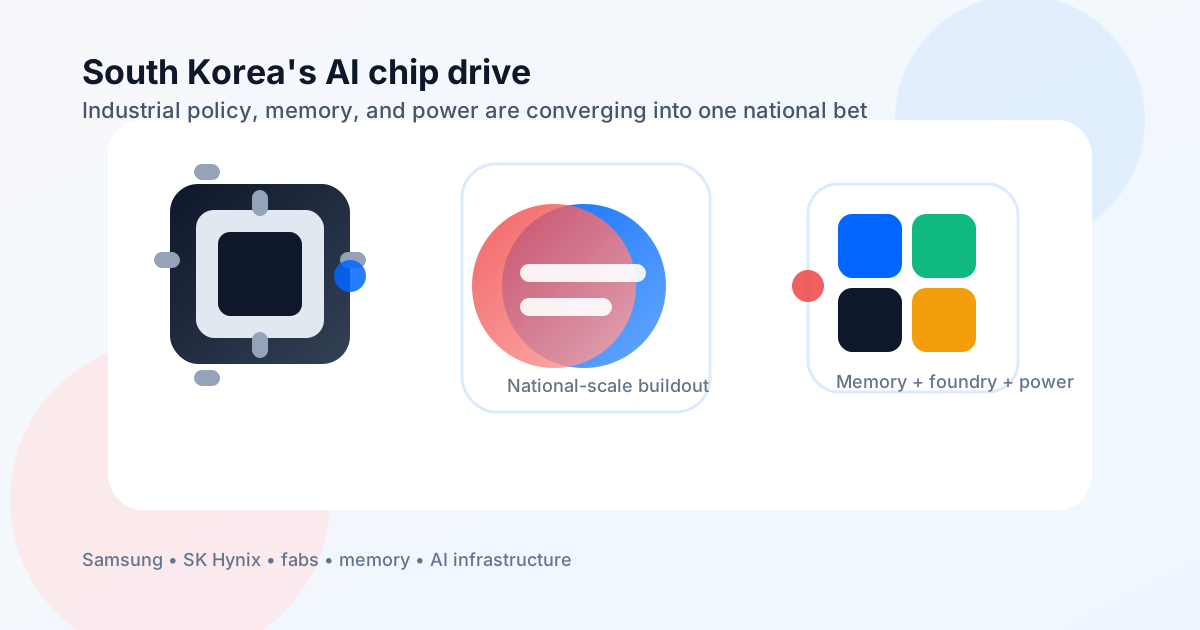
South Korea's giant AI-chip push shows how national industrial policy is moving from abstract AI ambition to memory, fabrication, power, and export leverage.
The latest reporting on AI supply strain points to a deeper bottleneck: memory, networking, and power are becoming just as important as GPUs in the race to scale intelligence.
OpenAI's first custom inference chip changes the conversation from model quality to bargaining power, cost control, and who gets to own the AI stack.
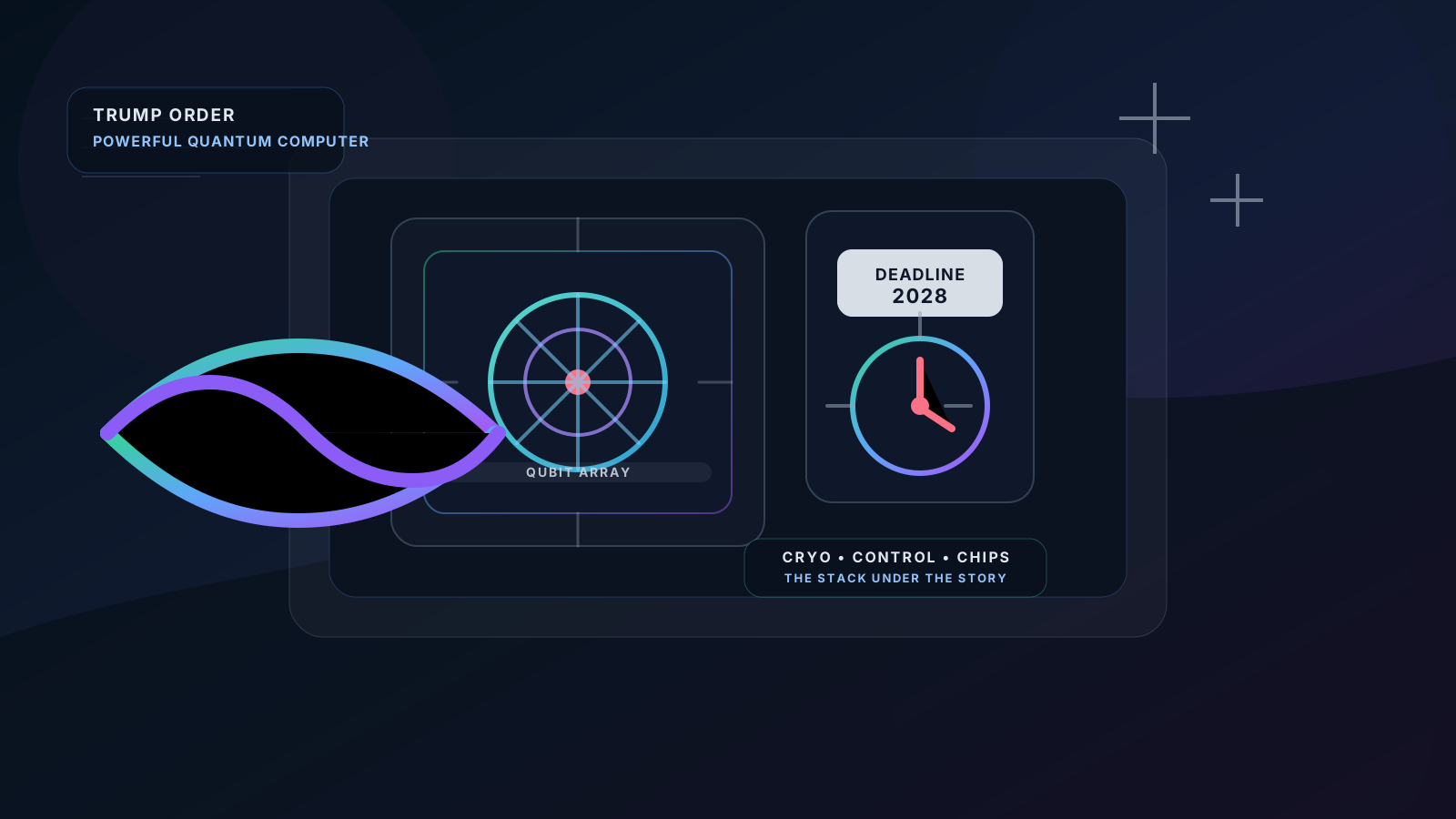
Trump’s quantum orders set a 2028 target that exposes the real bottlenecks in cryogenic hardware, control systems, semiconductors, and the industrial politics of quantum computing.

XCENA raised $135 million as investors focus on memory bandwidth, not only compute, as the next constraint for AI inference.

Cerebras is reportedly targeting a valuation up to $26.6 billion, giving public investors a sharper test of AI chip demand beyond Nvidia.

Micron and Samsung rallies show how AI memory demand is reshaping data centers, consumer devices, and semiconductor economics.

Huawei's expected AI chip gains in China show how export controls are pushing inference hardware, software, and sovereignty together.
A major helium supply disruption following strikes in Qatar has threatened the global 2nm semiconductor roadmap, forcing TSMC and Intel to pause high-EUV lines.
In response to rising regional tensions, Taiwan has enforced its 'Silicon Shield' export bans while proposing a controversial 'Cyber Martial Law' to stabilize the island's information ecosystem.