LeRobot v0.7.0 Pushes Open Robot Learning Toward a Reusable Data-and-Policy Stack
Hugging Face’s LeRobot v0.7.0 brings new tools for robot datasets, policies, and evaluation, sharpening the open-source path from demonstrations to deployed behavior.
25 articles

Hugging Face’s LeRobot v0.7.0 brings new tools for robot datasets, policies, and evaluation, sharpening the open-source path from demonstrations to deployed behavior.

NVIDIA's expanded Cosmos tools target the less glamorous work of physical AI: curating sensor data, generating rare events, evaluating behavior, and controlling cost.

NVIDIA is pairing frontier models with Omniverse physics, rendering, and OpenUSD so engineers can test buildings, turbines, and physical-AI workflows in simulation.

NEURA Robotics' Neuron model highlights the difficult middle layer of physical AI: turning multimodal perception and language into safe, repeatable actions on real machines.

Boston Dynamics’ new robot-hand work shifts the embodied-AI debate from humanoid spectacle toward dexterity, data, and reliable work.

LumiBot’s IROS 2026 showing is a reminder that robot intelligence depends on data collected through bodies, not just larger models and better simulators.

Google DeepMind’s SIMA 2 research uses interactive 3D worlds to study agents that perceive, reason, act, and learn alongside people rather than merely answer prompts.

Meta’s University of Pittsburgh robotics collaboration shows how perception models, human intent, and assistive devices must meet before robots can genuinely expand independence.

Black Forest Labs’ FLUX.3 Action release points from image generation toward action-conditioned visual models for robotics and interactive systems.

NVIDIA's latest physical AI push suggests robotics is moving from hardware-centric hype to simulation-heavy workflow design and data loops.

NVIDIA's Japan push shows that physical AI is no longer a demo concept — it is turning into a national industrial strategy.
Japan's new NVIDIA-backed national AI infrastructure is more than a chip deal: it is a blueprint for physical AI, robotics, and industrial sovereignty.

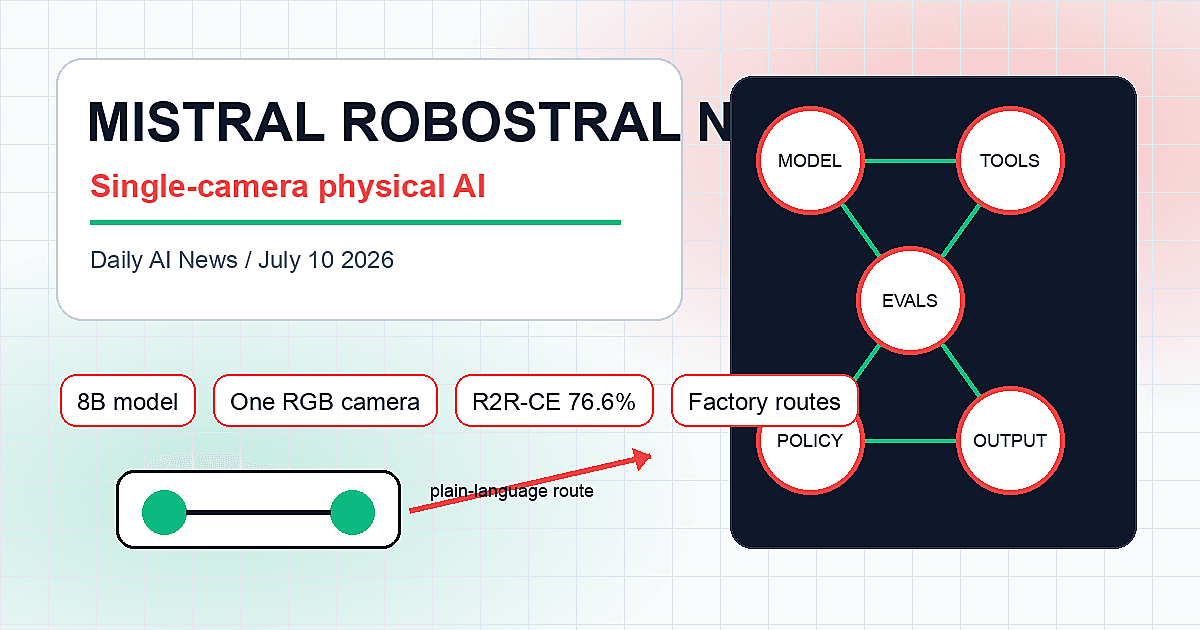
Mistral Robostral Navigate is an 8B robotics navigation model that uses one RGB camera and plain-language instructions.

Nvidia's Cosmos 3 pushes open world models toward robotics, autonomous vehicles, and physical AI infrastructure.

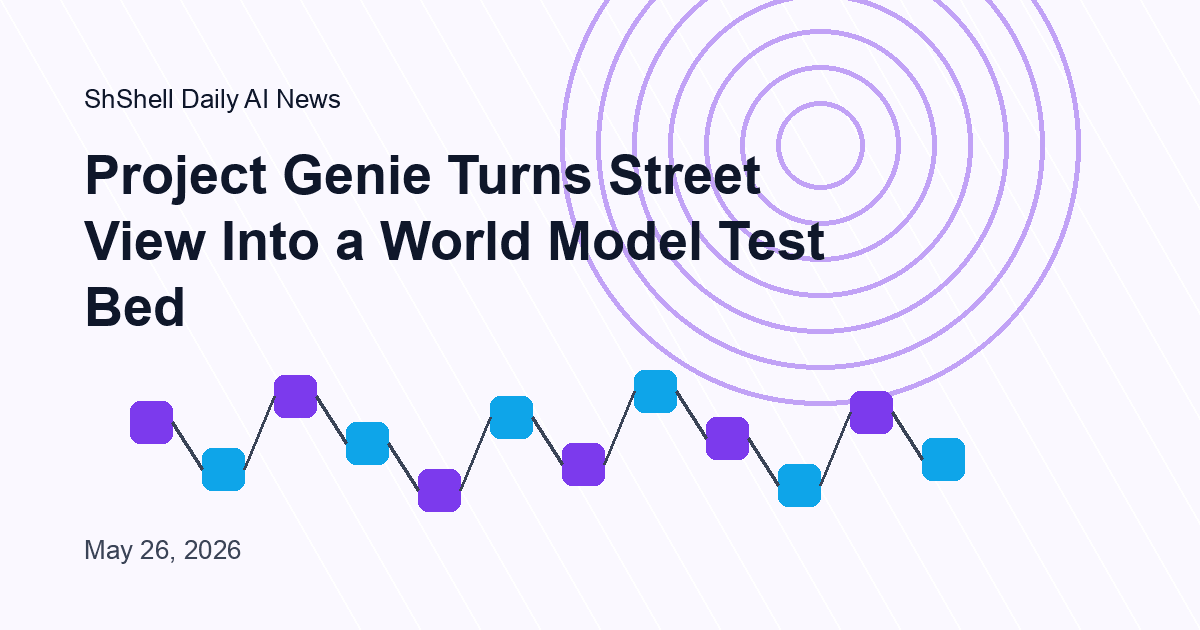
Google DeepMind's Project Genie expansion shows why interactive world models may become infrastructure for robotics, maps, and agent training.

Gemini Robotics ER 1.6 highlights the next robotics bottleneck: machines that can reason about space, instruments, tasks, and safety.

WIRobotics raised about 68 million dollars to scale wearable walking-assist robots and physical AI partnerships with AWS and NVIDIA.

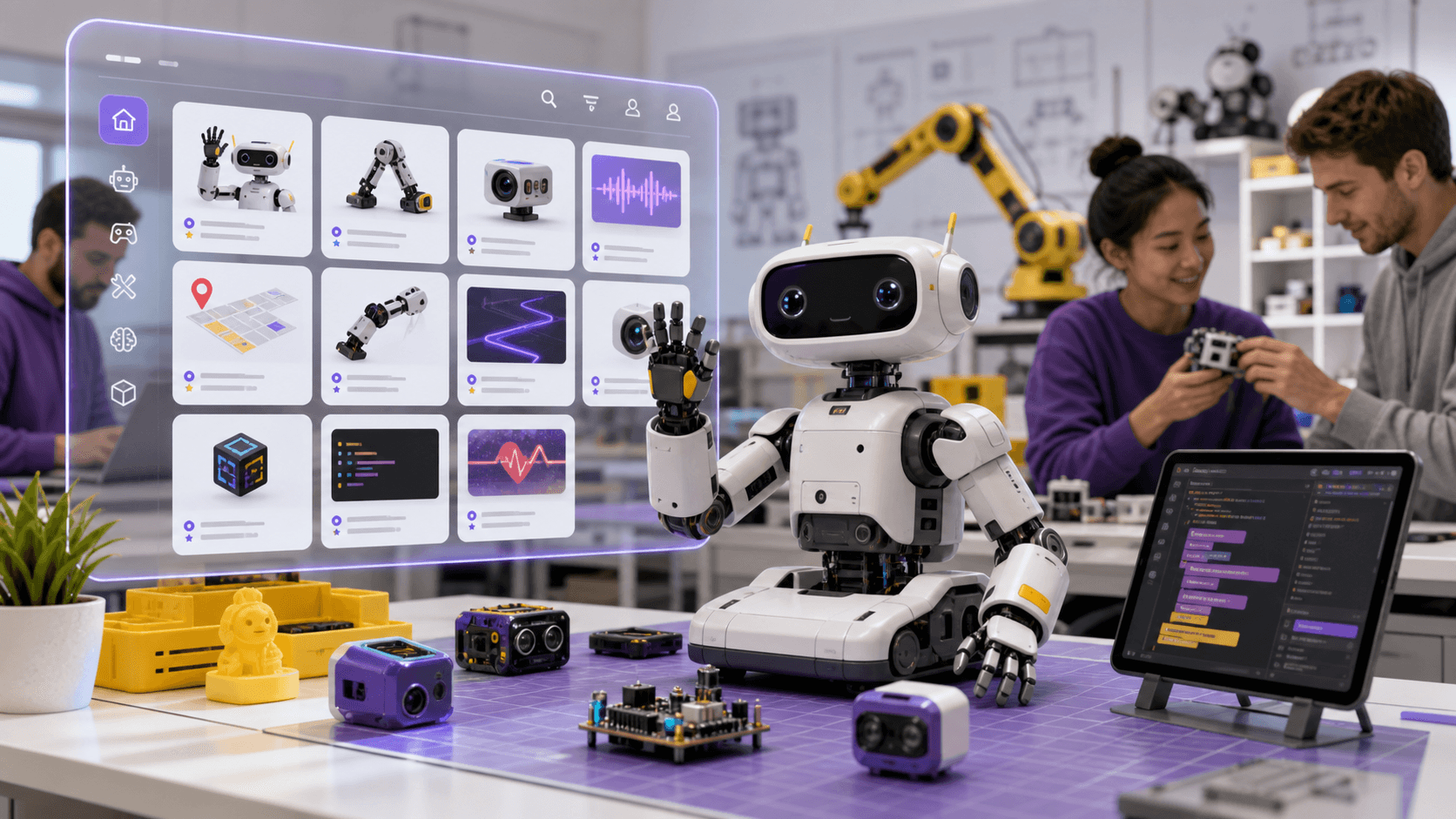
Hugging Face's Reachy Mini app store suggests the next AI platform fight may move from chat windows into small robots.

Eclipse’s 1.3 billion dollar fund signals a larger investor shift toward robotics, industrial automation, and physical AI startups.

French startup Genesis AI unveiled a robotics model and human-like hand, showing Europe's push into adaptable physical AI systems.

Intel hired Qualcomm veteran Alex Katouzian to lead Client Computing and Physical AI, signaling a wider shift beyond traditional PCs.

Meta reportedly acquired Assured Robot Intelligence, adding humanoid robotics expertise as AI labs push from chat into physical systems.

# The Sora Sunset: Why OpenAI Is Moving From Pixels to Physics It started with a demo that shook the world: a stylish woman walking down a neon-lit street in T...

AI inference costs have plummeted 280-fold since 2024, enabling a new generation of 'Physical AI' where humanoid robots and edge devices can think in real-time.

Alibaba changes the robotics landscape with RynnBrain, an open-source 30B MoE foundational model for embodied AI that outperforms Google and Nvidia in spatiotemporal reasoning.