NVIDIA’s Nemotron 3.5 Super VL and Bolt Models Target the Cost of Seeing at Scale
NVIDIA’s new Nemotron 3.5 Super VL and Bolt models focus attention on efficient multimodal inference, not just bigger vision benchmarks.
10 articles

NVIDIA’s new Nemotron 3.5 Super VL and Bolt models focus attention on efficient multimodal inference, not just bigger vision benchmarks.

TypeSafe's Jev replaces generated prose with typed decisions. Its automation promise depends on calibration, task design and honest fallback paths.

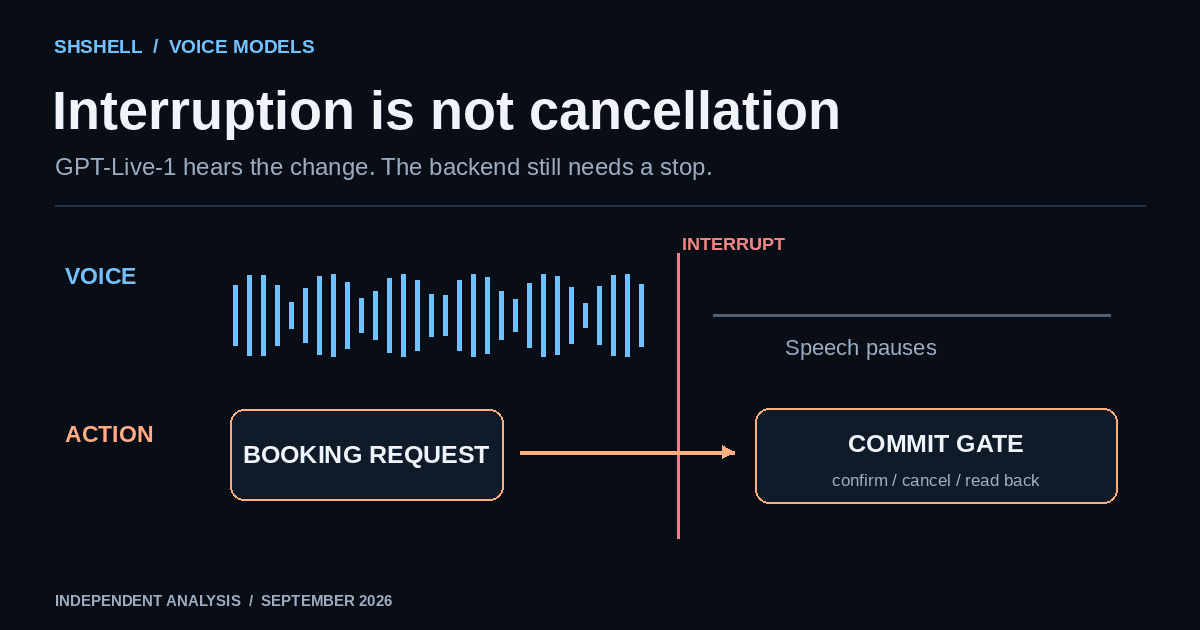
OpenAI's full-duplex voice API separates conversation from backend work. That makes cancellation, consent and task state central engineering problems.
Startups are routing work to DeepSeek, Qwen, and other lower-cost Chinese models because frontier inference has become too expensive to treat as the default.
Hugging Face’s FFASR leaderboard pushes speech recognition toward the conditions that actually matter: noise, distance, latency, and real deployment hardware.
Sakana Fugu is not just another model launch. It is a multi-agent orchestration system packaged as a single OpenAI-compatible API, and its benchmark chart says a lot about where AI systems are heading next.

Claude Opus 4.8 triggered a large Hacker News debate about whether frontier model gains are real or just harder to perceive.

OpenAI's GPT-5.5 'Spud' redefines the frontier as a worker-class model built for autonomous task completion. Benchmarks reveal a neck-and-neck battle with Claude Opus 4.7 across agentic workloads.

Meta unveiled Muse Spark, the first model from its Superintelligence Labs. Closed-source, multimodal, and reasoning-native, it marks a fundamental strategic break from the open-weights Llama era.

Anthropic releases Claude Opus 4.7 with advanced coding capabilities while keeping its frontier Claude Mythos model under a secretive gated program.