OpenAI’s GPT-Rosalind Academic Plan Makes Research Access the Real Life-Sciences Bet
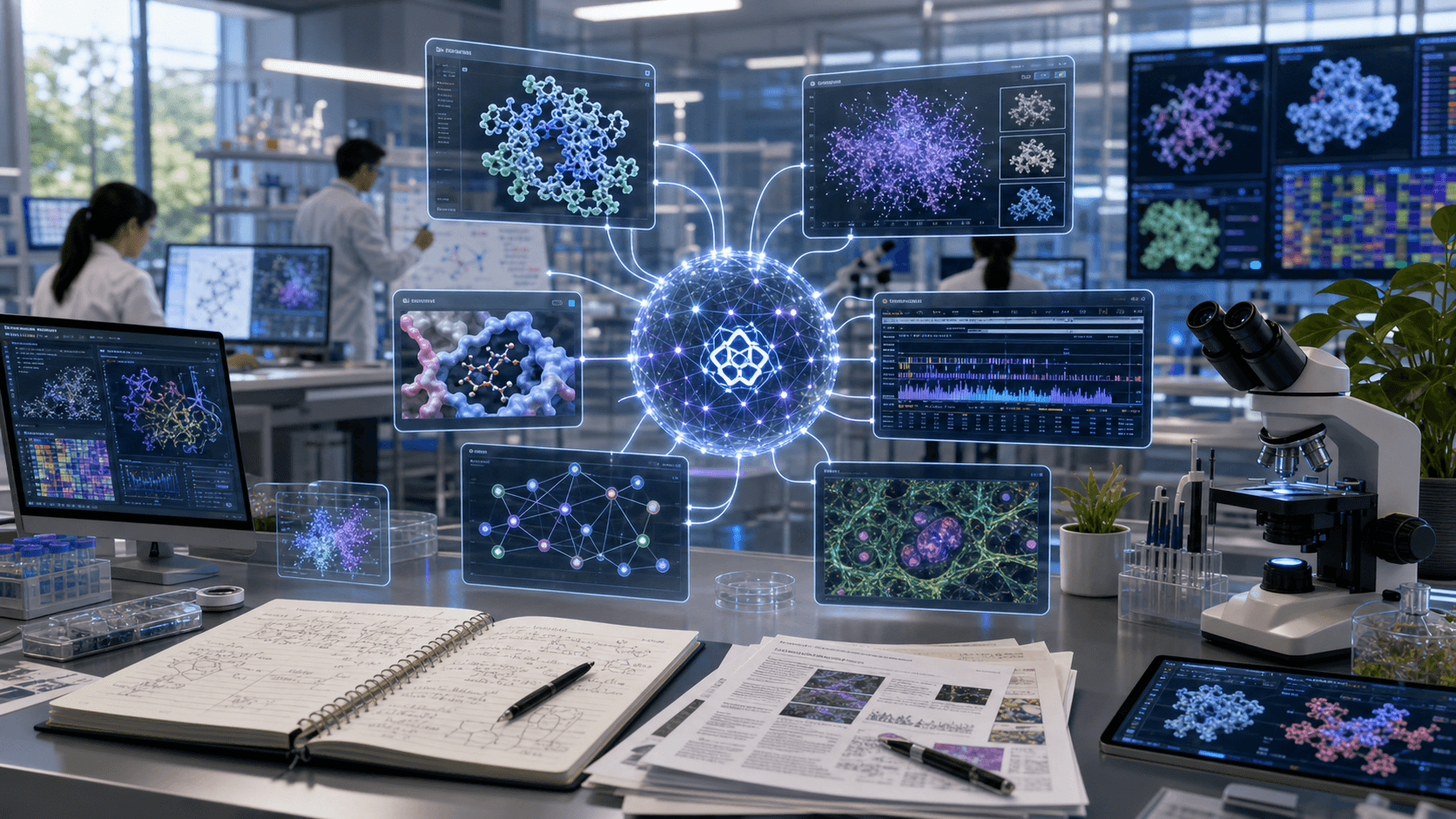
OpenAI is offering university research labs access to GPT-Rosalind, a move that shifts life-sciences AI from model novelty toward reproducible academic workflows.
27 articles

OpenAI is offering university research labs access to GPT-Rosalind, a move that shifts life-sciences AI from model novelty toward reproducible academic workflows.

OpenAI is publishing new mathematics results and artifacts, shifting the AI math debate from impressive answers to reproducible proof and review.

The Long-WAM paper argues that longer context for world-action models must preserve useful state, not merely store more observations.

A new paper proposes institutions made of autonomous research agents, shifting the AI research problem from single-agent skill to coordination and governance.

Ai2 open-sources AstaBrief, an 8B scientific report model that trades frontier scale for faster cited synthesis, local control, and inspectable training.

A new arXiv paper on Context Language Models proposes a model that learns from its context as it runs, reopening the design space beyond fixed-weight inference.

Microsoft Research’s Quine is a multimodal world model for biology. Its significance is the attempt to connect biological observations with actions, interventions, and testable hypotheses.

Black Forest Labs’ FLUX.3 Action release points from image generation toward action-conditioned visual models for robotics and interactive systems.

YODAS v3’s million-hour speech dataset points to the scale open voice models need and the provenance questions that scale makes impossible to ignore.

Anthropic says Claude found a CRISPR-like enzyme system in DNA data, illustrating how AI agents can search biology while experiments remain the proof.

Anthropic’s new measurements for frontier AI progress aim to track capability growth, but forecasting remains a governance problem, not a scoreboard.

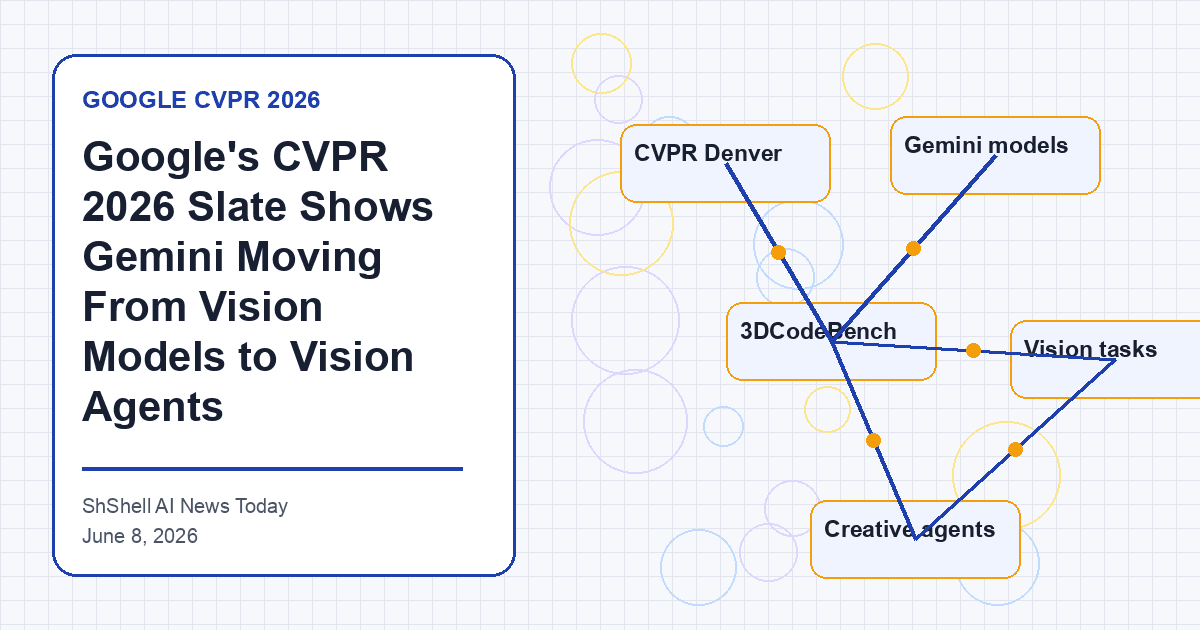
Google's CVPR 2026 research highlights Gemini 3DCodeBench, computer vision, and agentic perception workflows for today's AI news.

OpenAI GPT-Rosalind highlights how AI agents, LLMs, and generative AI could reshape life sciences research, evidence synthesis, and lab workflows.

A new arXiv comparison of Claude Code and Codex on Einstein Telescope data points to more realistic agent evaluation.

Andrej Karpathy joining Anthropic highlights a shift from bigger runs alone toward AI-assisted pretraining research.

Google DeepMind's Project Genie expansion shows why interactive world models may become infrastructure for robotics, maps, and agent training.

Gemini for Science packages hypothesis generation, computational discovery, and paper triage into agentic tools for researchers.

OpenAI says a general-purpose reasoning model disproved a famous Erdős unit distance conjecture, changing the research automation debate.

Andrej Karpathy's move to Anthropic puts pretraining, Claude-assisted research, and elite AI talent back at the center of the frontier race.

DeepMind's Co-Scientist uses Gemini-based multi-agent debate to generate, critique, and evolve scientific hypotheses.

Anthropic introduced Natural Language Autoencoders, a research direction for translating Claude activations into readable explanations.

Google DeepMind and Fenris Creations are using EVE Online as a controlled AI research environment for planning, memory, and complex behavior.

Ineffable Intelligence raised 1.1 billion dollars to pursue reinforcement-learning systems that can learn beyond human-generated data.

A technical deep dive into OpenAI's GPT-5.4 flagship model, its Ring Attention implementation, and the race for 1-million token context utility.

A deep dive into GPT-Rosalind, OpenAI's specialized model for life sciences, and how it is redefining protein folding, DNA sequencing, and the R&D pipeline.

A deep dive into the Anthropic "Mythos" leak, revealing a new high-performance AI model tier that challenges existing industry standards in reasoning and cybersecurity.

In a shocking move, OpenAI releases GPT-OSS-120B, its first major open-weight LLM, signaling a new competitive strategy against Meta and Alibaba.