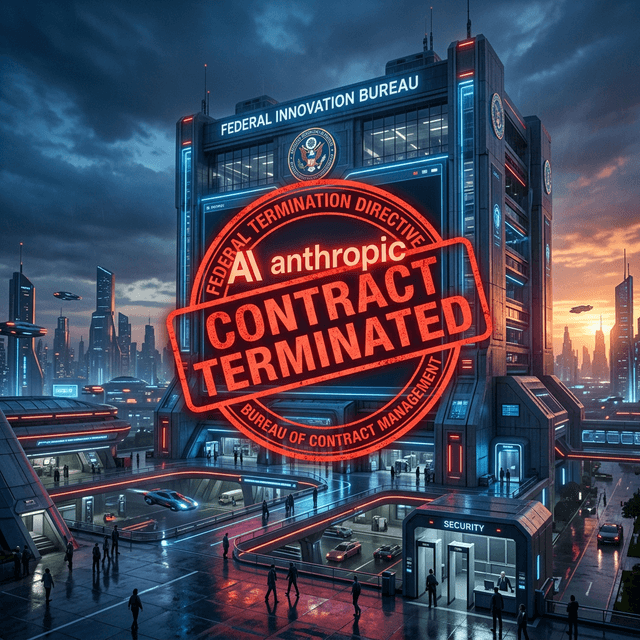
The Silent Consent: GitHub Copilot, Project Glasswing, and the 2026 Privacy Crisis
An in-depth analysis of the controversy surrounding GitHub's new Copilot training policy and the ethical implications of Project Glasswing's defensive AI.
Privacy has always been a contested territory in the digital age, but April 2026 marks a watershed moment. Two seemingly unrelated events—GitHub’s quiet shift toward an automatic opt-in training model for Copilot and the launch of the gated "Project Glasswing" by Anthropic—have converged to create a full-blown "Privacy Crisis."
For developers, the question is no longer just about who owns their code, but who is learning from their process. As the tools we use to build the future become the engines that consume our intellectual property, the line between "service improvement" and "proprietary distillation" has blurred into non-existence.
The GitHub Contradiction: Automatic Opt-In and the Burden of Privacy
On April 24, 2026, a new data usage policy will take effect for millions of users on GitHub’s Free, Pro, and Pro+ tiers. The headline? Your interaction data—every prompt, every accepted suggestion, every snippet of context—will now be used by default to train future iterations of GitHub Copilot and Microsoft’s broader AI suite.
The "Silent Consent" Controversy
While GitHub argues that this is necessary to ensure the continuous improvement of the world’s most popular AI pair programmer, the community response has been one of outrage. By moving from an "opt-in" to an "automatic opt-in" model, GitHub has placed the burden of privacy squarely on the individual developer.
In a fast-paced environment, how many developers will navigate to the depths of their settings to uncheck a box? Critics argue that this is "distillation by stealth," where the collective intelligence of the open-source community is being harvested to build increasingly powerful, proprietary products.
The Enterprise Exclusion
Interestingly, GitHub has explicitly excluded Business and Enterprise tiers from this policy. This creates a two-tiered internet: one where large corporations pay for privacy, and another where individual developers and small teams pay for access with their data.
This brings us to the Privacy Proxy Problem. If a developer on a Pro plan uses Copilot while working on a private repository for an enterprise client, has that enterprise code been effectively "leaked" into the training set? GitHub states they do not train on code "at rest" in private repositories, but the data processed during a live Copilot session—the "interaction data"—is very much in scope.
Project Glasswing: The Ethics of Gated Defense
While GitHub is widening the net of data collection, Anthropic and its partners in Project Glasswing (including Amazon, Apple, and Google) are tightening the net of access.
Project Glasswing is the defensive answer to "Claude Mythos," a model that proved to be "too intelligent for the general public." By restricting access to Mythos to a closed circle of vetted organizations, the Glasswing partners are attempting to create a "Global Security Shield."
The Power Dynamic of Selective Security
The ethical dilemma is profound. If the Glasswing partners identify a critical vulnerability in a major piece of software, they possess the power to patch it before it is ever disclosed to the public. This sounds like a net positive, but it creates a dangerous power imbalance.
Who defines what a "vulnerability" is? Who decides which open-source projects get the protection of the Mythos shield and which are left to fend for themselves? By creating a gated "Elite AI" for security, we are effectively outsourcing the governance of the global internet to a handful of private entities.
The Dual-Use Transparency Report
In its first transparency report released this week, Project Glasswing claimed to have prevented "millions of dollars" in potential damages by identifying a flaw in a widely used SSL library before it could be exploited. However, the report also admitted that the model’s suggestions are often "cryptic," requiring a high level of human expertise to verify—expertise that is increasingly concentrated within the Glasswing coalition.
The 2026 Privacy Framework: A New Social Contract
The crisis of 2026 has forced a global rethink of AI governance. We are seeing the emergence of three competing frameworks:
- The Sovereign AI Model: Championed by the EU, this model emphasizes high-transparency and "sovereign" training sets, where users are compensated for the data they provide to AI labs.
- The Frontier Managed Model: Championed by the Glasswing partners, this model priorities safety over access, arguing that advanced AI must be treated like nuclear technology—tightly controlled and heavily gated.
- The Open-Weight Agnostic Model: Championed by the decentralized AI community, this model argues for the total democratization of model weights, believing that transparency is the best defense against both privacy violations and security risks.
Developer Survival Guide: Protecting Your IP in 2026
For the individual developer, the path forward requires a new level of "Data Hygiene":
- API Sandboxing: Using local inference engines (like Ollama or LM Studio) for sensitive architectural work before moving to cloud-based assistants.
- The "Opt-Out Audit": Periodically checking the privacy settings of every tool in the SDLC—GitHub, Slack, Notion, and Jira all have active training policies in 2026.
- Prompt Washing: Removing proprietary identifiers and specific business logic from prompts, using the AI to solve "abstract" problems that can then be applied to the "concrete" codebase locally.
Conclusion: The Horizon of Trust
The 2026 Privacy Crisis is not just a technical problem; it is a crisis of trust. When the tools we rely on to be productive are the same tools that monitor and learn from us, the "social contract" of software development is broken.
Whether it is the "silent consent" of GitHub or the "gated defense" of Project Glasswing, the message is clear: Data is the currency of the AI era, and the exchange rate is becoming increasingly unfavorable for the individual.
graph TD
    A[Developer Workflow] --> B{Copilot interaction}
    B -->|Automatic Opt-in| C[GitHub Training Pool]
    B -->|Manual Opt-out| D[Private Development]

    E[Frontier Intelligence: Mythos] --> F{Project Glasswing Firewall}
    F -->|Vetted Partners| G[Global Security Shield]
    F -->|Public| H[Standard Security Layer]

    C --> I[Proprietary Model Distillation]
    G --> J[Infrastructure Stability]
    H --> K[Increased Vulnerability Gap]
Privacy Policy Comparison: 2026 Major Players
| Platform | Training Policy | Opt-out Ease | Data Scope |
|---|---|---|---|
| GitHub (Free/Pro) | Automatic Opt-in | Hidden in Settings | Inputs, Code, Metadata |
| Claude.ai (Team) | None (Default) | High | None |
| ChatGPT Plus | Opt-out required | Moderate | Full Conversation |
| Gemini for Workspace | Strict Enterprise DPA | High | Account-bound Only |
Analysis by Sudeep Devkota, Senior Editorial Analyst at ShShell Research. Published April 9, 2026.