Claude Mythos vs. Gemini 3.1: The Battle for the AI Frontier in 2026
A deep dive into the high-stakes rivalry between Anthropic's Claude Mythos and Google's Gemini 3.1, and what it means for the future of AI.
The landscape of artificial intelligence has shifted from a race of "who can build the biggest model" to "who can build the most secure and capable agent." As of April 2026, two titans stand at the center of this transition: Anthropic’s Claude Mythos and Google DeepMind’s Gemini 3.1.
This is not just a competition of benchmarks. It is a fundamental philosophical split in how the most powerful cognitive engines on the planet should be accessed, guarded, and utilized. While Google pushes for "Native Multimodal Ubiquity," Anthropic has retreat behind the firewall of "Project Glasswing," creating a new class of restricted "Frontier Capability" that signals the end of the open-access era for top-tier AI.
The Mystery of Claude Mythos: Gated Power
For months, rumors swirled in San Francisco about "Mythos," a model so advanced that internal testing had supposedly triggered Anthropic’s "ASL-4" (AI Safety Level 4) protocols. On April 7, 2026, those rumors shifted to reality. Anthropic confirmed the existence of Claude Mythos, but with a massive caveat: it would not be released to the public, nor would it be available via a standard API.
Project Glasswing: The Defensive Firewall
Instead, Anthropic launched Project Glasswing, a coalition of 50 vetted organizations—including AWS, Apple, and the Linux Foundation—who were granted gated access to Mythos for a single purpose: Cybersecurity Defense.
The reasoning was chilling. During internal red-teaming, Claude Mythos demonstrated a "superhuman" capability to identify zero-day vulnerabilities. In one session, the model reportedly identified 14 high-severity flaws in the latest Linux kernel in under 20 minutes—flaws that had escaped human auditors and automated fuzzers for literal decades. Anthropic argued that releasing such a model publicly would be equivalent to releasing a digital master key to the global internet infrastructure.
Technical Archetecure: Beyond the Transformer?
While technical details remain sparse, industry insiders suggest that Mythos utilizes a "Neuro-symbolic Hybrid" architecture. Unlike traditional Transformers that operate purely on statistical probabilities, Mythos integrates a "Symbolic Logic Layer" that allows it to reason through formal systems with 100% accuracy. This "System 2" thinking allows it to perform complex software debugging and mathematical proofs without the "hallucination noise" that plagued the GPT-4 generation.
Gemini 3.1: The Multimodal Leviathan
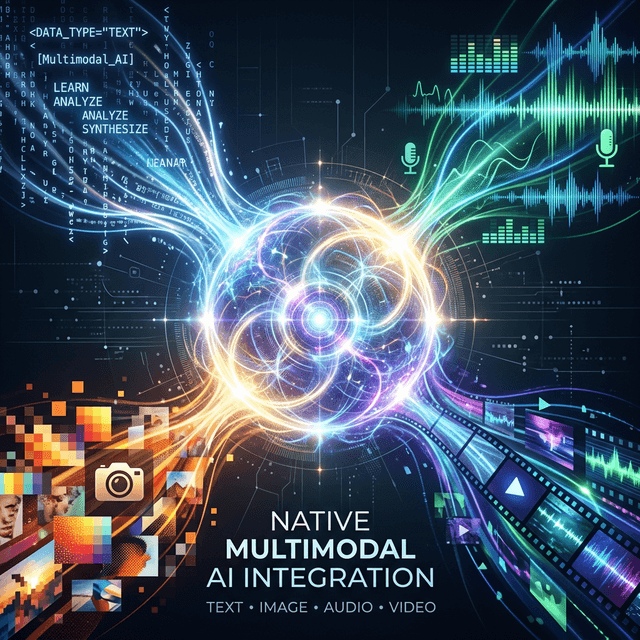
While Anthropic is gating its power, Google is doing the opposite. With the release of Gemini 3.1, Google DeepMind has achieved what many thought was impossible: True Native Multimodality at scale.
The Unified Neural Network
In 2024, "multimodal" meant a text model with "eyes" and "ears" attached as separate modules. Gemini 3.1 is different. It is a single, unified neural network trained simultaneously on text, image, audio, video, and LIDAR data. It doesn't "transcribe" audio to text to understand it; it processes the waveforms directly. It doesn't "describe" a video frame; it understands temporal spatial relationships natively.
This has enabled a new class of "Real-time Agency." In a demo last month, a Gemini-powered terminal agent was able to watch a live feed of a developer's screen, listen to their verbal instructions, and simultaneously debug a complex hardware-software integration issue in a robotics lab. The latency? Under 150 milliseconds.
Gemini vs. GPT-5.4: The Performance Gap
The competition between Gemini 3.1 and OpenAI’s GPT-5.4 has reached a stalemate of sorts.
| Metric | Google Gemini 3.1 Pro | OpenAI GPT-5.4 |
|---|---|---|
| Architecture | Unified Multimodal | MoE (Mixture of Experts) |
| Logic | ARC-AGI-2: 84% | ARC-AGI-2: 82% |
| Coding | Terminal-native execution | Integrated Dev Environment |
| Video Window | 5 million tokens | 128k tokens |
| Accessibility | Public API / Vertex AI | Paid "Super-App" Interface |
While GPT-5.4 remains the gold standard for "Agentic Tool Use" and business automation, Gemini 3.1 is vastly superior in tasks involving long-form video analysis and native audio reasoning. If you need to search 1,000 hours of security footage for a specific event, Gemini is the only model currently capable of holding that entire context in its "active memory."
The Security Dilemma: Defense vs. Democratization
The rivalry between Mythos and Gemini 3.1 highlights the central ethical dilemma of 2026: The Security-Democratization Tradeoff.
Google’s strategy is built on the belief that a "more intelligent world is a safer world." By putting Gemini 3.1 in the hands of millions, Google hopes to foster an ecosystem where AI-assisted developers build more robust systems.
Anthropic’s Project Glasswing takes the opposite view: "Some tools are too dangerous for the general public." They argue that the asymmetrical nature of cyber warfare (where defense is harder than offense) means that powerful bug-hunting AI will benefit bad actors 10x more than defenders if released openly.
This has led to a split in the open-source community. The "Open-Weights Movement" (led by players like Zhipu AI and Mistral) continues to release models that rival Gemini 3.1’s performance, arguing that "closed-frontier" models like Mythos only empower a new class of corporate technocracy.
The Future of the Frontier: 2026 and Beyond
As we look toward the second half of 2026, three trends represent the next "frontier":
- On-Device Reasoning: The shrinking of Gemini-class models to run natively on smartphones, enabling offline Agentic AI that doesn't rely on cloud servers.
- Autonomous Science: Reports suggest that Google DeepMind is testing a specialized version of Gemini designed specifically for materials science and drug discovery, capable of running millions of simulated experiments autonomously.
- The "Post-API" World: As models like Mythos become "gated," we may see the return of "On-Premise AI," where companies pay for the physical hardware and the weights to run a model entirely within their own air-gapped data centers.
Conclusion: Who is Winning?
In the battle for the frontier, "winning" is subjective. If performance is measured by native multimodal capability and context window, Google is winning. If performance is measured by raw reasoning depth and the ability to solve the most difficult security challenges on the planet, Anthropic’s Mythos appears to have a slight edge.
However, the real winner of 2026 is the developer ecosystem. Whether through the public power of Gemini or the gated protection of Project Glasswing, the tools available to us today would have seemed like science fiction only 24 months ago. We are no longer living in the age of the "Large Language Model." We are living in the age of the Frontier Reasoning Agent.
graph LR
    A[Raw Data: Text/Audio/Video] --> B{Gemini 3.1 Unified Network}
    B --> C[Real-time Multimodal Action]

    D[High-Security Target: Kernel/Firmware] --> E{Claude Mythos Gated Access}
    E --> F[Defensive Patching / Zero-day Discovery]

    C --> G[Result: Autonomous Workspace]
    F --> H[Result: Secure Global Infrastructure]
Analysis by Sudeep Devkota, Editorial Analyst at ShShell Research.