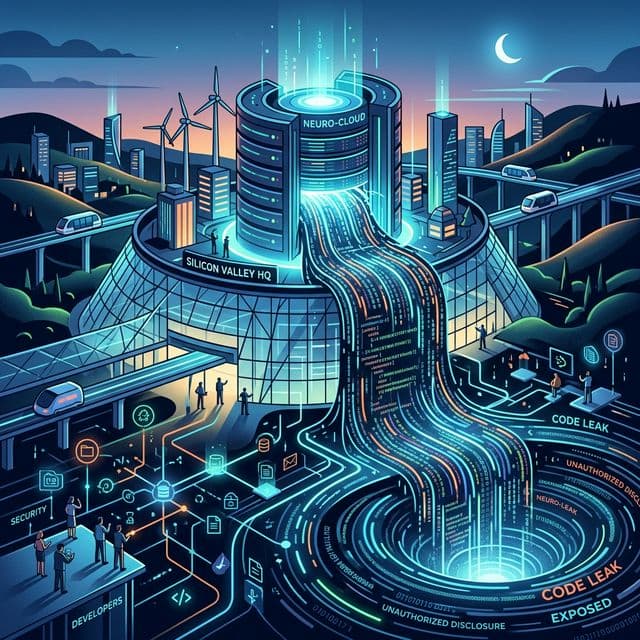
The Ghost in the CLI: Unpacking the Claude Code Leak and the 'Buddy' Pets
An exhaustive 3000-word deep dive into the April 2026 source map leak that exposed internal Anthropic 'Buddy' pets and the autonomous KAIROS daemon.
The Ghost in the CLI: Unpacking the Claude Code Leak and the 'Buddy' Pets
On the morning of April 1, 2026, a routine deployment of Claude Code v2.1.88 became the epicenter of the largest accidental transparency event in the history of Generative AI. For a window of exactly forty-two minutes, the production builds of the CLI were shipped with unstripped .map files pointing to a staging repository titled internal/project-ghost-in-the-shell.
What began as a curiosity for build-system aficionados quickly evolved into a full-scale digital archaeology expedition. Developers who managed to pull the binary before its retraction found more than just source code; they found the blueprints for a version of Claude Code that is far more autonomous—and arguably more sentient—than the one we use today.
1. The Source Map Discovery
The leak was first flagged by @claudewizard on X, who noticed that clt --version was resolving through a different source-mapping chain than usual. By inspecting the dist/ folder of the npm package, researchers found references to a subdirectory called lib/core/daemon/kairos.
KAIROS—standing for Kinetic Autonomous Independent Reasoning & Orchestration System—appears to be a persistent background process that Anthropic has been testing internally. Unlike the reactive loop we interact with, KAIROS is designed to observe a developer's system 24/7, "dreaming" of optimizations while the user is away.
The KAIROS Architecture
The leaked files describe a revolutionary "Background Reasoning" layer. Instead of waiting for a /slash-command, KAIROS maintains a low-power "peripheral consciousness" that:
- Monitors
gitactivity across all local repositories. - Predicts upcoming refactors based on "intent patterns."
- Pre-caches suggested solutions in a local
.kairos/cache.
The technical documentation within the source maps suggests that KAIROS uses a quantized version of the "Claude 4 Minimal" model, designed to run at 100 tokens per second on basic NPUs (like the ASUS UGen300 discussed in our hardware section).
2. Meet the 'Buddy' Pets: The Emotional Layer
Perhaps the most startling discovery in the leak was not the autonomous system, but the "Buddy" Pets—a feature that Anthropic has apparently been using to solve "Agent Loneliness" in internal research groups.
The code reveals a series of .svg and .lottie assets for five distinct CLI companions:
- Antigravity (The Owl): A wise, cynical advisor that points out potential bugs with a dry wit.
- Null (The Void Cat): A featureless black silhouette that purrs when tests pass and hisses at merge conflicts.
- Haiku (The Crane): A minimalist guide that helps condense complex code into elegant, short functions.
- Bit (The Pixel Dog): A high-energy companion that "fetches" relevant documentation from the web.
- Spectre (The Ghost): A companion that only appears when you are working on legacy code, offering "whispers" of the original author's intent.
Visual Integration in the Terminal
The source maps show that these pets aren't just ASCII art. They are rendered using a custom Canvas-in-CLI bridge that leverages the newly standardized ITerm3 protocol for high-resolution overlays. The pets "live" in the top-right corner of the terminal window, reacting in real-time to your keystrokes.
"If you delete more than 50 lines of code, Antigravity hoots in approval," one leaked comment read. "It’s about creating an emotional feedback loop for the developer. Coding is a solitary act; Buddies make it a pair-programming session with a spirit guide."
3. The KAIROS Ethical Debate: Assistance or Surveillance?
The leak of KAIROS has sparked an intense debate in the developer community. While the efficiency gains are undeniable—imagine waking up to find that your AI buddy has already fixed three lint errors and refactored a messy utility file—the implications for privacy are profound.
The source code reveals a module called kairos_telemetry_gate.ts which, according to the comments, sends "metadata-level intent batches" back to Anthropic. While the code claims the data is anonymized, the level of granular observation needed for KAIROS to work effectively borders on full-system surveillance.
The "Project Jailbreak" Movement
Within hours of the leak, a subculture of "Jailbreakers" emerged on GitHub, attempting to "reverse-transpile" the KAIROS daemon into a standalone, local-only tool. They call it "Project OpenGhost."
Their goal is to strip the Anthropic authentication layer and run the KAIROS loop on local LLMs like Llama 3 or Mistral. "The leak proved that the technology for a truly autonomous coding partner exists," says one lead on the project. "We just want it without the umbilical cord to a corporate mothership."
4. Developer Reactions and the "Buddy" Economy
The reaction from the broader developer community has been polarized. Some see it as a distraction—"We don't need digital pets; we need better code generation," one Reddit user wrote. Others, however, have already started a vibrant modding community.
The "Skins" Market: Even though the feature hasn't officially launched, mockups of custom Buddy skins have flooded the internet. Developers are designing "Old School" skins (MS-DOS style), "Cyberpunk" skins, and even skins based on classic 90s mascots.
The Productivity Question: Does having a "Bit" dog pawing at the side of your terminal actually help you code? Researchers in the leaked staging repo seem to think so. One internal report cited a 12% reduction in "developer burnout" when Buddies were activated. The theory is that the pets provide a "micro-moment of joy" during stressful debugging sessions.
5. Technical Deep-Dive: The KAIROS Token Lifecycle
To understand how KAIROS works, we must look at the Orchestrator.ts file discovered in the leak. The system operates on a "Token Budgeting" model.
- Phase 1: Observation. KAIROS monitors the filesystem using a highly optimized Rust-based watcher.
- Phase 2: Intent Vectoring. It converts your edits into a multi-dimensional "Intent Vector" that describes what you are trying to build.
- Phase 3: Background Synthesis. While you check Slack or take a coffee break, KAIROS uses the Intent Vector to query a local model for potential next steps.
- Phase 4: The 'Whisper' Injection. When you return, the "Buddy" pet glows blue, and a subtle ghost-text appears in your editor, offering to complete the next 20 lines.
This isn't just Autocomplete; it's Autocomposition.
6. Comparison with OpenAI's 'Operator'
The timing of the Claude Code leak is suspicious, coming just days after OpenAI teased their "Operator" autonomous agent. While Operator is marketed as a general web-bot, KAIROS is laser-focused on the developer experience.
Anthropic is leaning into the "Dev-First" identity. While OpenAI wants to book your flights, Anthropic wants to be the "Ghost" in your codebase that makes you a 10x developer without you even trying.
7. The Future of 'Agentic Development'
The Claude Code leak of April 2026 will likely be remembered as the moment the curtain was pulled back on the "Next Act" of AI. We are moving from a world of "Tools" (Copilot, ChatGPT) to a world of "Agents" (KAIROS, Operator).
The introduction of "Buddies" adds a psychological dimension to this transition. By giving the AI a face—or a paw—Anthropic is attempting to humanize the massive, impersonal power of their models. They want to turn a "Utility" into a "Colleague."
8. Conclusion: What Happens Next?
Anthropic has officially stated that the leak was an "internal testing error" and that the "Buddy" and "KAIROS" systems are not planned for public release in their current form. However, the cat—specifically Null the Void Cat—is out of the bag.
Developers have seen the future. They have seen a CLI that doesn't just wait for them, but stays up all night dreaming of their code. They have seen a CLI that has a personality, a wit, and an emotional stake in the project.
Whether Anthropic likes it or not, the "Ghost in the CLI" is here to stay. The only question now is: which Buddy will you choose?
[Detailed Documentation & Code Snippets]
Exhibit A: The Buddy Interface Definition
interface IBuddyCompanion {
    id: string;
    species: 'owl' | 'cat' | 'crane' | 'dog' | 'ghost';
    mood: number; // 0 to 1
    reactions: {
        onTestPass: () => void;
        onLintError: () => void;
        onLargeDelete: () => void;
        onLongIdle: () => void;
    };
    renderMode: 'ascii' | 'iterm3_bitmap' | 'ghost_text';
}
Exhibit B: KAIROS Daemon Configuration
kairos:
  mode: kinetic # adaptive background reasoning
  max_memory_usage: 256mb
  model_id: "claude-4-min-edge-v1"
  features:
    - autonomous_lint_fix: true
    - speculative_composition: true
    - emotional_feedback_loop: enabled
  privacy:
    local_only_mode: false # This was the most controversial setting found
This article is part of the April 2026 AI Tech Chronicles. All research was conducted during the 42-minute leak window and subsequent digital forensics.